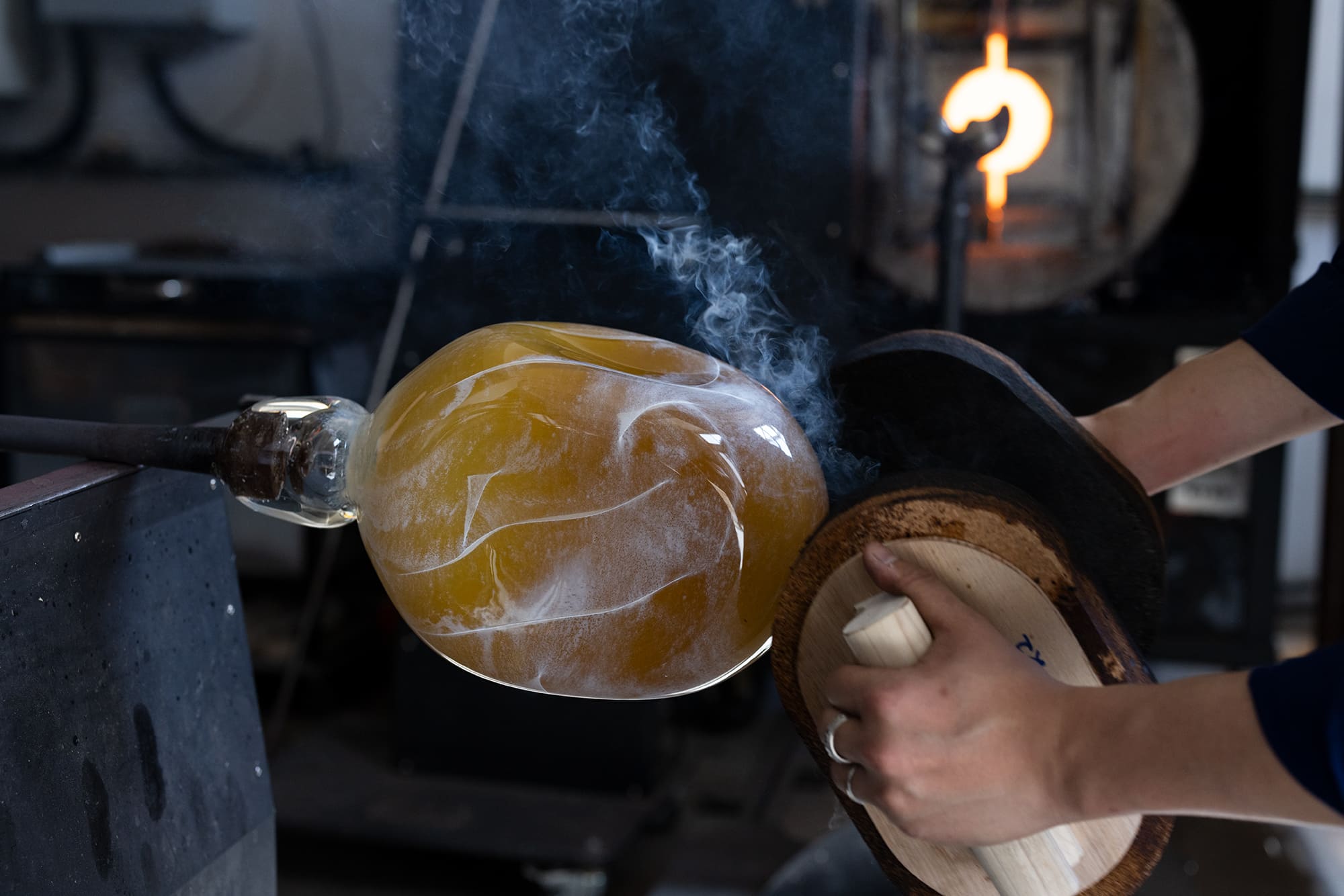
Born in Taiwan in 1988, Liu Chien-Kuang found in glass the ideal medium not only to explore the relationship between craftsmanship, technology, and identity, but also to give voice to a personal and cultural experience suspended between East and West. His practice emerges from the encounter between the tradition of blown glass and the most advanced digital techniques—from 3D printing to computer-assisted carving—in a journey that reflects an ever-evolving idea of art, capable of engaging with history without being confined by it.
In his work, matter becomes a vehicle for memory. Liu observes and studies historical objects and handcrafted artifacts, often preserved in museums, and then reinterprets them through a contemporary lens. This process of translation is deeply rooted in his personal experience: a childhood spent in a family of artisans, early exposure to places of production, his move to Europe, and the subsequent rediscovery of his own roots through artistic practice.
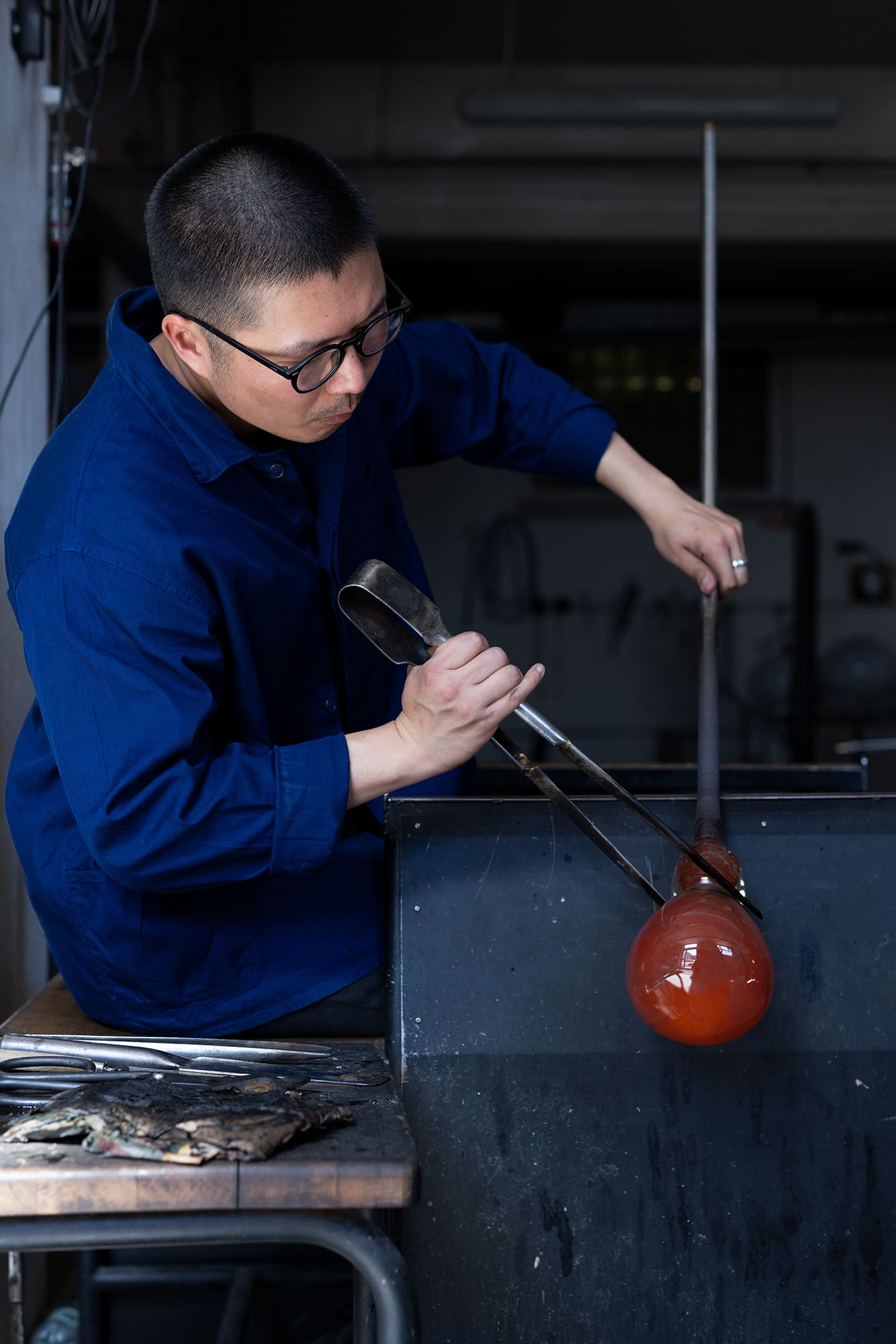
In Liu’s practice, glass is never merely a formal medium, but a tool for mediation between different cultures, eras, and materials. Each work emerges from a delicate balance between technique and experimentation, where mistakes and unexpected outcomes are not obstacles to be avoided, but possibilities to be embraced. Liu does not see himself as the guardian of an immutable tradition; rather, he is an explorer of an ongoing dialogue between craftsmanship and technological innovation.
Living and working in Europe today has made this threshold dimension even more apparent. His works carry within them the tensions and transformations of contemporary identity, offering viewers a reflection on the complexity of cultural exchange and the beauty of change over time. In this sense, his practice inhabits a liminal territory between art and design, understood not as separate categories, but as a fluid process of exploration and choice.
In this interview, Liu Chien-Kuang reflects on his artistic journey, his relationship with material and technique, and the way glass has become a tool through which he questions the past, the present, and our way of inhabiting the world. This dialogue with memory, transformation, and matter will continue in his upcoming solo exhibition, Ethereal Geology, on view at Spazio Nobile in Brussels from November 20, 2026, to January 17, 2027.
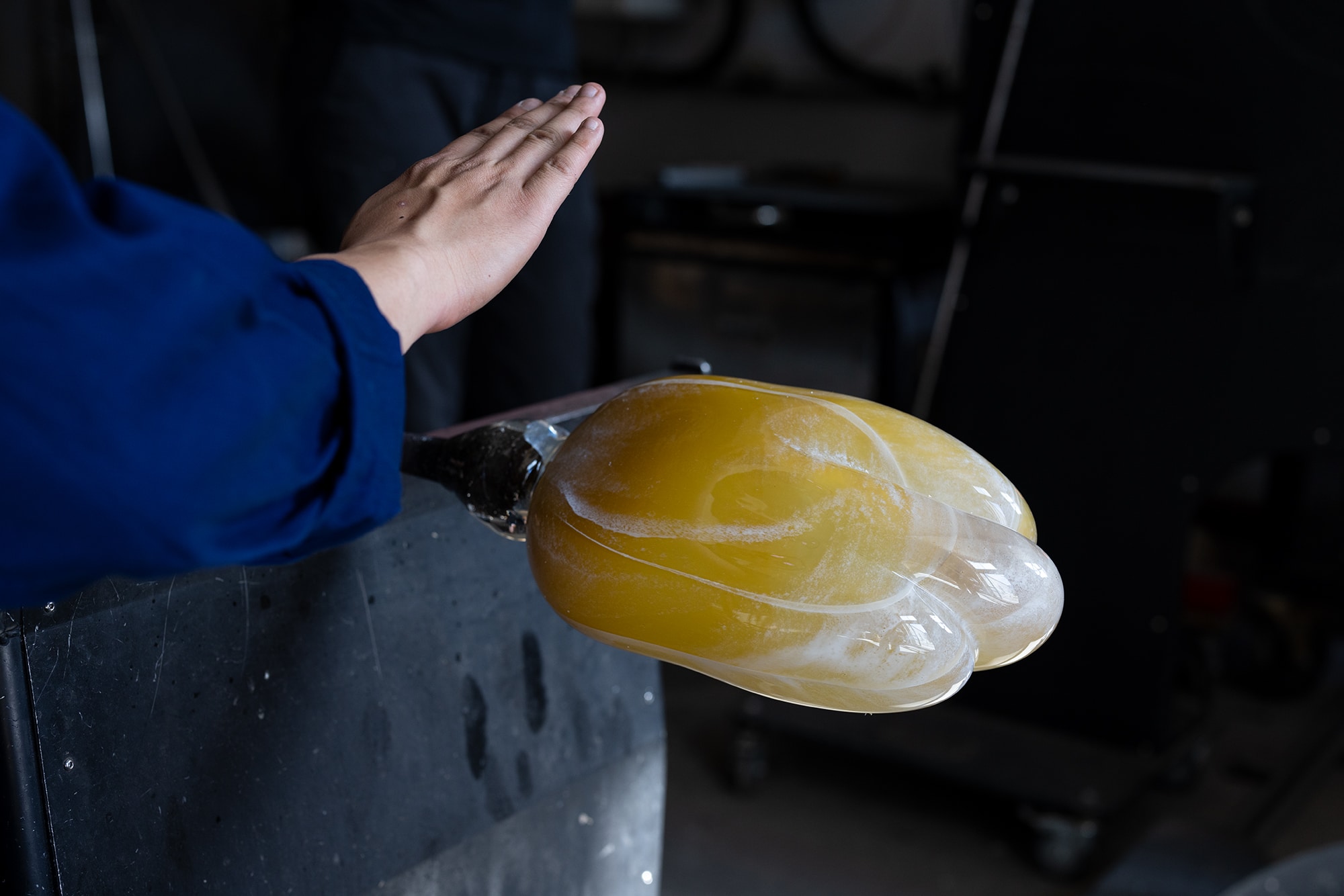
I first encountered glass while studying ceramics in college in Taiwan. Glassblowing is a vibrant art form and, compared to ceramics—which is primarily a solitary practice—it is far more engaging because it is a collaborative, team-based process. When I began studying glassmaking, access to information was still relatively limited. I became fascinated with searching for knowledge about glass from around the world through the internet. At that moment, glass became the medium through which I not only started making art, but also began to understand the world. Glass provided both the opportunity and the means to discover the world: while searching for information across various platforms, I also connected with the cultures and languages of different countries. Glass as a material has taken me around the globe, from Asia to Europe and America. Every place I have visited has its own unique glass industry, one that is worth exploring and studying.
Exactly. During a visit to the National Museum of Taiwan History, I saw a Stone Age stone axe. Observing its form and structure, I felt the urge to reinterpret it in the material I know best: glass. For me, glass is like a language through which I can express my ideas. It is a material that can be translated and reinterpreted. When glass interacts with heterogeneous materials, it creates an exotic harmony. The concept of “exoticism” is central to my work, with all its multiple nuances, both positive and negative.
In my creations, I use a variety of materials, each of which requires specific tools. I have always had a strong desire to learn new skills in order to explore different modes of expression. I hope to keep this passion for learning new techniques and technologies alive throughout my life. In my studio, I have tools for woodworking and ceramics, as well as several 3D printers and computer numerical control (CNC) machines. In the future, my goal is to acquire a robotic arm and learn how to program software for artistic production. I believe that continuous learning enriches my creative practice.
I grew up in a family where making things by hand was a natural part of everyday life, and my hometown is an international port with an export-processing zone. As a result, many children of my generation developed, to varying degrees, allergies and respiratory problems. Industry, materials, and manufacturing processes run through my veins.
I believe all art is autobiographical. My father is a furniture designer, and from an early age, by spending time in different factories, I developed a natural interest in craftsmanship. I was born in Taiwan in the 1980s, a period of change and conflict. During those years, the country was emerging from martial law, and restrictions on political parties and newspapers were gradually being lifted. The flow and clash of values have continued to influence me. When I make art, I often think back to moments from my childhood that seemed normal at the time but now feel absurd. These ways of life, which from the perspective of contemporary European society may appear overly ritualistic or even superstitious, have nourished my artistic expression.
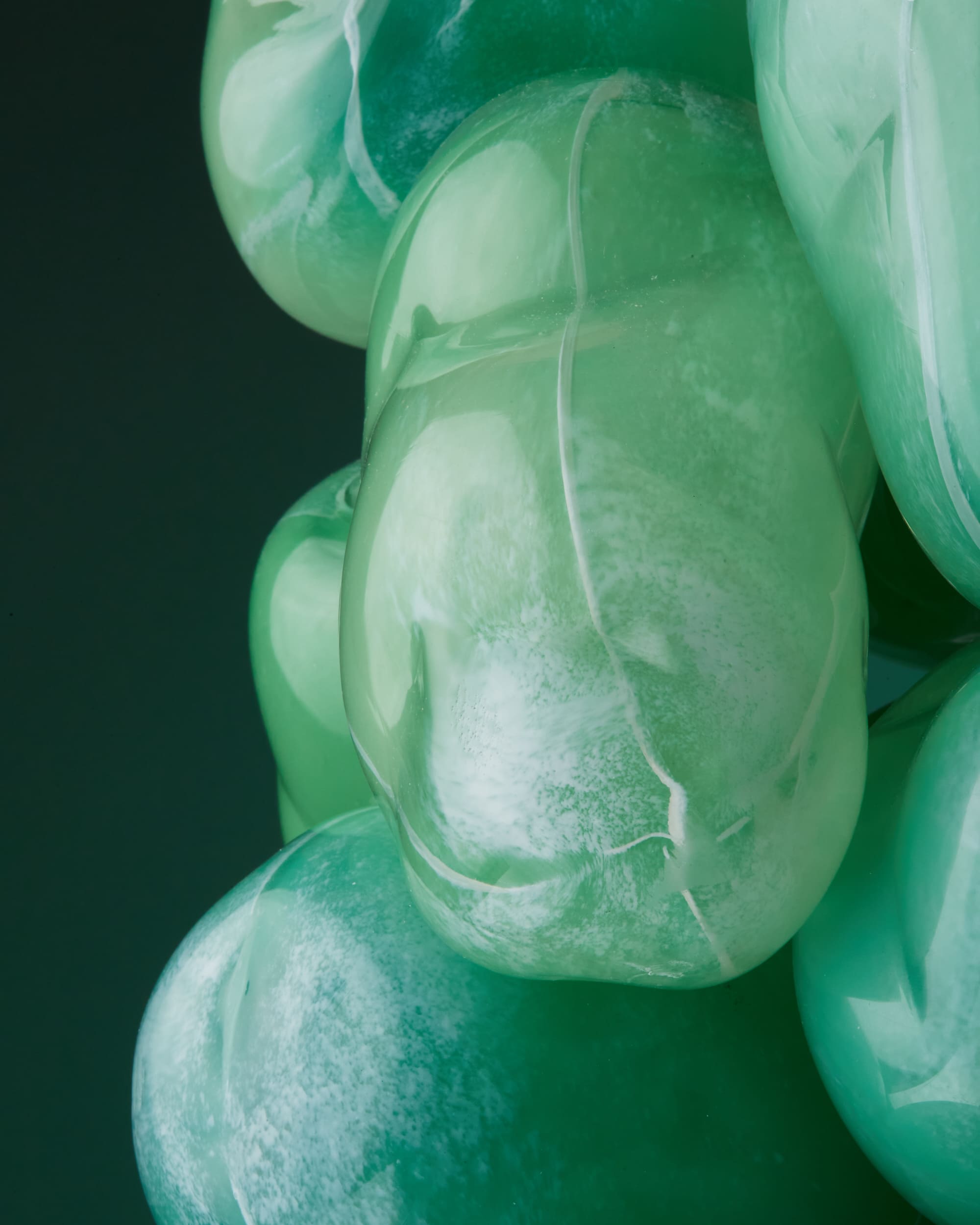
I enjoy visiting history museums and observing the objects on display. I am interested in studying the craft techniques used in their making, but also in discovering the hidden stories behind them. After this research, I return to the studio and begin interpreting and translating these museum objects into my sculptures, using my own sensibility and techniques. However, I am not an expert in all methods. While exploring new techniques, mistakes and misunderstandings inevitably occur, due to the limitations of materials and tools. I accept—and indeed expect—the beauty that arises from these errors.
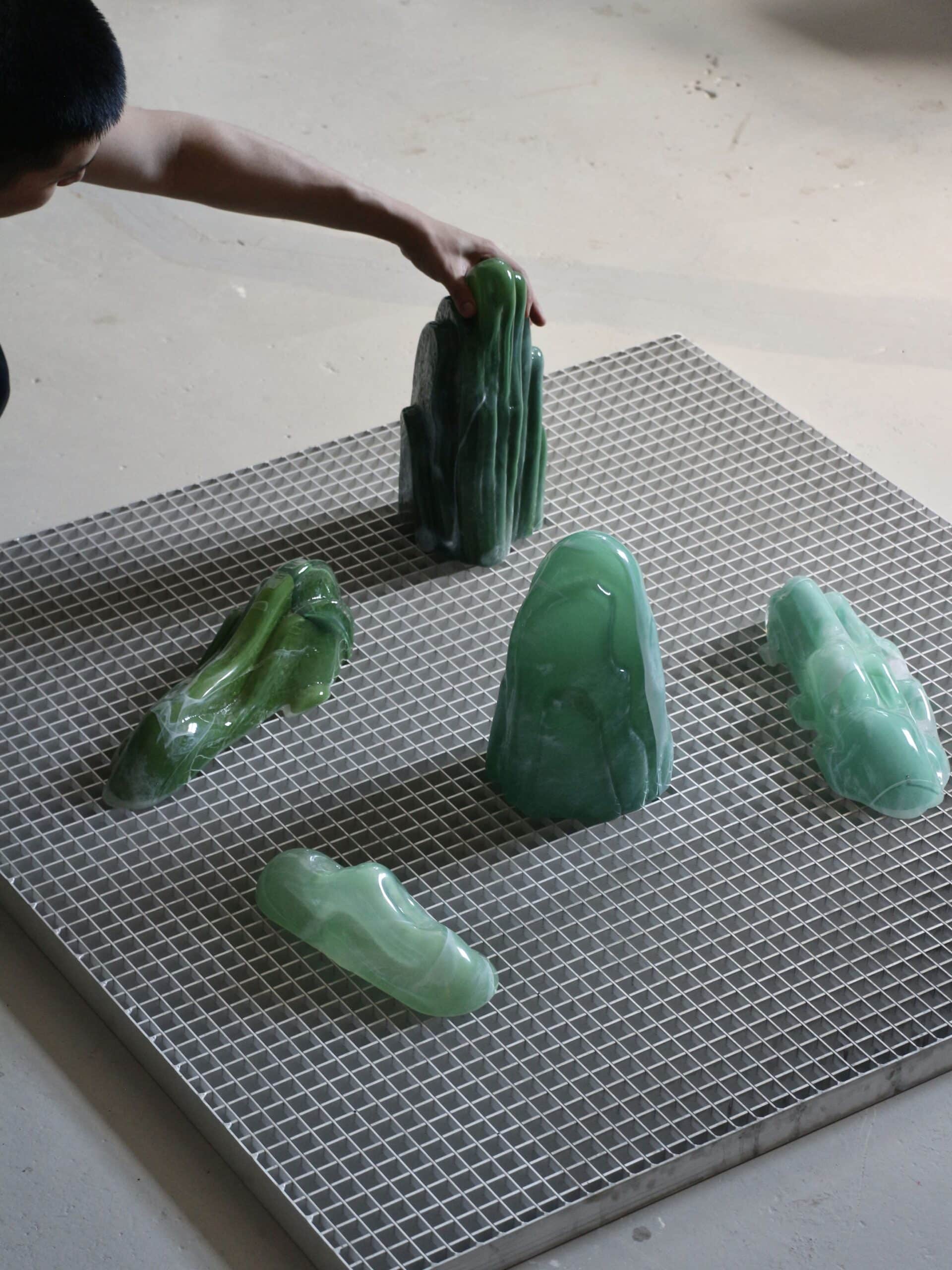
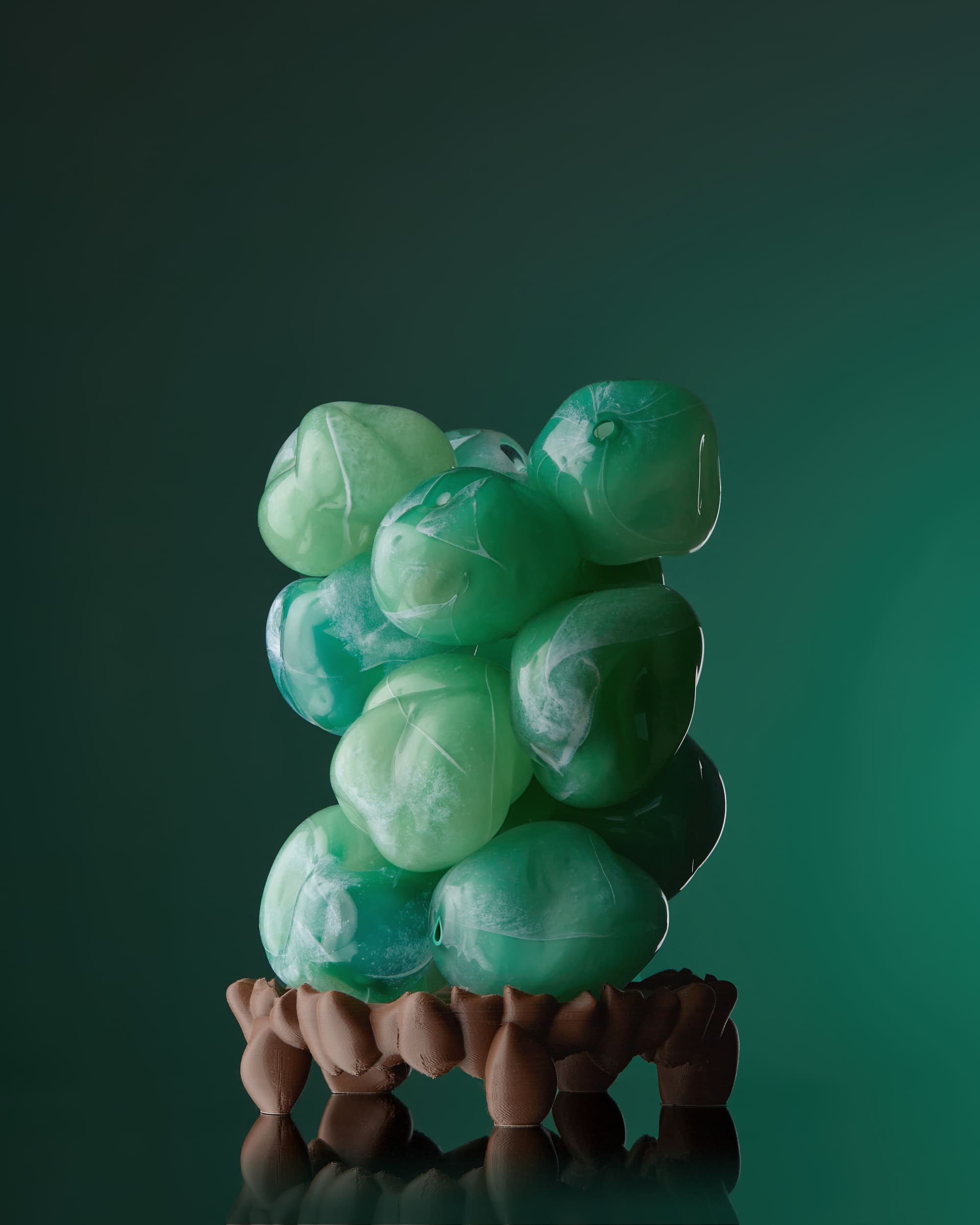
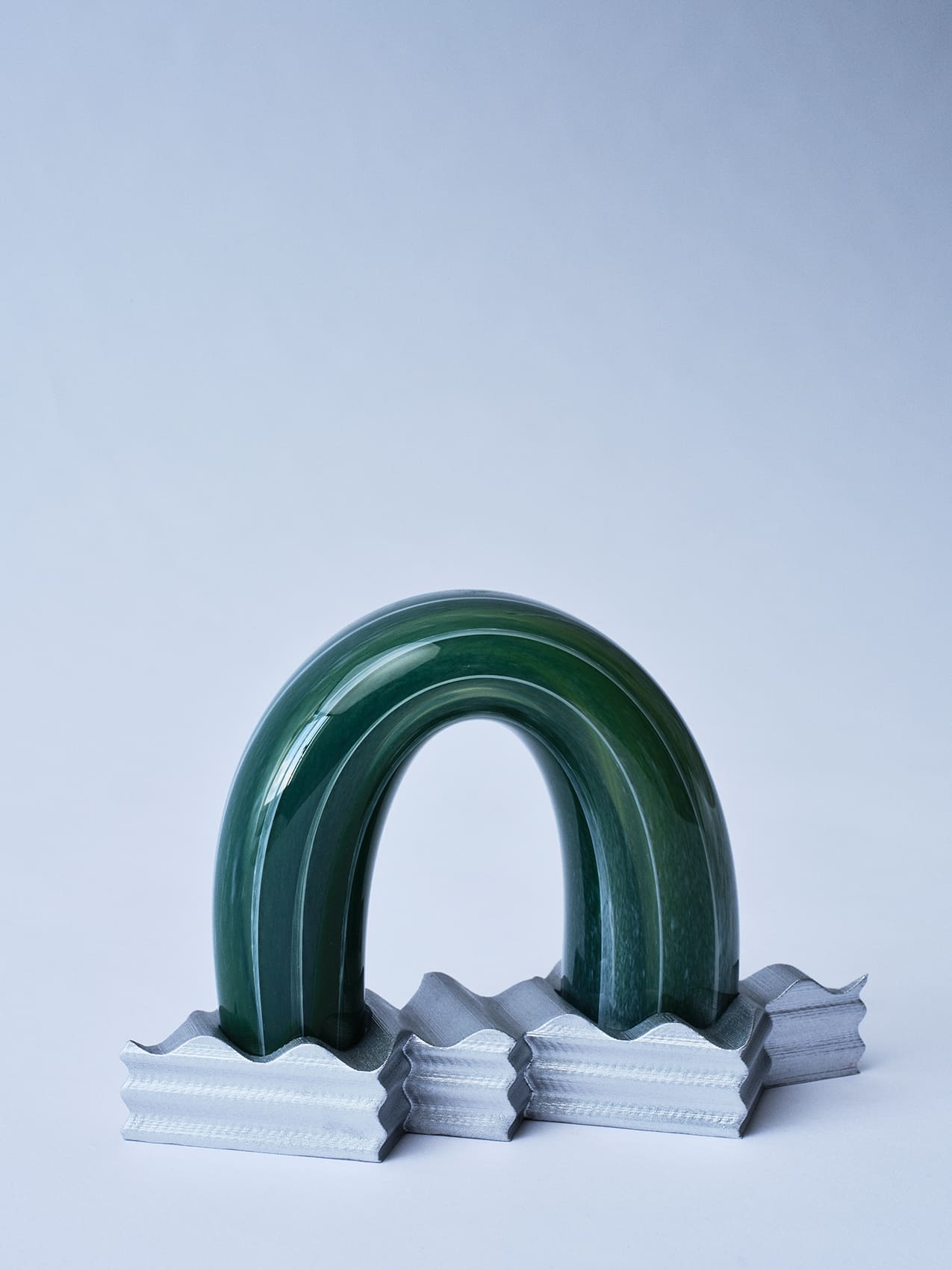
No, on the contrary. What matters is not repeating, but moving forward. I do not simply use other people’s techniques—I make them my own and, in my own way and on my own scale, I evolve them, transforming them into something different from their original form. A concrete example is a project I have been developing for several years. I had the opportunity to visit the Asian glass collection at the Östasiatiska Museum in Stockholm. I found glass objects with distinctive patterns and colors, resembling precious stones. A researcher explained to me that, for a long time, glass was used to imitate jade and other rare stones.
For this project, I focused on using green glass to recreate the “rarest jade.” I also designed a custom wooden support, 3D-printed for each “jade stone.” During the process, I experimented with various types of green glass I have collected over the years, some of which may have been produced before I was born. I layered different shades of color to give depth to the imitation stone. The bases for precious stones are usually made from rare dark wood; I chose instead to make each pedestal unique by designing it digitally and 3D-printing it. I enjoy playing with the contrast between materials and reflecting on ideas of imitation and authenticity. For me, glass has been an excellent tool for understanding the complex world around us.
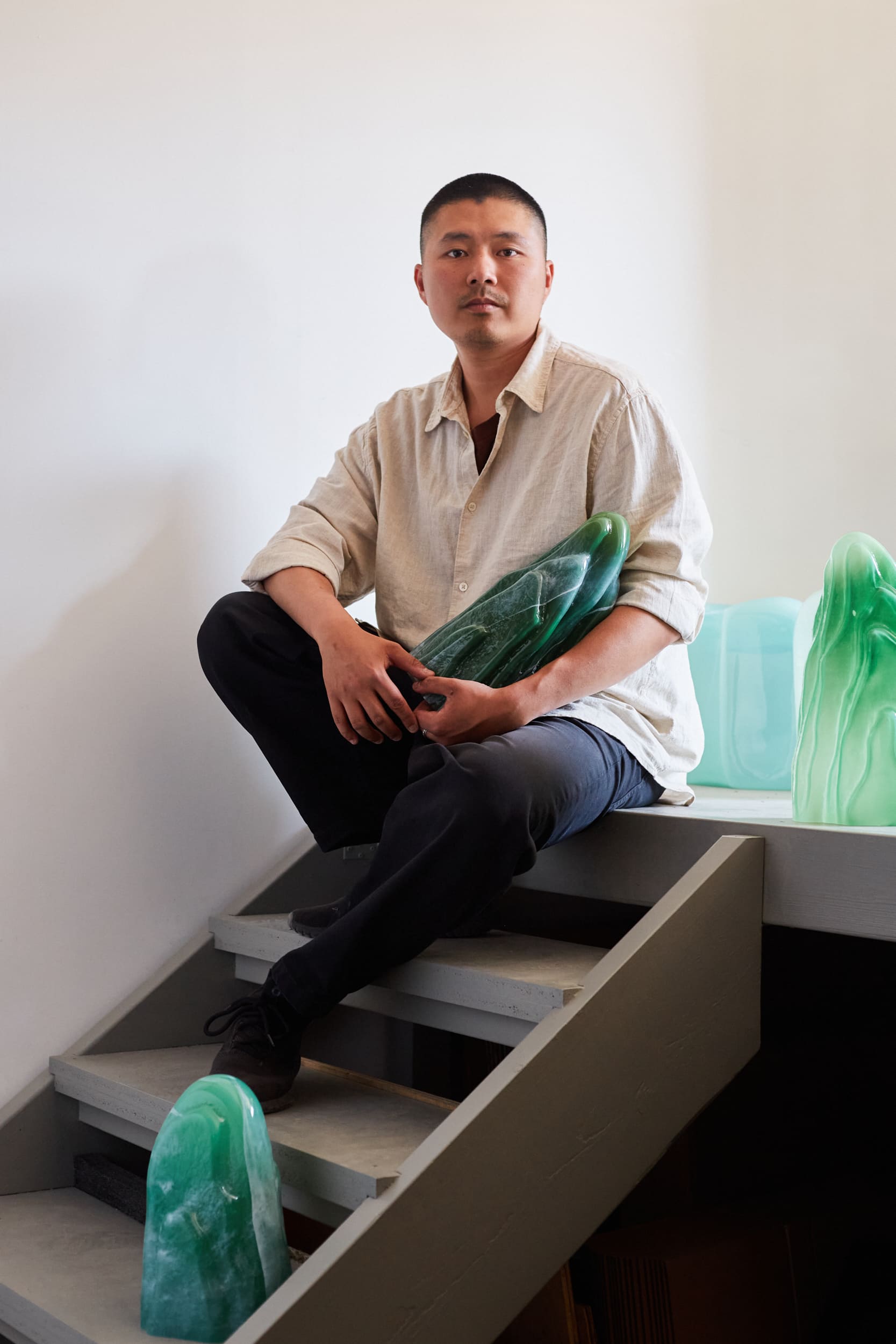
Studying historical objects leads me to reflect on the past, on my own existence, and on the future. Since moving to Sweden, people often ask me about my origins, and this made me realize how limited my knowledge of Taiwan—the country where I grew up—actually was. This pushed me to learn more about the people and events that have shaped my homeland; however, I currently live and work mainly in Europe. When I exhibit my works here, I hope viewers can perceive the beauty of shifting identities and cultural exchange. At the same time, I aim to poetically convey the inner tensions and challenges of living in a different place.
I feel like someone who constantly moves between art and design. I use art to question society and my own existence, while design helps me find solutions to problems. For me, art and design are not separate categories, but a fluid process in which I move freely.
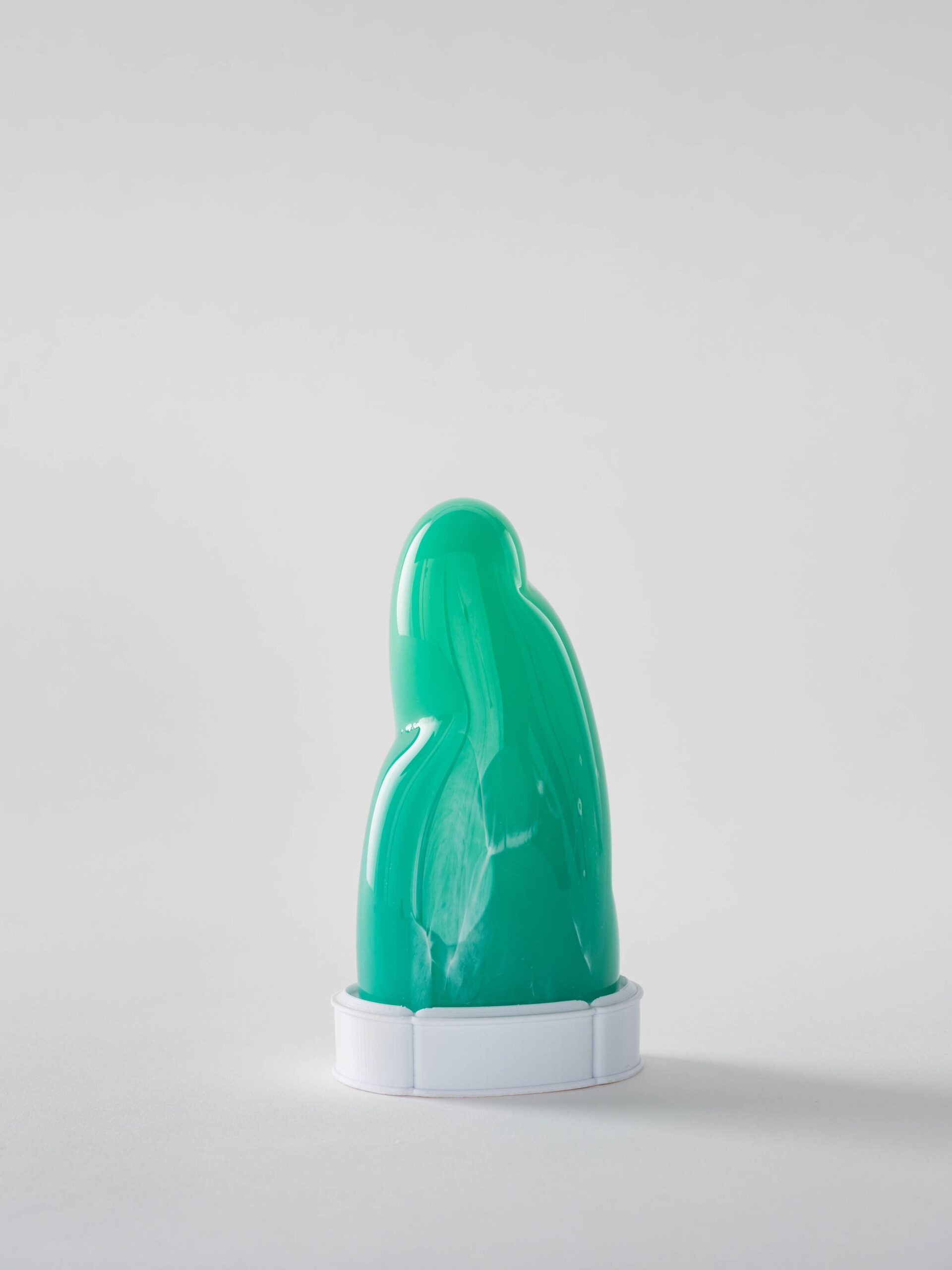
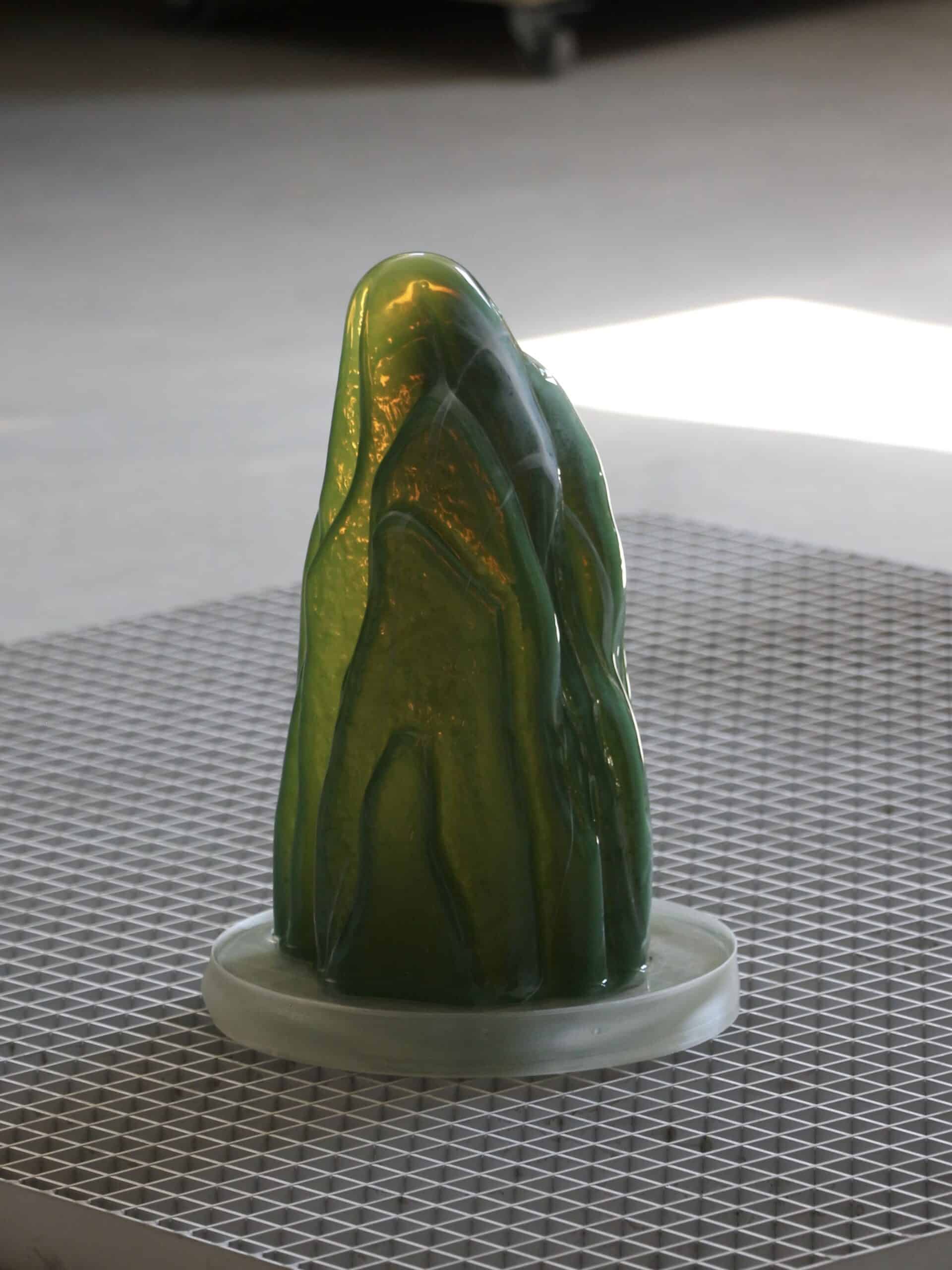
Leaving my country more than ten years ago was undoubtedly a crucial turning point, an intense experience that profoundly shaped my artistic path. It was not easy, and among the most significant moments I recall the project realized after several years with Sveriges Allmänna Konstförening in 2021: my first major creative research after moving to Sweden. This work gave rise to the series Stone from Other Mountain, born from a visit to the Östasiatiska Museum in Stockholm. At that moment, I felt I had found a new expressive language, a solid foundation for my current artistic direction.
Another key milestone was my solo exhibition Arahant at Soil Space in Taiwan in 2024. Returning to my homeland after ten years with a major exhibition was an intense and almost surreal experience. Taiwan felt both familiar and distant, a suspended dimension between past and present. This return awakened new questions and insights within me, which have begun to shape my work in ways I am still exploring.
Discover previous episodes:
Paola Pivi. The Freedom to Exist
Quando il mecenatismo ti fa innamorare dell’arte: nasce “L’arte in prima persona”