There are artists who pursue the image and others who allow it to mature. Ingar Krauss belongs to the latter category. His photographs often begin with an idea that is held onto for a long time, gradually taking shape through an encounter with what happens during the creative process. They seem to be the result of an extended period of observation: fruit, flowers, domestic interiors, gardens, faces. Nothing appears accidental, yet nothing is rigidly planned either. Each image is thus created through a subtle balance between intention and the unexpected.
Born in East Berlin in 1965, Krauss lives and works between Berlin and the Oderbruch countryside, on the border with Poland, where the rhythm of nature has become an integral part of his working method. After initially focusing mainly on portraiture, his practice gradually shifted towards still life, transforming fruit, vegetables, flowers and everyday objects into suspended presences, capable of escaping time and offering an unexpected form of contemplation. Rather than documenting reality, his images seem to preserve it, keeping open the possibility of a constantly renewed gaze.
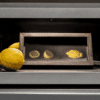
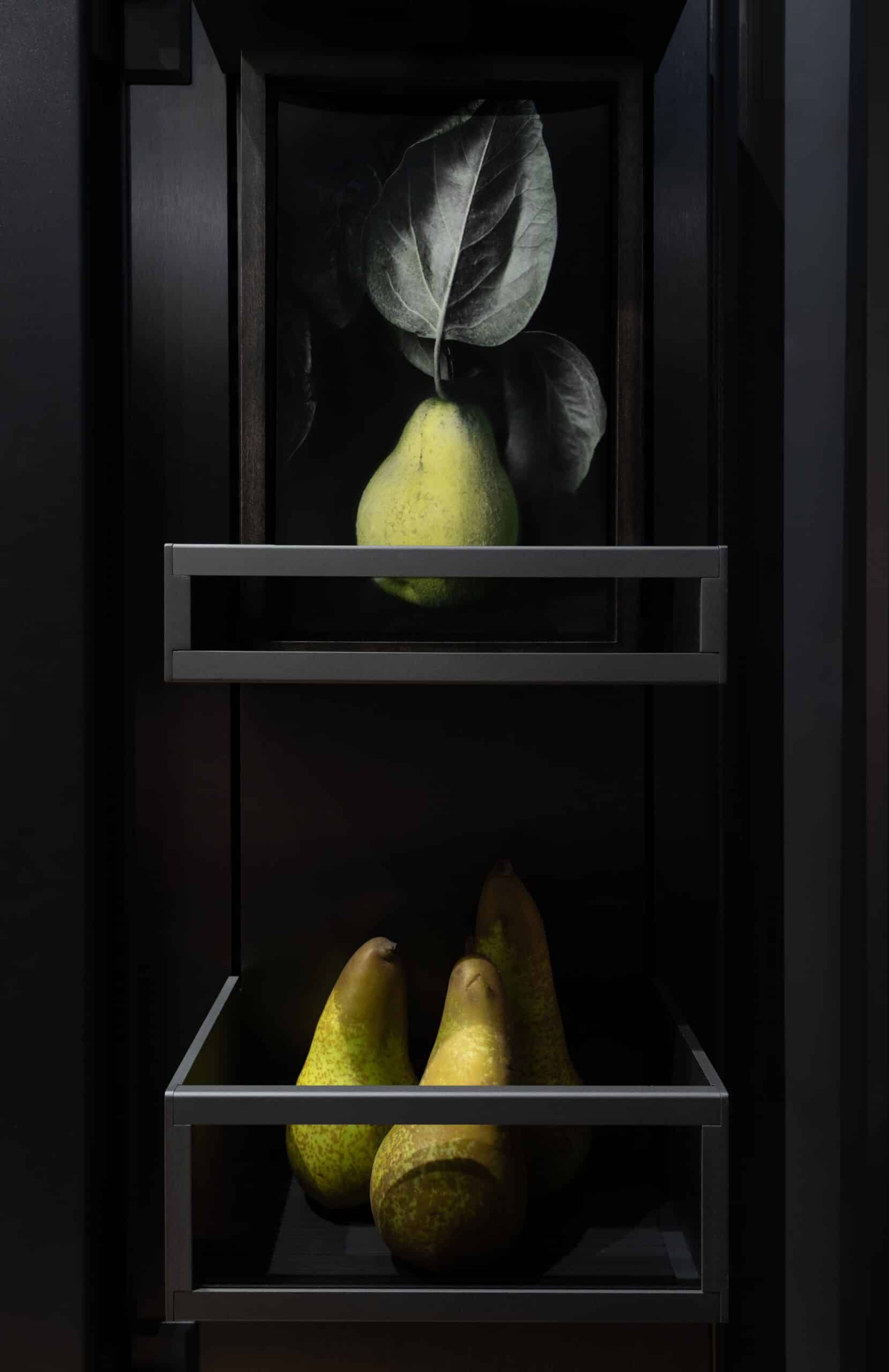
It is precisely this idea of photography as a place of preservation and discovery that gave rise to D’ENTRO, the project promoted by Gaggenau and Cramum on the occasion of Artissima 2026, open to the public on 30 and 31 October. For the first time, Krauss created a body of work conceived to be discovered inside a Gaggenau Vario Series Expressive refrigerator, transforming an everyday gesture—the opening of a door—into the beginning of an aesthetic experience.
We interviewed him on the occasion of the presentation of the project to discuss the origins of his images, time, his relationship with matter, and that slow practice of observation that continues to distinguish his work within the contemporary photography landscape.
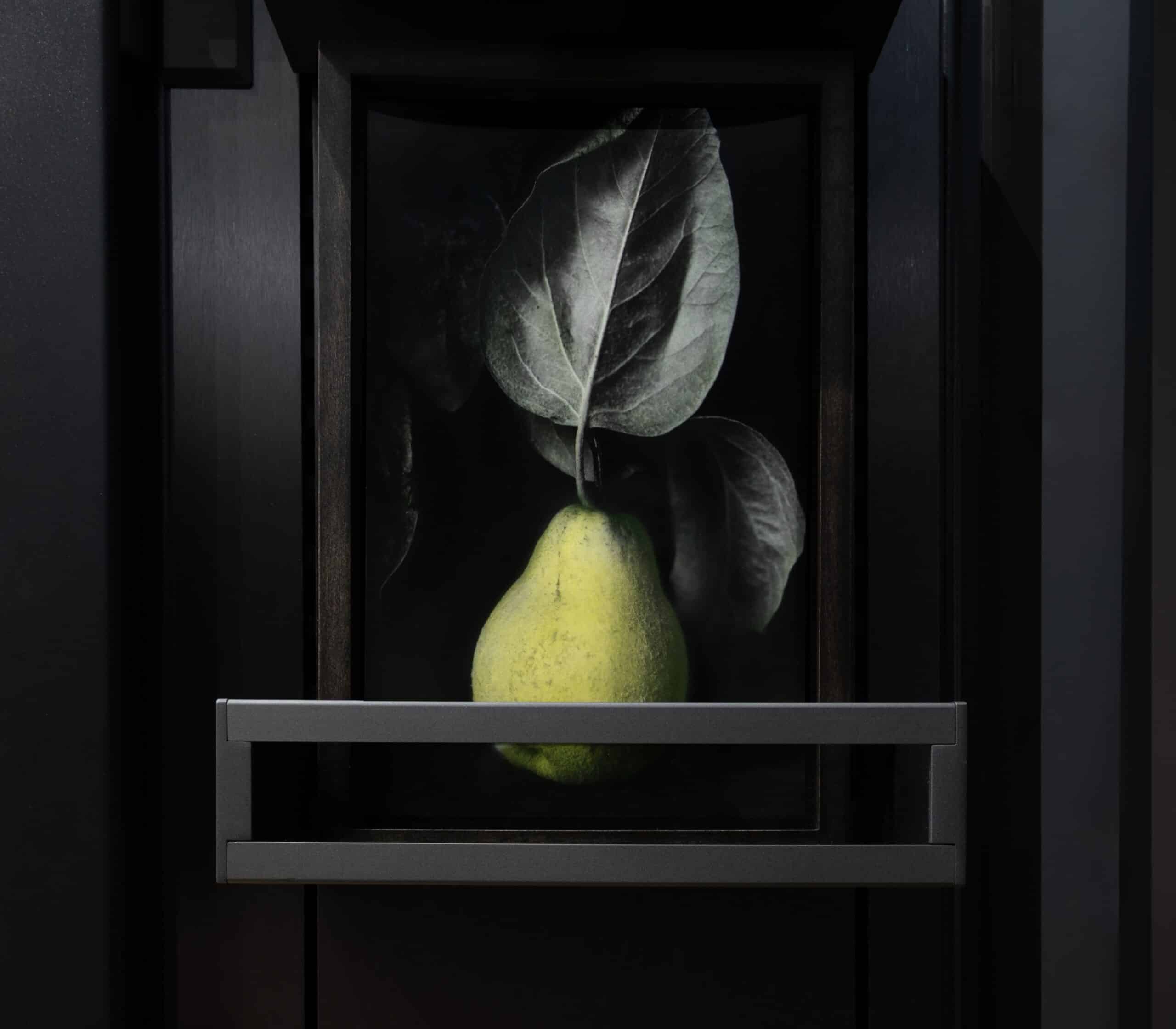
I think in terms of images and, in most cases, an image begins with an idea, a thought or a vision. Sometimes I carry that idea with me for a long time before reaching the moment when I feel ready to give it form.
Sometimes I come across fruit or plants that capture my attention; at other times, I deliberately look for them. From there, I begin to develop the image mentally. Sometimes I sketch out the composition in advance and return to it later. At other times, however, the final photograph turns out to be completely different from what I had imagined. During the creative process, practically anything can happen: I start with an idea, but I never follow it too rigidly.
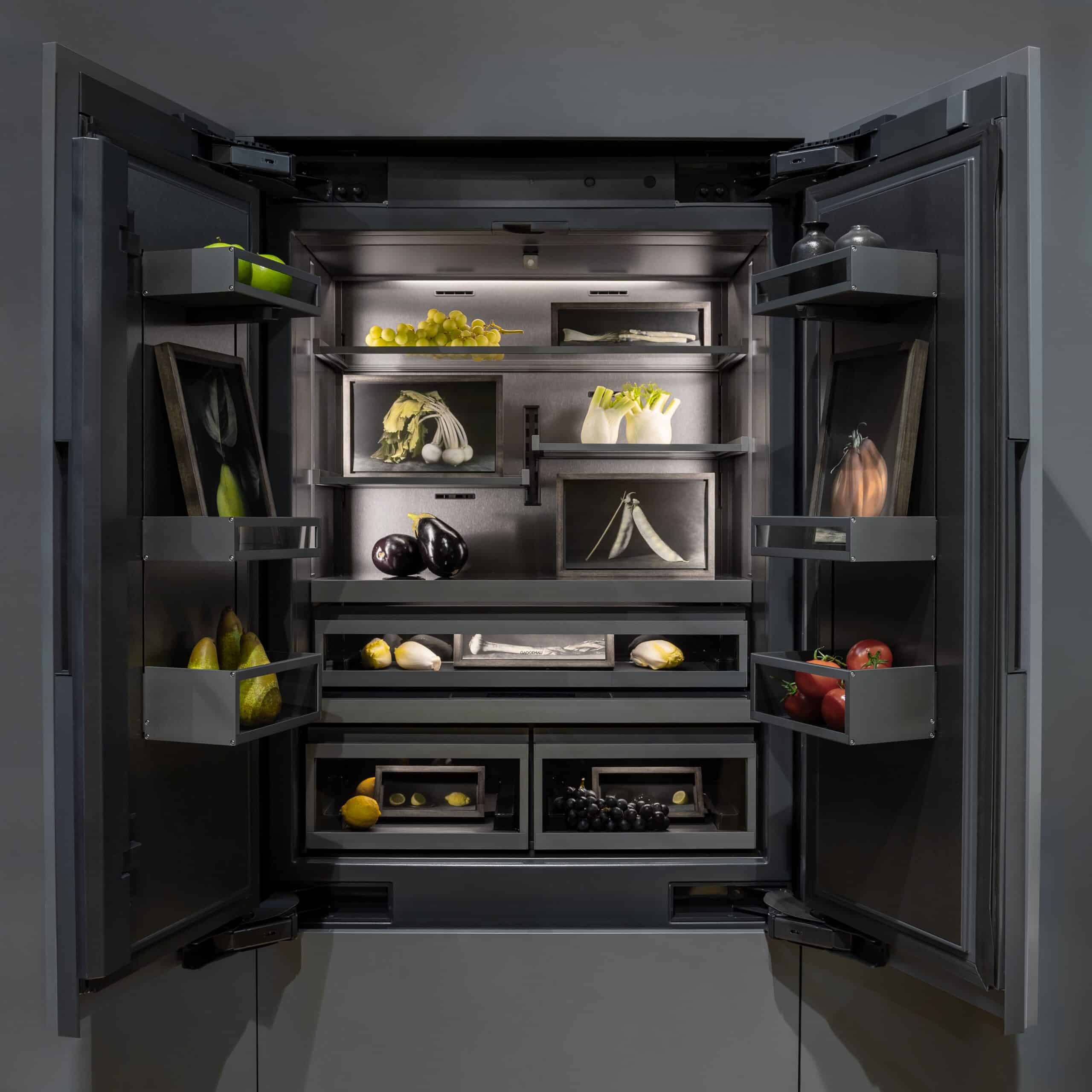
At the moment, I find it easier to engage with still lifes and other subjects than with portraits. I also feel that still lifes offer me a broader creative space.
I simply believe that analogue photography is better suited to the way I work and allows me to develop a visual language that is different from that of digital photography. This is why I continue to use it to create my works, while I use digital photography only as a visual notebook: to record ideas for future images or, more simply, to document works that have already been completed.
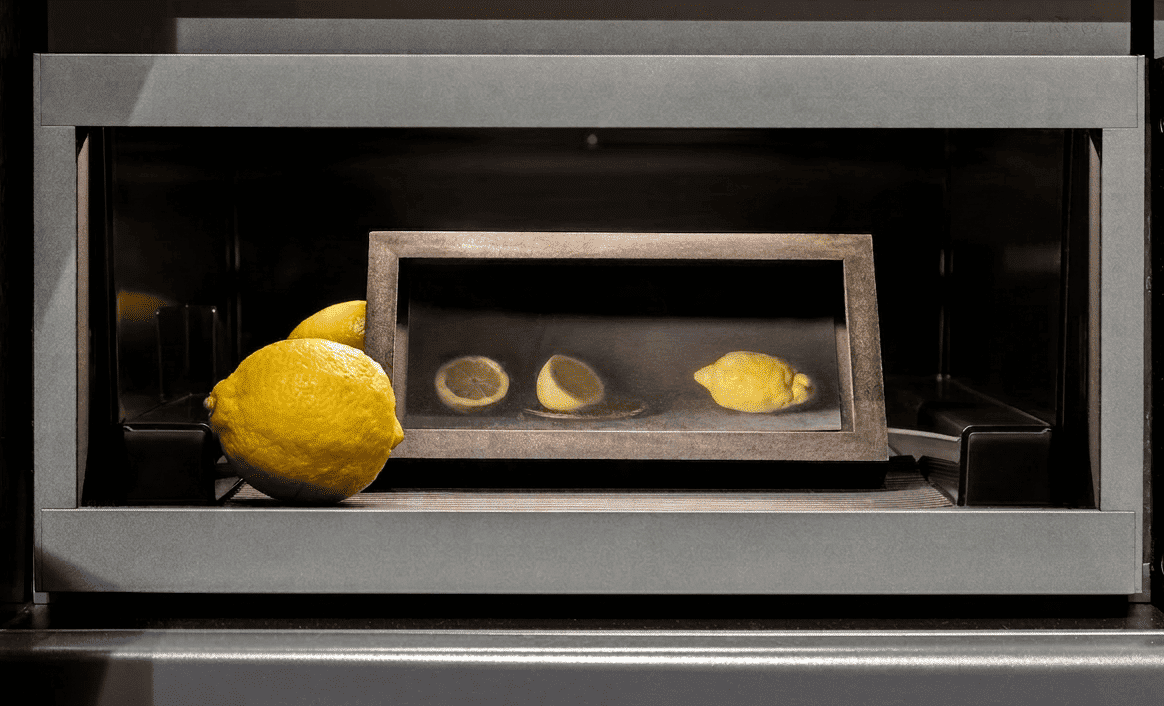
I still use the same cameras I worked with thirty years ago, and very little has changed in my darkroom either. Naturally, it is more difficult today to find materials for analogue photography, particularly photographic paper and the chemicals used for printing. This is the main difficulty I face in continuing to work with analogue processes.
To be honest, during my early years as an artist I deliberately avoided looking at too many photographs because I did not want to be influenced by them. This helped me develop my own visual language more freely. Of course, there are artists whom I greatly admire, both in photography and in the visual arts. One of them is the Danish painter Vilhelm Hammershøi. In general, however, I find much more inspiration in the visual arts than in photography.
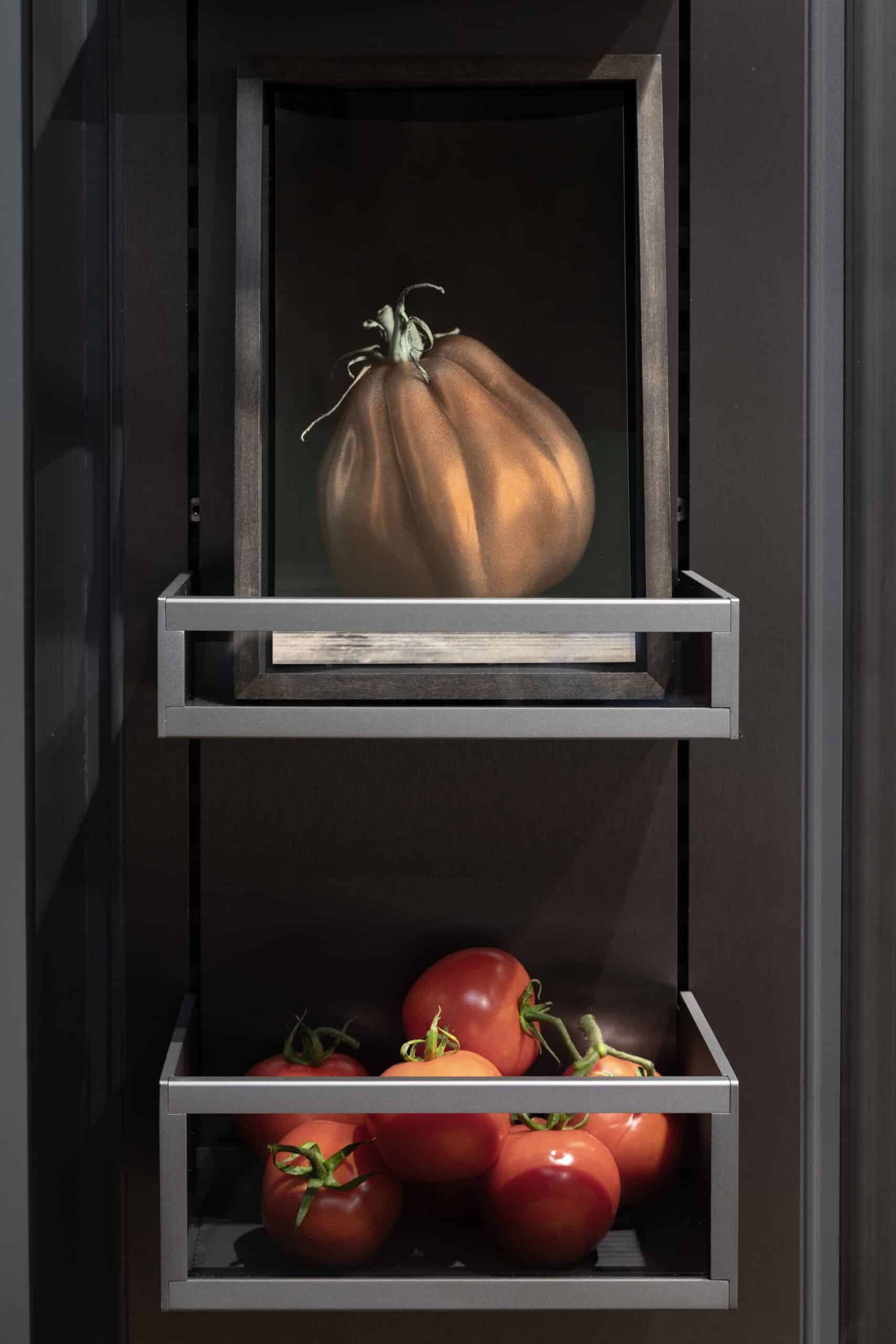
I am particularly interested in Hammershøi’s interiors. I believe he was truly ahead of his time in these images. In the recent exhibition Vilhelm Hammershøi. The Eye That Listens at the Kunsthaus Zürich, there was also an extraordinary painting by Adolf Menzel depicting a staircase immersed in shadow. And then there was a portrait by Hammershøi of a young sick woman: an extremely clear and essential image, yet one with an incredible presence.
Of course, inhabited interiors always reveal something about the people who live in them. In the series dedicated to men who live alone, for example, domestic spaces play a central role and, in some cases, I personally design and arrange the environments I photograph. Architecture is also important in other bodies of work: I am currently working on a series about urban allotment gardens, some of which are in Italy, in which I consider the structure of the garden itself to be fundamental. In the project created for Santoni in Milan, on the other hand, I combined portraits with nocturnal views of Milanese architecture.
I found the Gaggenau refrigerator project to be a fascinating idea and a particularly stimulating artistic challenge. From the very beginning, the curatorial vision behind the project seemed convincing and far from obvious to me: I was excited by the possibility of exploring the relationship between the object, the work it contains and the space in which it is revealed. Transforming an everyday object of the highest design quality into an exhibition space, ultimately making it an artwork in its own right capable of housing other works, holds a special fascination for me. I hope the project succeeds in conveying this fully.
Quando il mecenatismo ti fa innamorare dell’arte: nasce “L’arte in prima persona”