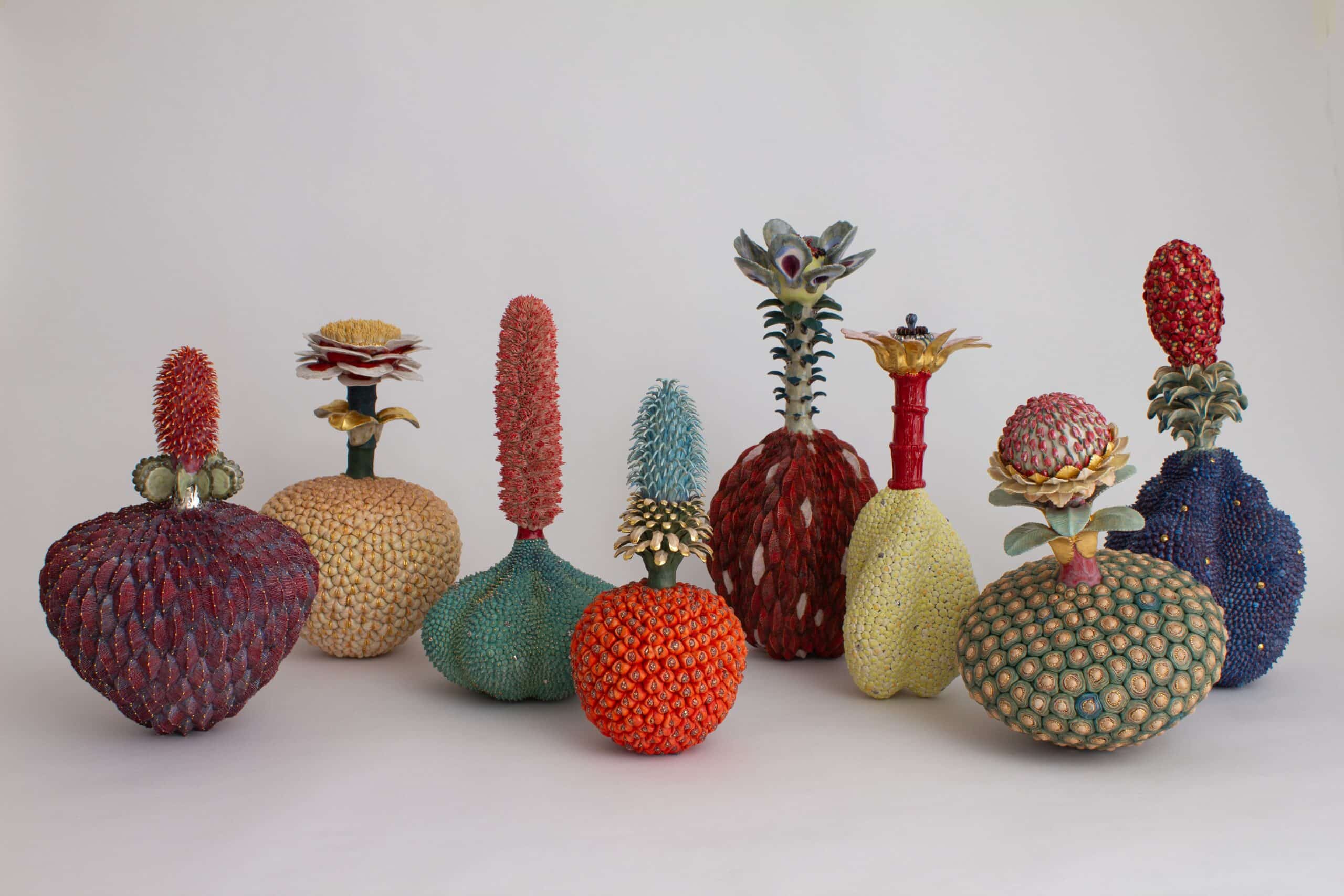
Born in Osaka in 1987 and now based in France, Kaori Kurihara has emerged in recent years as one of the most original voices in contemporary international ceramic art. Her artistic research begins with the observation of nature but never seeks to reproduce it. Fruits, flowers, and plant organisms become the starting point for a process of transformation that leads to unprecedented forms, suspended between memory, imagination, and possibility.
Every work is entirely handmade by the artist, who deliberately chooses not to work with assistants or molds. Her creative process is one she describes as an ongoing dialogue with the material itself. Form and color are never imposed but gradually emerge throughout the making of the piece, as though the work itself were suggesting its own development. For Kurihara, artistic practice is above all an act of listening: a search for the harmony that nature expresses spontaneously through its structures, reinterpreted through the language of ceramics.
Her sculptures bring together technical precision and imaginative freedom, formal rigor and a sense of wonder. The result is a poetic universe in which ceramics become a bridge between the tangible and the imagined, between what exists and what could exist.
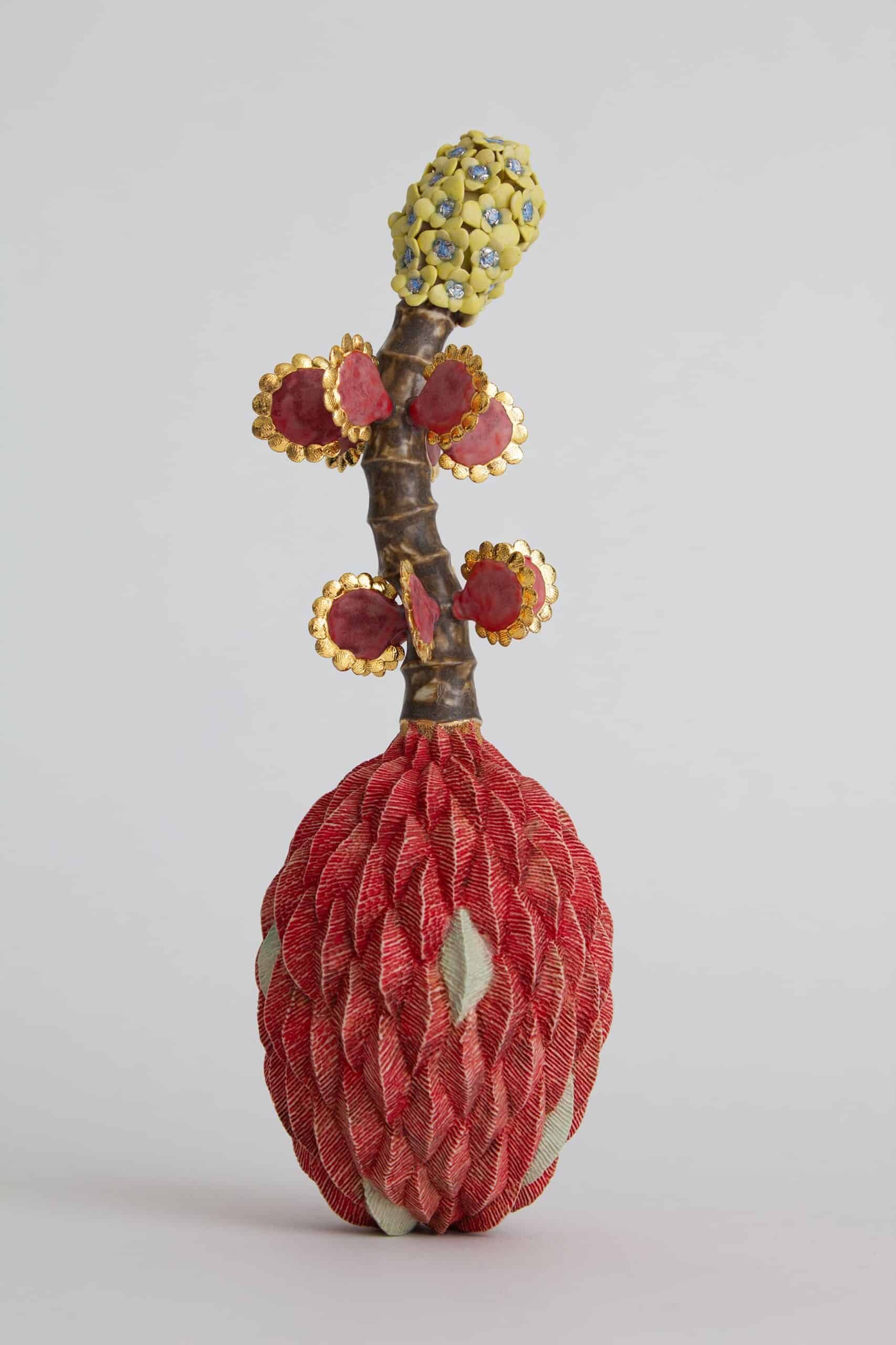
In this new episode of L’Arte in Prima Persona in , Kaori Kurihara guides us through an artistic practice that, through ceramics, reflects on universal and ontological questions. Imagined botanical forms, organic geometries, and a remarkable reflection on the absence of personal will reveal a vision of artistic creation understood not as mastery over matter, but as an attentive dialogue with its inherent possibilities.
My move to France and my interest in French ceramics are actually two separate things. As a child, I discovered that my favorite shop for buttons and beads originated in France, and from that moment the country became a dream destination for me. I wanted to pursue what I love in the country I love, and that is why I am here. Only after arriving did I realize that France—with its deep appreciation for art and its respect for individual freedom of expression—was an inspiring place in which to begin and develop an artistic career. Here, art is an integral part of society, and this allowed me to find my own place and fully devote myself to creating.
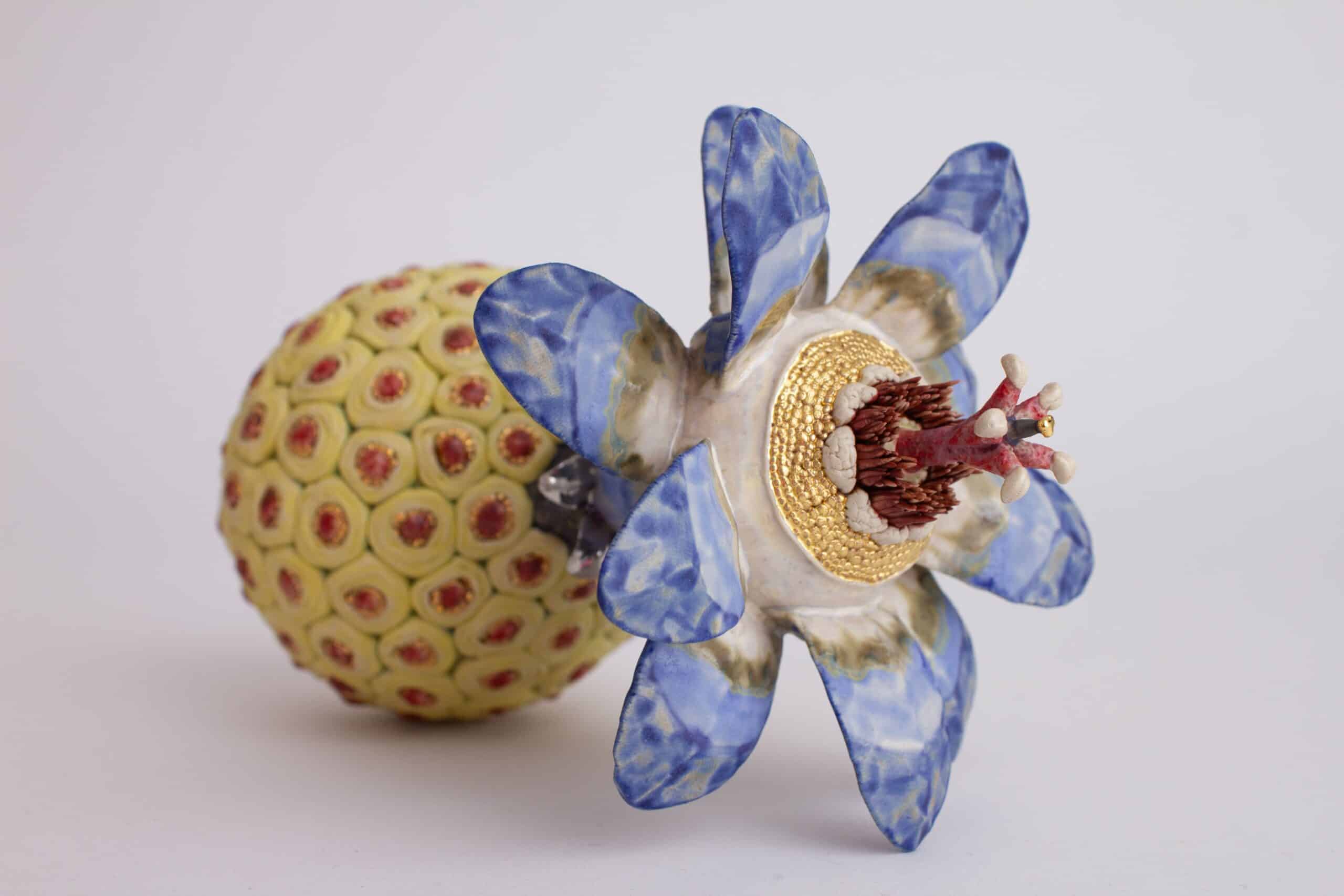
I am not interested in faithfully reproducing existing forms. Rather than trying to create something as close as possible to reality, I seek to explore the mysterious boundary between what exists and what exists only in memory. Even if a form does not exist in reality, it is important to me that it conveys the feeling of being alive—that it possesses a vital presence within its own space.
Animals move according to their own will and are not symmetrical around a central point, but rather along an axis. Plants, on the other hand, as far as we know, do not act according to individual intention. Instead, they seem to develop according to a natural order, growing in directions determined by material efficiency and the environment around them. Their ability to adapt and move efficiently is what makes them alive, and it is from this state of vitality that, in my view, beauty emerges.
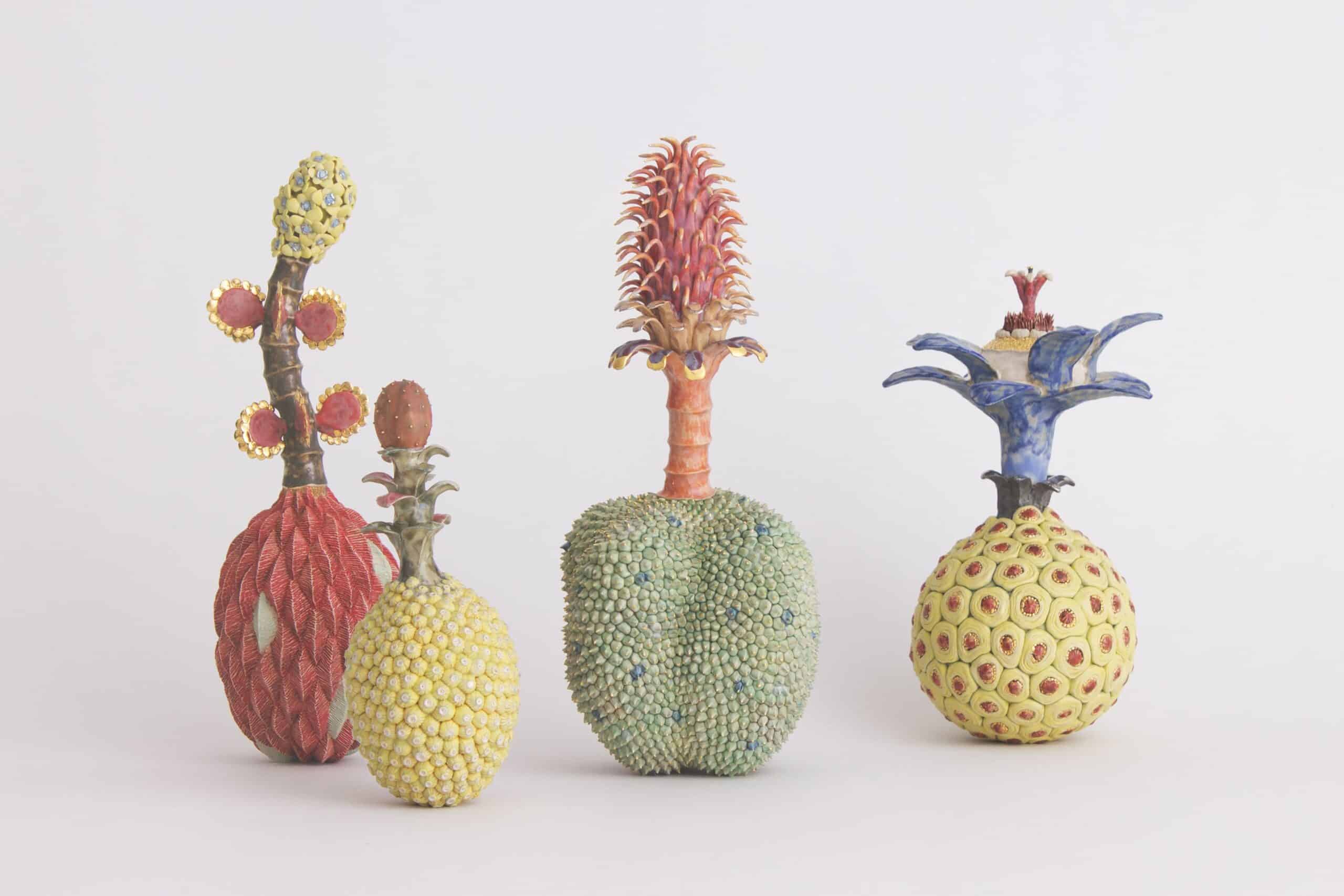
Just as an actor embodies someone else’s intentions in a role, I believe that when we create in a state free from personal will—allowing form to emerge naturally—we can generate objects that seem to grow in harmony with their surroundings, just as plants do. Of course, simply reflecting on this process is already an intentional act, so contradictions inevitably remain. Nevertheless, it is essential for me to strive to preserve this absence of conscious will while creating, and this is why I choose not to represent animals.
They are a waking dream. Throughout my work, I have always wanted to convey the feeling of something alive, something animated by its own vital energy. Through my forms I seek to express the wonder and radiance that emanate from living beings. Just as in nature and in plants, I wish to create something deeply connected to that living world. If my work can become a source of serenity and comfort for someone, that would be an even greater joy for me: to allow a dream to live.
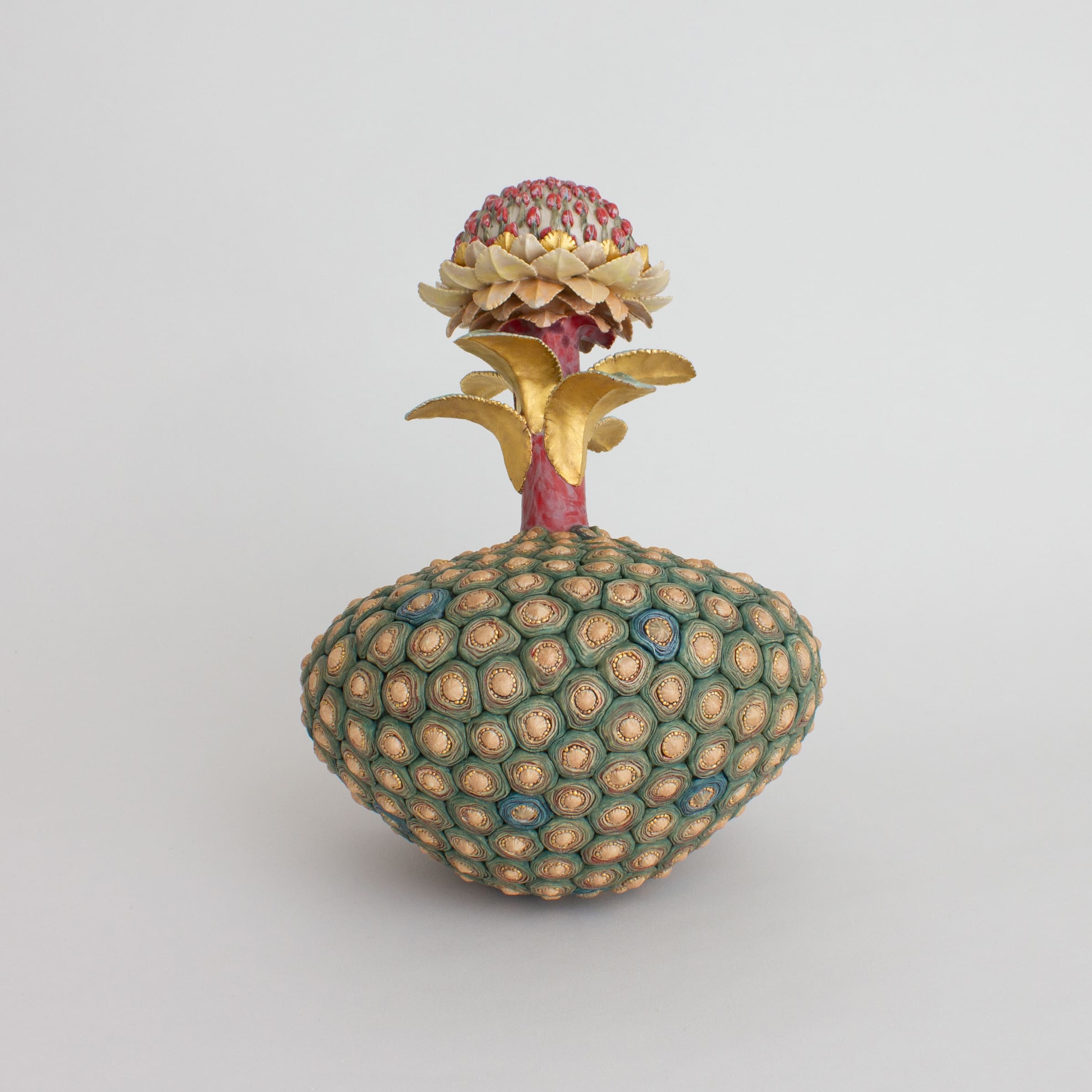
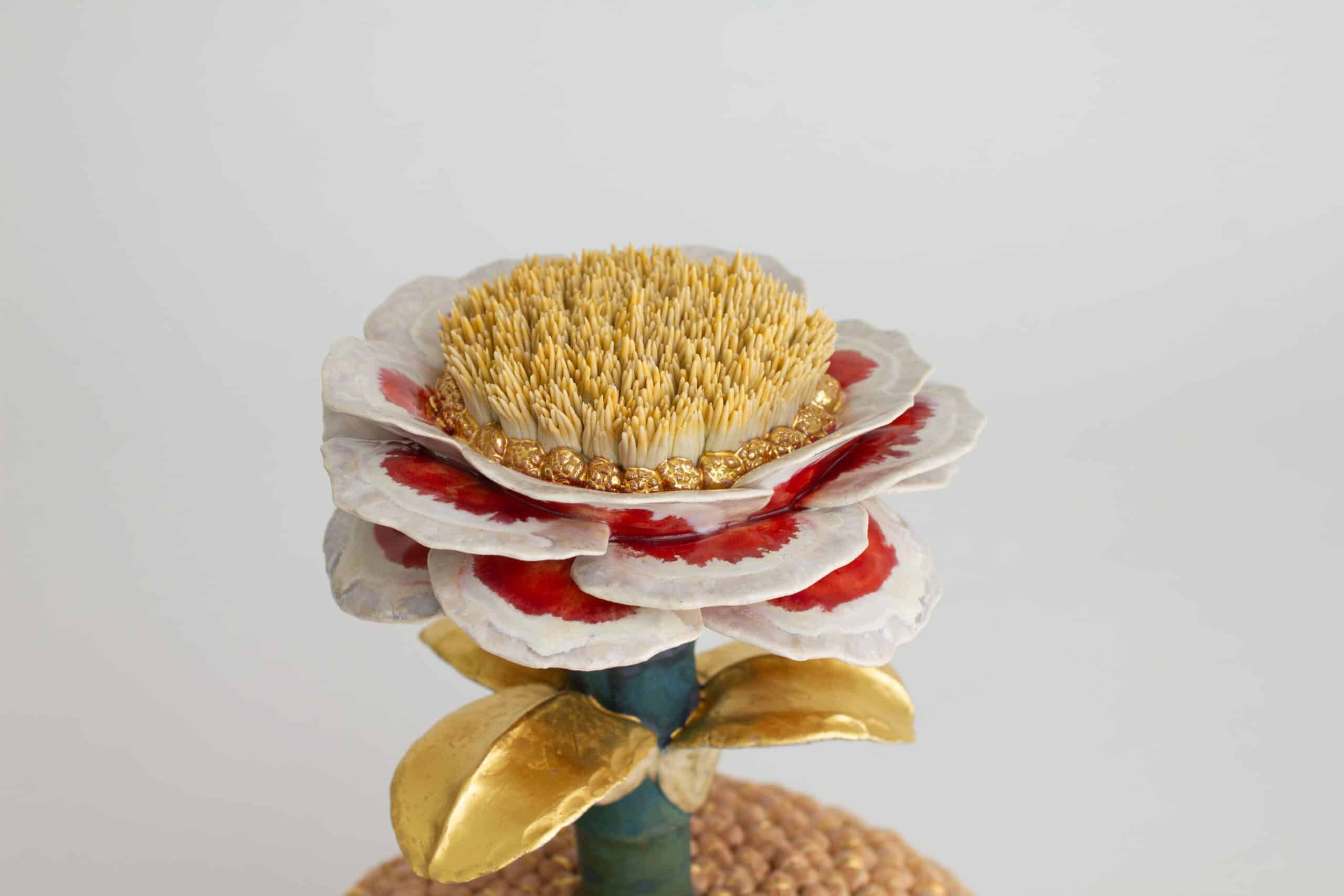
I first build the basic form entirely by hand using the coil-building technique. Then I create the small surface details separately before attaching them one by one to complete the piece. After the first bisque firing, I apply color with slips and glazes using a brush. Once the glaze firing is complete, I add gilding and silver detailing, finishing the work with a third firing at a lower temperature. At every stage of the process, I decide on form and color by listening to what I call the “will of the piece.” I simply follow what is in front of me; the work itself guides me, and that is how I move forward.
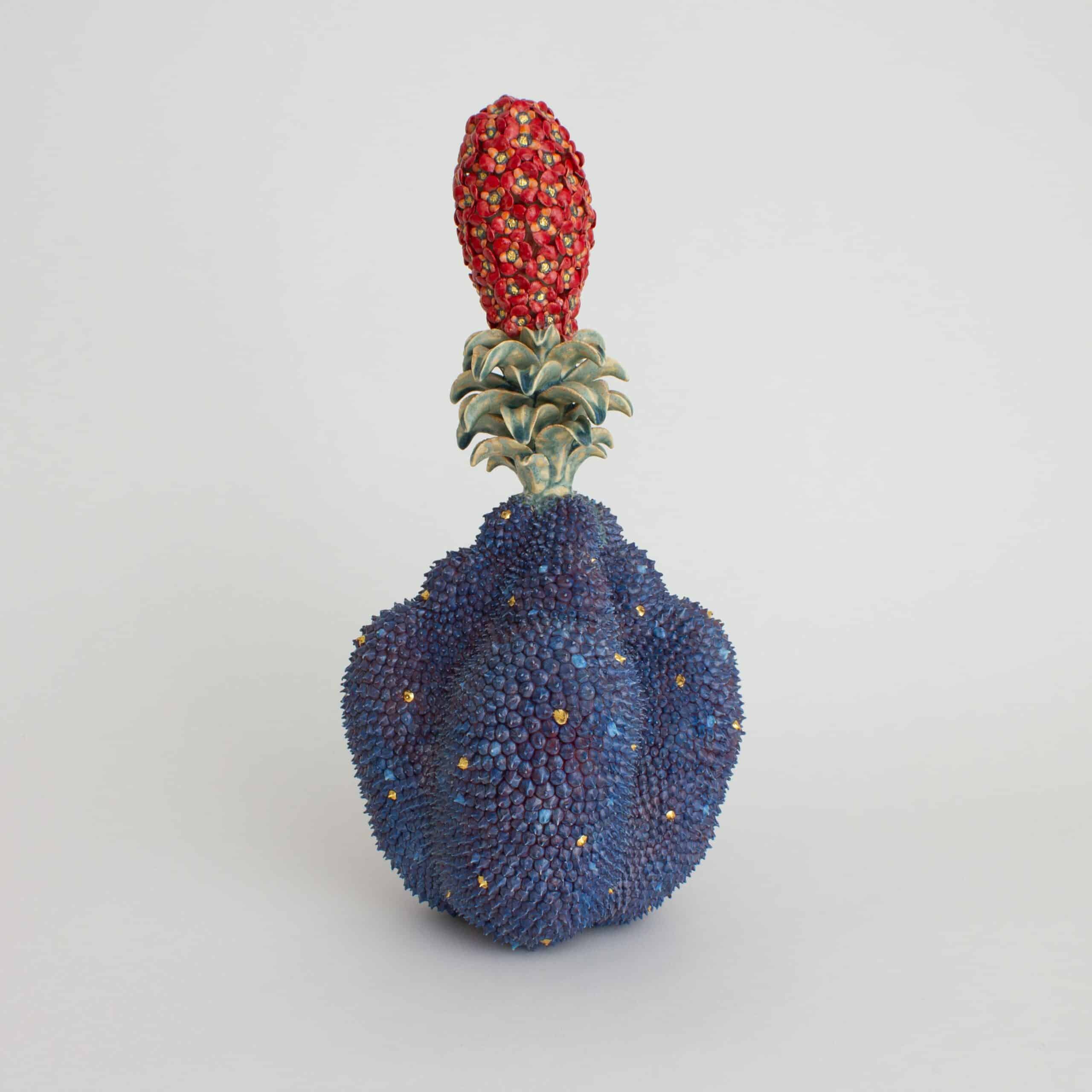
The initial impulse behind this body of work came from my fascination with the shape of the durian (Ed. note: a large tropical fruit native to Southeast Asia) when I was a student. At the time, I did not fully understand why I was attracted to certain forms, but over the years I realized that what fascinated me most were structures based on the Fibonacci sequence and the Golden Ratio as they appear in nature. Although my work has a strong visual dimension, my primary desire is to recreate the harmonious aesthetic sensation that nature gives me, while interpreting it in my own way.
SMF: How important is craftsmanship at every stage of your practice?
I produce every work entirely by myself. Handcraftsmanship is essential to my practice. My motifs are inspired by nature. In plants, for example, many repeated leaves and petals may appear identical, but in reality no two are ever exactly the same. I believe this is precisely what makes them feel so natural to my eyes, and that is why I make every single element by hand without using molds. I live according to a natural rhythm and try not to impose a predetermined intention when creating repetitive parts, allowing them to emerge spontaneously instead. At present, I do not work with assistants because I want to experience this sense of “naturalness” directly through my own hands as I create.
Quando il mecenatismo ti fa innamorare dell’arte: nasce “L’arte in prima persona”