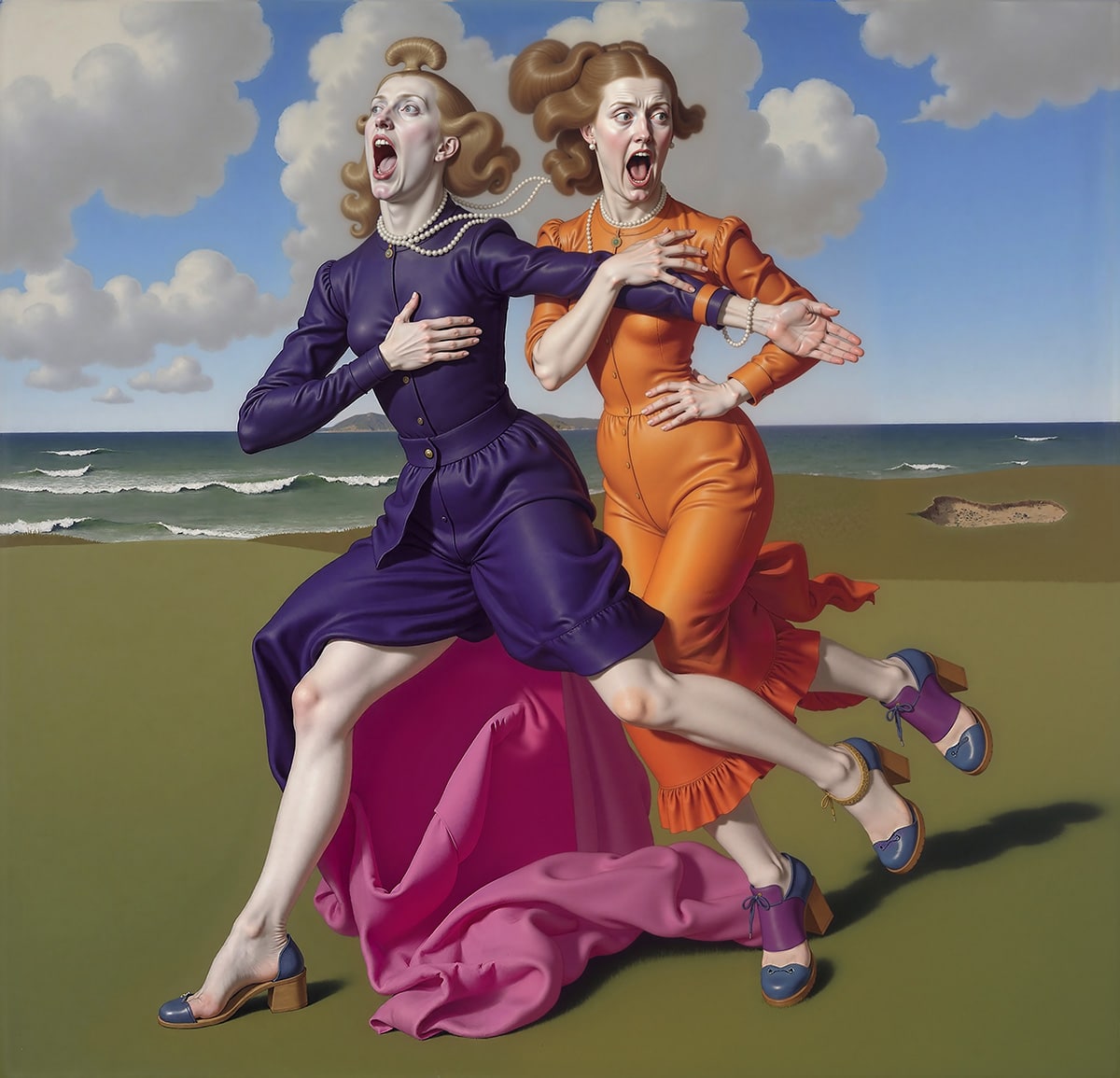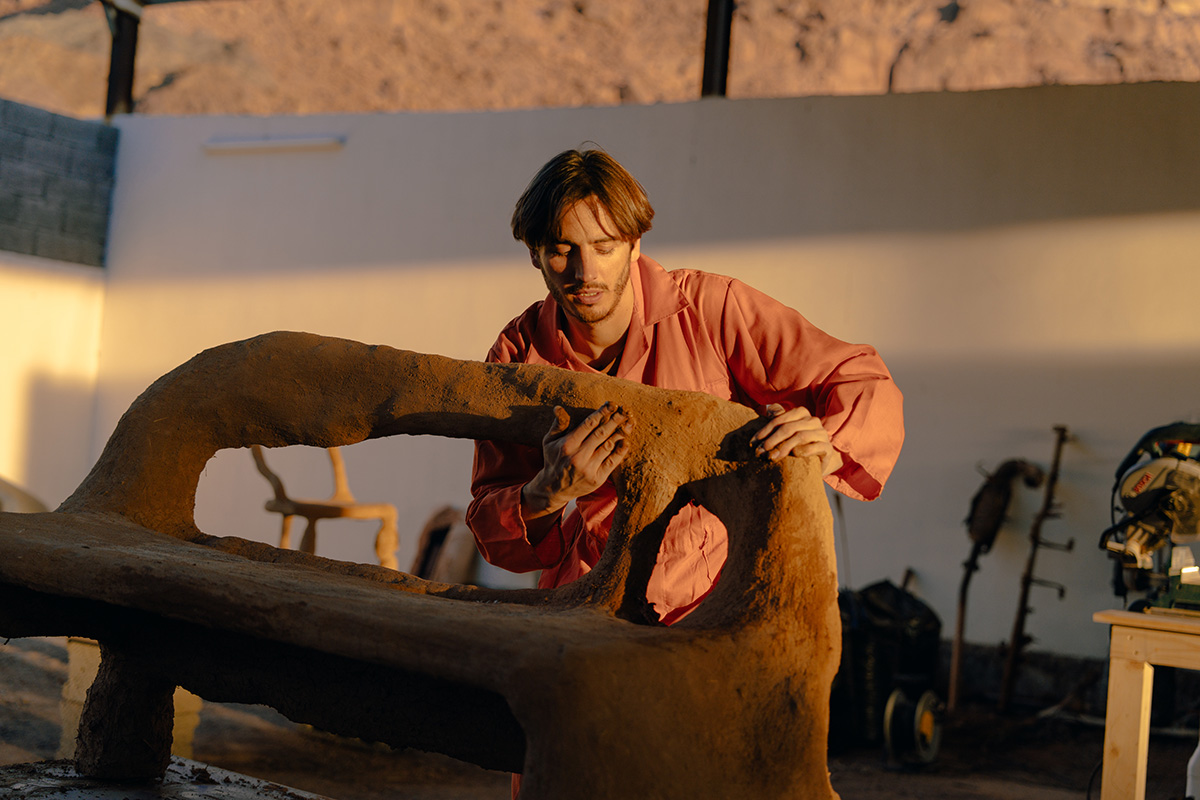
The cosmopolitan painting of Wolfe von Lenkiewicz brings Magritte into the digital age and captivates audiences. Between a Parisian runway and an international exhibition, the artist transforms masterpieces from art history into prêt-à-porter icons for artificial intelligence, blending classical brushwork, digital algorithms, and echoes of haute couture.
Sabino Maria Frassà
Between classical brushstrokes, digital algorithms, and virtual runways, an aristocratic artist reinterprets Magritte in the age of Instagram. Wolfe von Lenkiewicz—a descendant of Baron von Schlossberg, court painter to Ludwig II of Bavaria—turns the masterpieces of art history into prêt-à-porter icons for the age of artificial intelligence, bringing the taste of luxury and haute couture into the heart of the contemporary imagination and winning over audiences far beyond Europe. His creations—impeccable in their execution—feed on the past to transform it into an object of contemporary desire, weaving together learned references and high-impact imagery. Lenkiewicz winks at the digital public while also engaging the worlds of luxury, fashion, and communication: paintings suspended between Magrittian imagery, artificial intelligence, and the glossy language of advertising campaigns. Nothing is left to chance: every work is conceived in formats that perform best on social media, from Instagram’s iconic square to the new vertical imposed by the algorithm, thus becoming a perfect bridge between artistic tradition and new visual codes.
Alongside institutional exhibitions, the artist has consolidated his international market and positioned himself within elite collecting circles. It is no coincidence that he has also crossed into the realm of haute couture: in 2023 he collaborated with the platform SHOWstudio, reinterpreting in real time the collections presented during the Paris S/S Haute Couture Week, in a project that combined illustration, painting, and fashion without tying itself to a single maison, instead engaging with the entire Parisian haute couture scene.
Lenkiewicz looks with admiration to Renaissance workshops yet moves effortlessly in the present, ready to shape his art for the times and for his clients. His process of adaptation and reinterpretation challenges traditional conventions and reflects on the fluidity of the image in the technological age, transforming icons of visual culture—from the historical avant-gardes to pop aesthetics—into new narratives with a strong conceptual and provocative component.
Internationally recognized, he has exhibited in prestigious institutions such as the Musée Quai Branly in Paris, the Ateneum Museum in Helsinki, the National Museum in Stockholm, and the Palais des Beaux-Arts de Lille. We interviewed him to better understand a language that, while rooted in the imagery of the past, continually updates it and establishes him as one of the most fascinating and controversial figures on the contemporary art scene. One may still wonder whether his game with art history is a genuine reinvention or rather a careful operation of commercial restyling for the digital age. But one thing is certain: whether square or vertical, his work will always find the right framing.
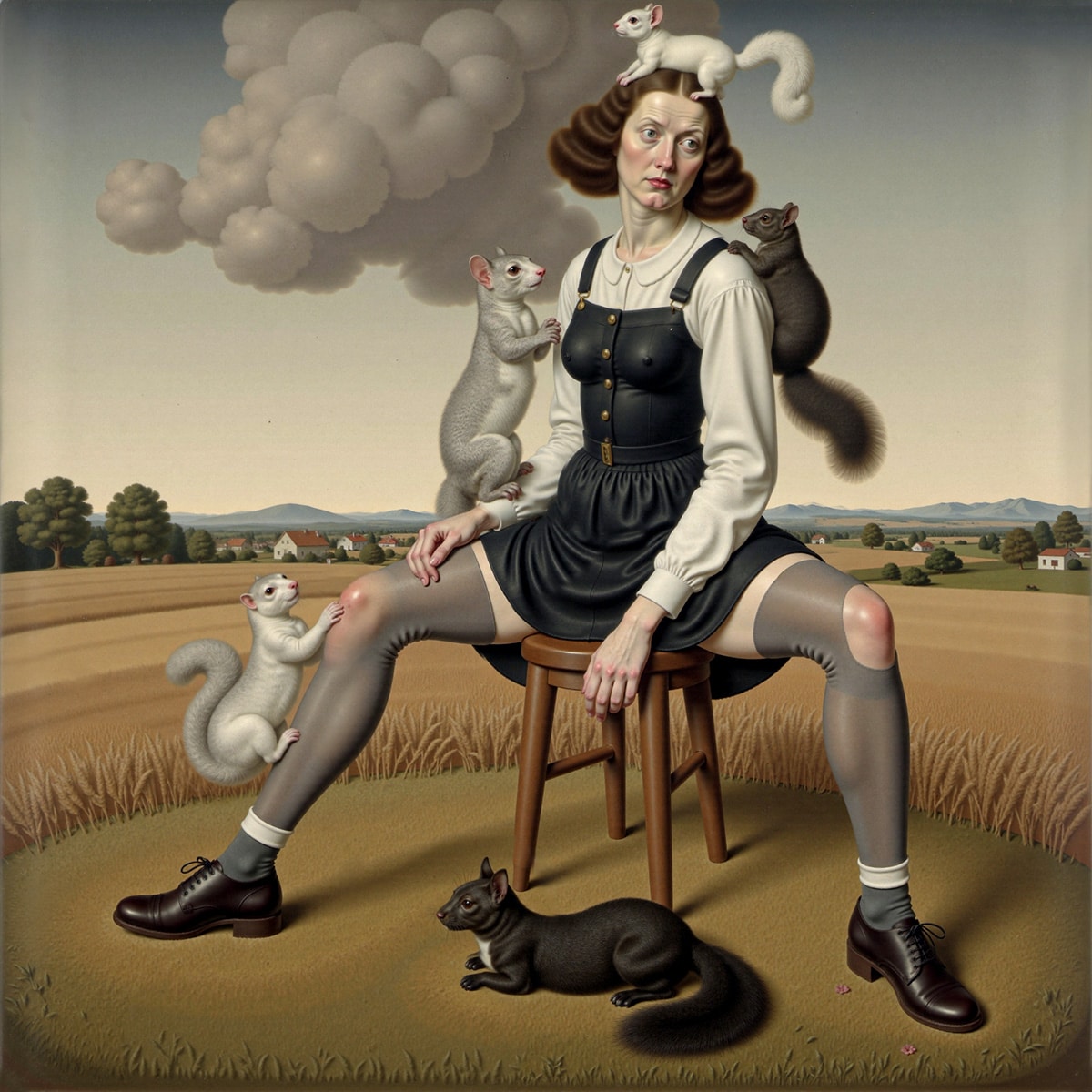
My family’s artistic legacy has always been a conscious presence in my path, but my work represents both a continuation of and a break from that tradition. My great-grandfather was the court painter to King Ludwig II of Bavaria and operated within the canons of his time, adhering to the conventions of official portraiture. I, instead, feel free to deconstruct and reconstruct visual language without aesthetic constraints tied to formal painting. However, I retain a deep respect for the technical precision and craftsmanship of the great painters of the past, elements I consider fundamental to my research.
Leonardo da Vinci has always been an indispensable reference for his ability to fuse science and art, while Théodore Géricault fascinates me for his extraordinary psychological depth. As for contemporary art, I find the intersection between technology and painting particularly stimulating, and I am drawn to artists who explore new visual languages, moving beyond traditional forms.
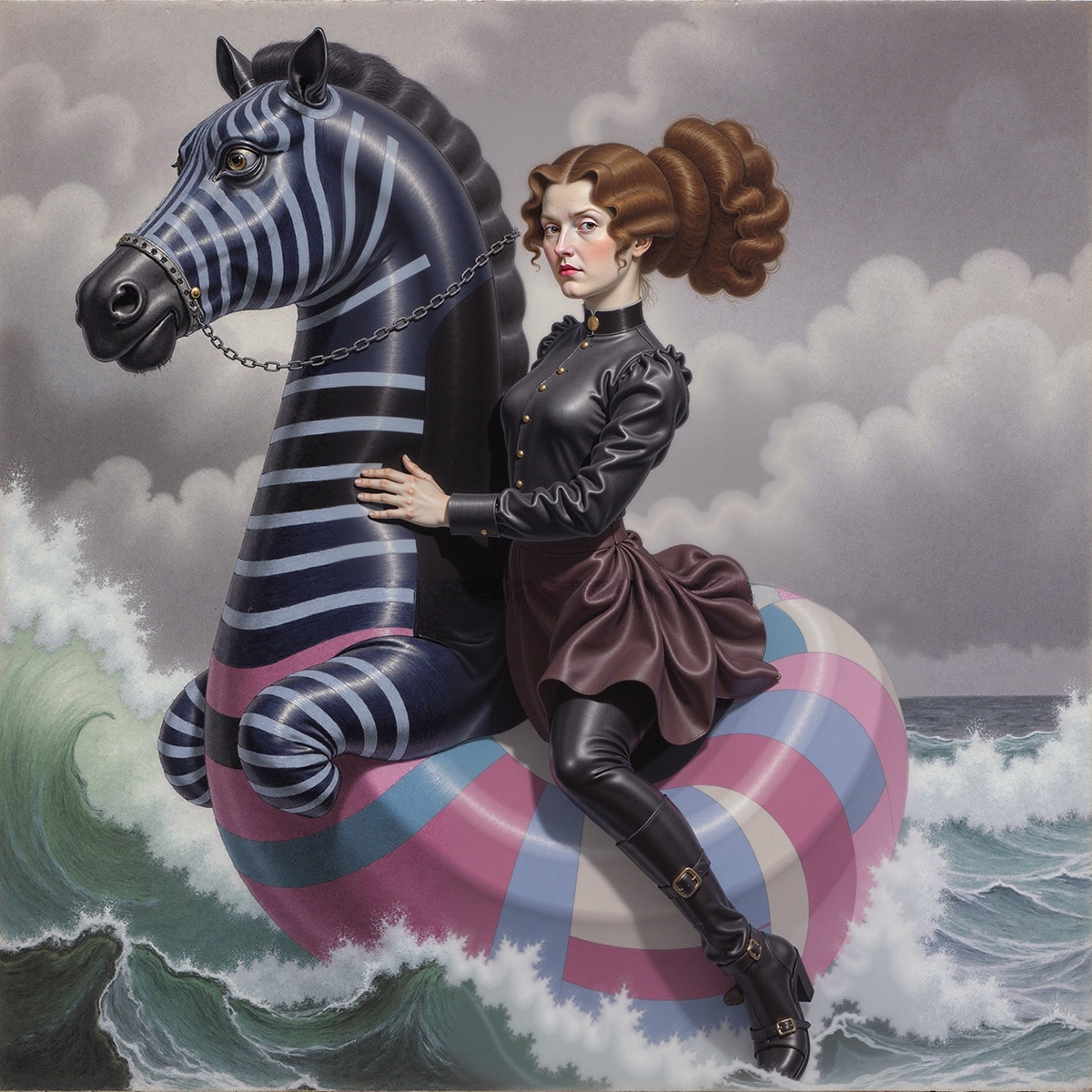
The selection of historical elements in my work is an intuitive but always conscious process. I am attracted to moments in art history when an aesthetic or an idea was in transition, when an artistic movement was about to evolve into something new. The Flemish school, Romanticism, and early twentieth-century abstraction are constant references for me—not as models to replicate, but as sources to filter through my own language, intertwining them with contemporary themes.
My hybrid approach arises from the need to overcome the limits of traditional painting without betraying its history and language. I began by studying classical oil-painting techniques, delving into Renaissance methods and the atelier system, but at the same time I have always been fascinated by the possibilities offered by technology. Artificial intelligence and diffusion models allow me to experiment rapidly and explore new forms, not as substitutes for painting, but as tools to expand the creative process. In a way, this use of AI is a contemporary version of the Renaissance sketch. A decisive moment in this evolution was the shift from reinterpreting historical compositions to creating entirely new works, free from direct references.
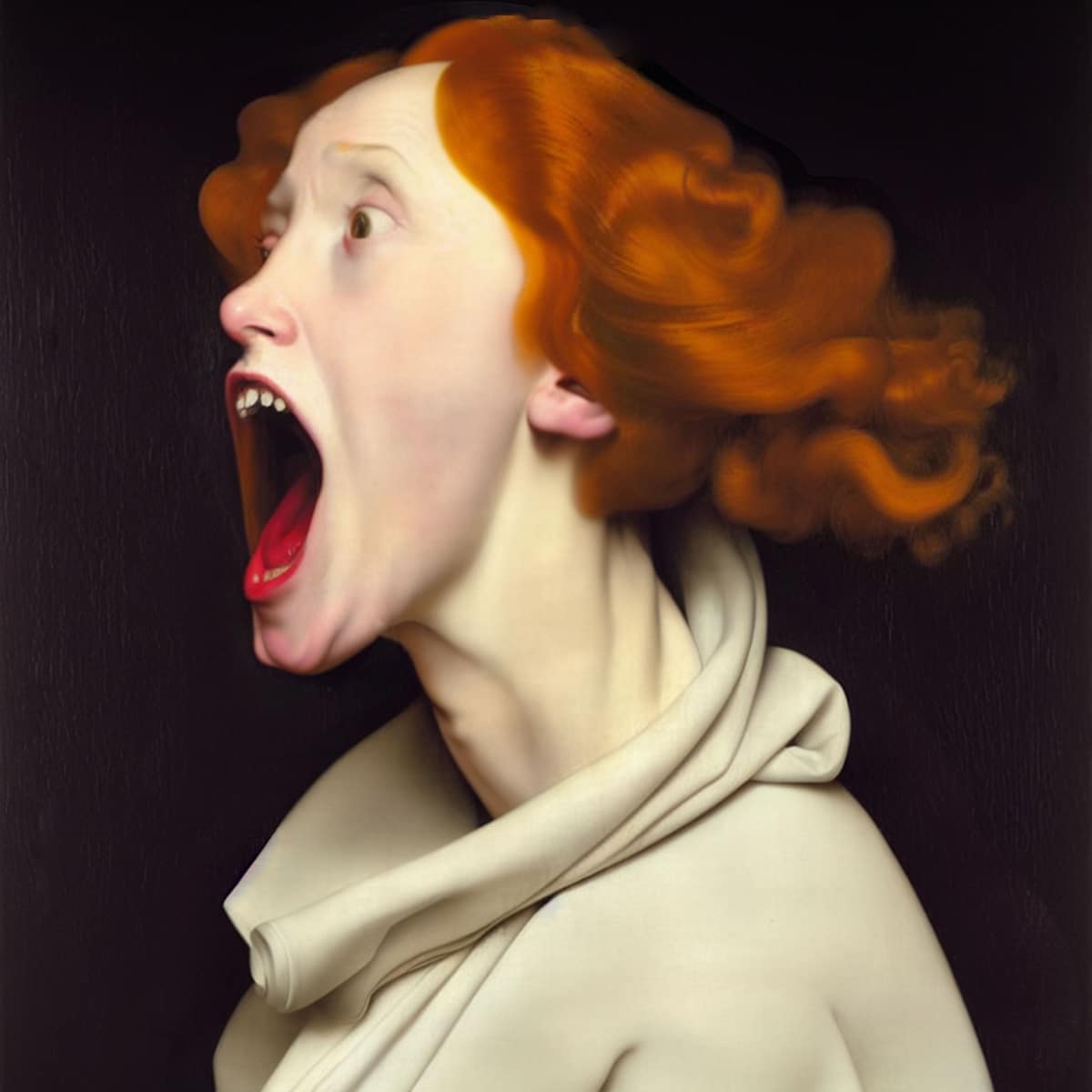
I like that. Certainly there is the idea that history is not a linear process but a cyclical one. The great questions of the past—power, identity, representation—are still extremely relevant today, and by reworking them I create a dialogue between different eras. My works suggest that the past is not a distant, immutable entity but a living element that continues to shape and influence our present.
Artificial intelligence and algorithmic art challenge traditional notions of authorship, but I believe the role of the artist is more essential than ever today. There is a false perception that AI generates images autonomously, when in reality it requires direction, selection, and refinement. My process is deeply artisanal: I train models, create and modify datasets, guide the AI’s output, and translate it into a physical work.
If anything, AI makes authorship more layered, not less relevant. In this new paradigm, the artist is not only a creator but also a curator, an editor, an orchestrator of possibilities. In the age of machine learning, the artist’s task is to preserve the human touch, to infuse intentionality, interpretation, and emotion into what would otherwise be merely an algorithmic expression.
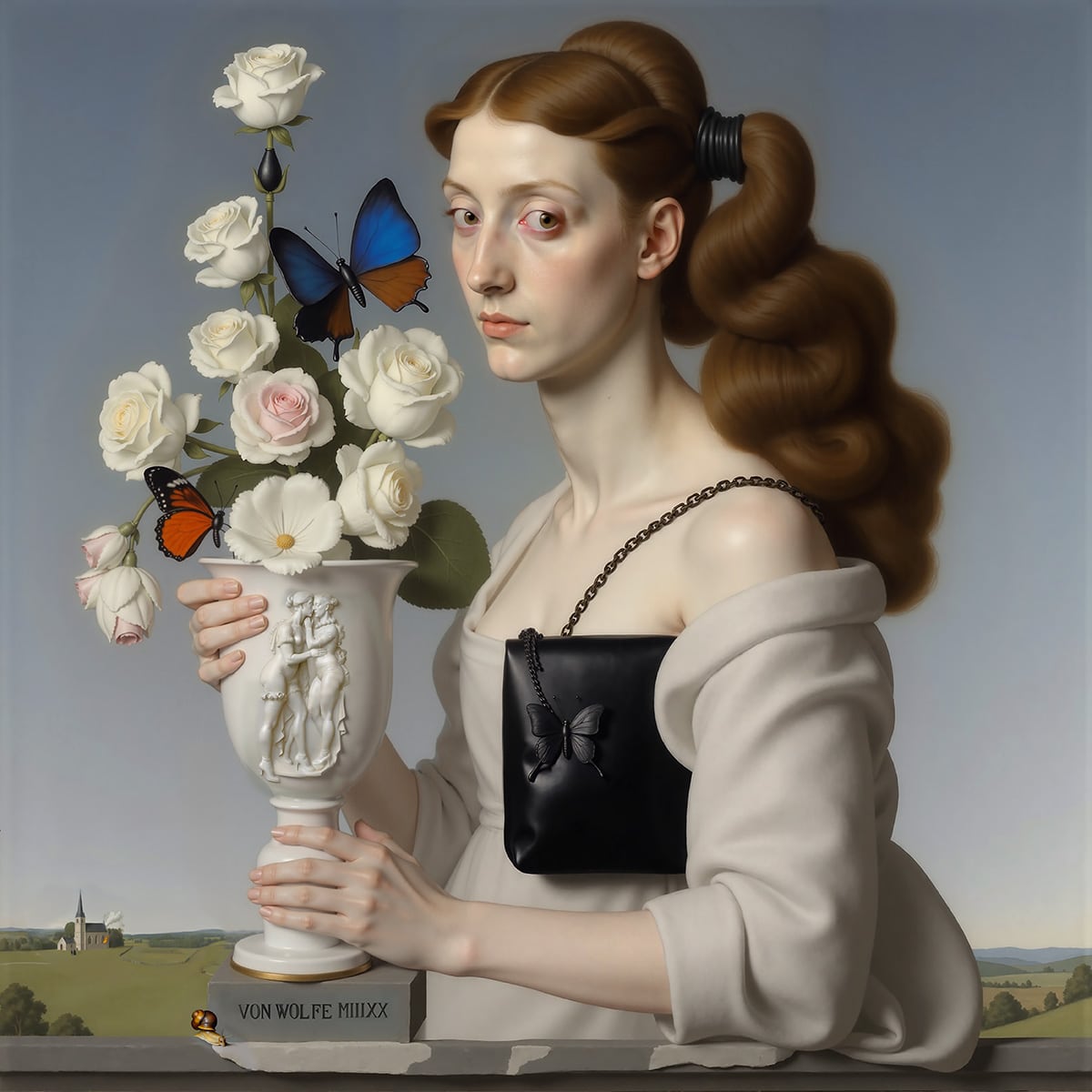
The balance between chaos and order is a fundamental component of my works. I often consider them a kind of visual archaeology, in which layers of meaning accumulate, overlap, and sometimes contradict one another. This stratified effect arises both from my creative process and from the themes I address. AI-generated elements introduce a degree of unpredictability, almost like a raw and uncontrolled unconscious, while my task as a painter is to refine, remove, and highlight. The result is a controlled chaos—works that seem to develop organically over time, as if they carried their own history within them. This tension between structure and disorder is what gives energy to my paintings, preventing them from appearing either too rigid or excessively chaotic.
Ambiguity is central to my work because it forces the audience to engage, to ask questions rather than receive immediate answers. My works often contain elements that seem familiar but are distorted, subverted, or reinvented, creating visual tension. Figures may appear powerful and vulnerable at the same time, beautiful yet also unsettling.
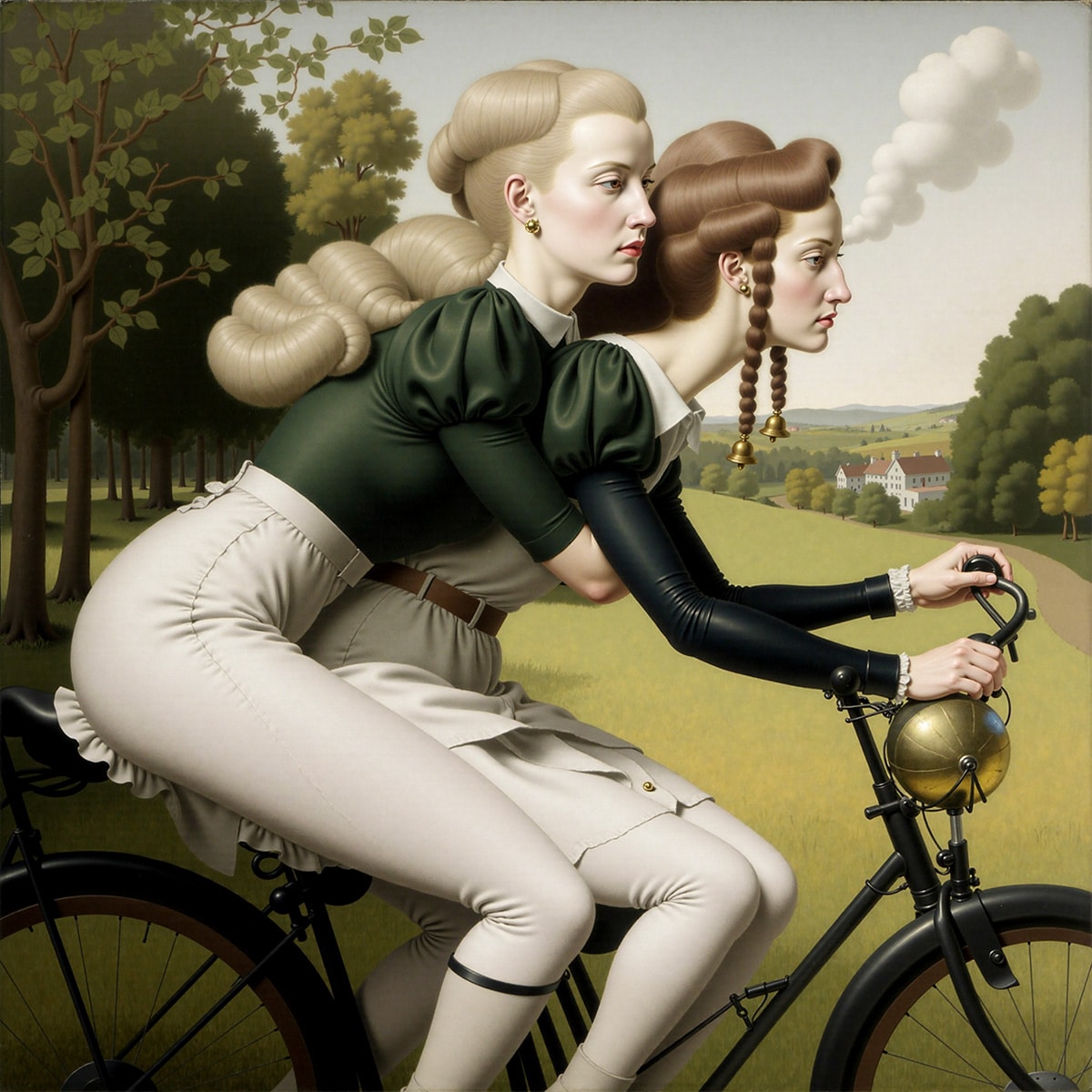
Identity, in particular, is a concept I prefer to leave open. Rather than offering a single, fixed representation, I allow multiplicity and contradiction to emerge. My goal is not to impose a meaning but to create an interpretive space for the viewer. By leaving some things unresolved, I encourage a dialogue between the work and the observer, turning them into an active participant in the artistic process.
Over the next ten years I see my research expanding in several directions. I am particularly fascinated by the potential of artificial intelligence in the three-dimensional realm, in augmented reality, and in the development of new physical materials capable of bridging the gap between digital and traditional media. Painting itself may transform—not so much in style as in the way it is perceived and experienced. I imagine works that exist simultaneously as physical objects and as immersive, interactive experiences. From a historical perspective, I am interested in periods of transition—those moments when one way of seeing the world gives way to another. The digital age represents one of these crucial turning points, and my goal is to explore how painting can maintain its vitality within this new reality. The tension between tradition and innovation is what excites me most, and it is precisely at this intersection that I see my work developing.