Over the past few years, Fulvio Morella has developed an artistic practice in which wood, Braille, textiles and light become tools for exploring boundaries, perception and relationships with others. Among the most significant milestones in his recent career is “I limiti non esistono” (“There Are No Limits”), a project developed between Paris and Milano Cortina 2026 through exhibitions, performances, light, encounters and artist’s books.
This conversation starts precisely from that point, but looks primarily behind the scenes: how an artist thinks when a major project comes to an end and another begins; what happens to ideas that do not immediately take shape as artworks; and why, alongside major opportunities, a portrait, an etching or an artist’s book can be just as meaningful.
Because what may appear from the outside as a succession of large and small projects is, for an artist, often a single ongoing journey that continues to evolve.
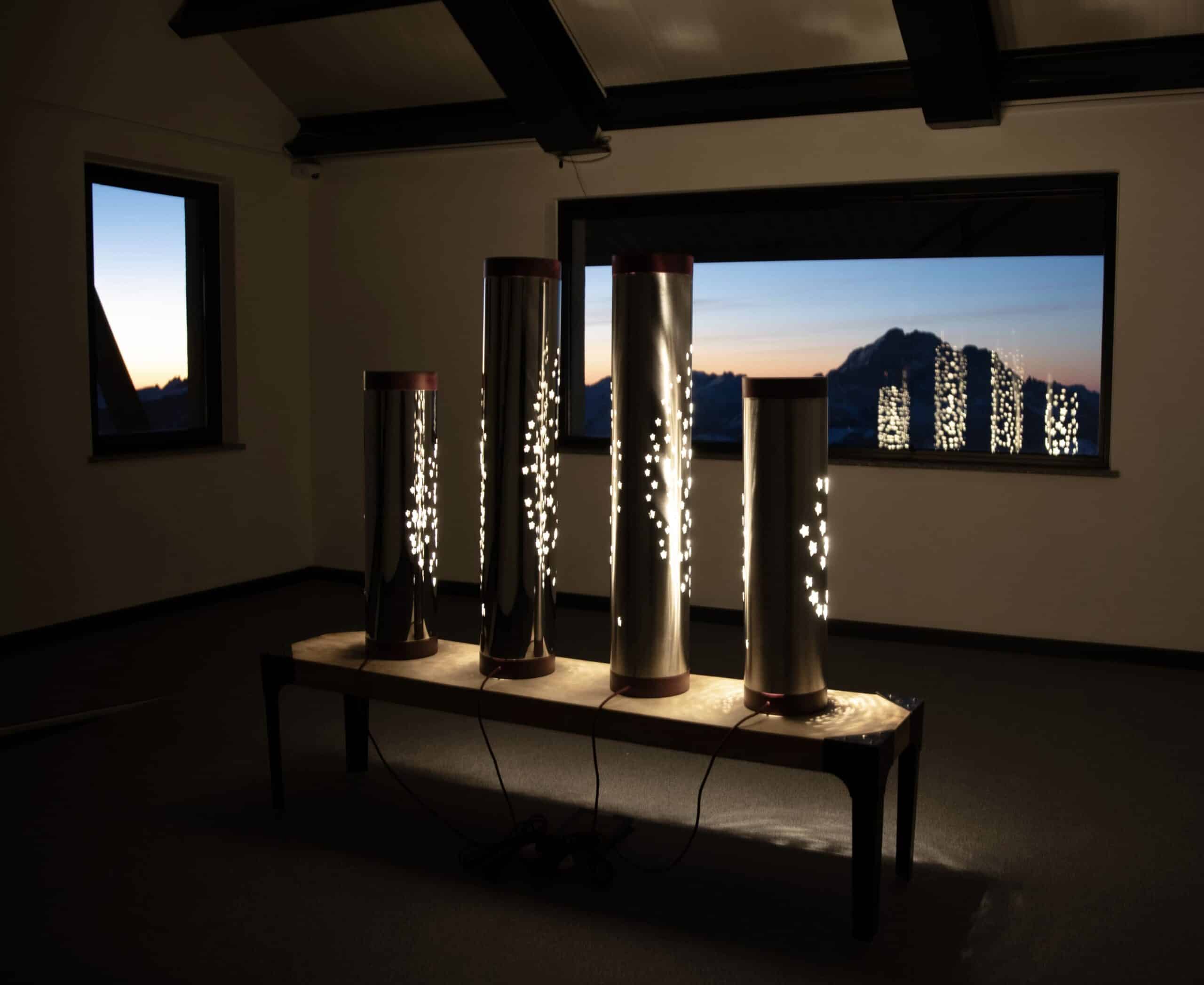
I limiti non esistono It was a project I had strongly envisioned and carefully developed across space and time, spanning almost two years and encompassing exhibitions, performances, light, artist’s books and many different experiences. When we dismantled everything on 5 April, I didn’t feel a sense of emptiness. Rather, my mind was full of thoughts and a sense of satisfaction, but without the tension that had kept me moving in the same direction for so long. However, I didn’t really have a horror vacui, also because what the public sees of an artist’s work is only the tip of the iceberg.While all this was happening, projects that had begun years earlier continued to develop, and are only now coming to fruition.
I enjoy working this way, with long-term projects: ideas evolve, come to a standstill and then start again. Perhaps that is why there is never really a drop in adrenaline: while something is coming to an end, something else has already begun or is about to start again. This is what keeps art alive, as it so often emerges from dialogue with new places and new people.
There is always a very long planning phase, during which an artist is never alone – or at least should never be. There are curators, institutions, promoters and many different people to engage with. Dialogue is always the starting point. Countless attempts are made: some work, many others don’t. We have to accept that; it is part of the process. Nor do I believe that projects that fail to come to fruition today are a waste of time. They are still ways of thinking, rethinking and moving forward. So, if I had to choose one word, it would be: sowing seeds.
I can develop several ideas simultaneously. Bringing them to life, however, is another matter. I am someone who needs long periods of intense focus. Then come what I call “moments of synthesis”: very intense periods during which I can work for two or three days almost without interruption, day and night. It is as though everything that has built up beforehand suddenly needs to find its form.
Afterwards, though, I need time for things to settle. And perhaps this is where there is a contradiction with my technical background. In art, I work differently. I’m afraid I’m one of those people who needs to be inspired. There are days when forcing myself is pointless: I could spend hours in front of a piece without getting anywhere. So I’ve learned that even doing something else is part of the creative process.Working on something else, focusing on completely different things, even temporarily stopping thinking about a particular artwork, allows me to clear my mind. Then the right moment comes, and everything suddenly falls into place again. For me, that is the moment of synthesis.
Not necessarily. In fact, I believe one of the risks is thinking that a major project must inevitably be followed by an even bigger one. Artistic work doesn’t function that way for me. There are times when you need to build something highly complex and others when you simply need to return to the artwork itself, to the material, to the gesture.
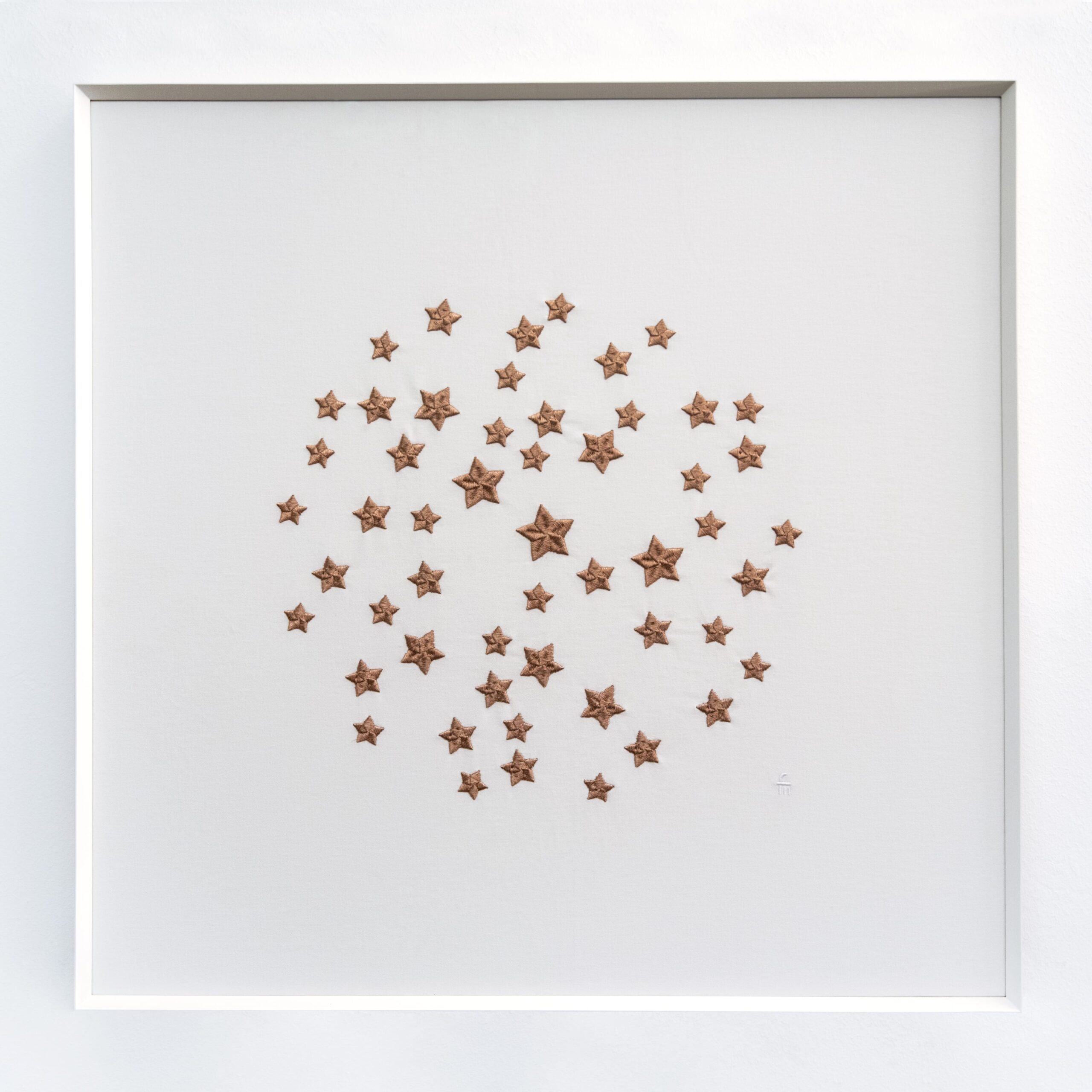
Sometimes, a piece of work that emerges almost on the sidelines allows you to experiment with something you might not have had the courage or opportunity to explore within a major institutional project. And perhaps that idea, which initially seems marginal, becomes the starting point for something that will take shape much later. So, whenever time allows, I also work on spontaneous, independent pieces. That was how Braille Stellato came into being.
Sometimes a single artwork comes into being simply because I meet someone, an opportunity arises, or I feel there is something worth exploring further. In recent months, I have been particularly pleased to have completed three of the four independent works that meant a great deal to me and that I had been thinking about for some time. Two of them are portraits, including the Portrait of Martina.
I actually believe it goes back a long way. My entire relationship with art, in a sense, began with a painting I made when I was twelve. Then life took me in a different direction, and my artistic journey followed very different paths. Yet, deep inside, I held on to this almost elementary association: being an artist also meant being able to paint a portrait.
Over the years, I have worked with wood, woodturning, Braille and textiles, using languages that might seem to take me a long way from the representation of the human figure. And yet, it was precisely this distance that brought portraiture back into focus.
I don’t like talking about issues being “resolved” in art. I prefer to think that there are questions that keep coming back, perhaps years later, when we have different tools at our disposal to address them.
At a certain point, I therefore asked myself: how can I create a portrait today, using the artistic language that has become my own in the meantime?
For me, a portrait doesn’t necessarily mean representing a face, but rather telling someone’s story as I see it or as it is told to me. So, before creating the artwork, there is always a moment of getting to know someone and listening.
This time, I had the opportunity to work with a father who had lost his daughter and to offer him a space in which to tell her story through one of my star portraits, a body of work I have been developing for years. It was a very delicate process, built around words, thoughts and memories.
Shortly afterwards, a family approached me to commission a family portrait, and the process was much the same. Perhaps this is what interests me about portraiture: not describing what someone looks like, but trying to convey something of who they are.
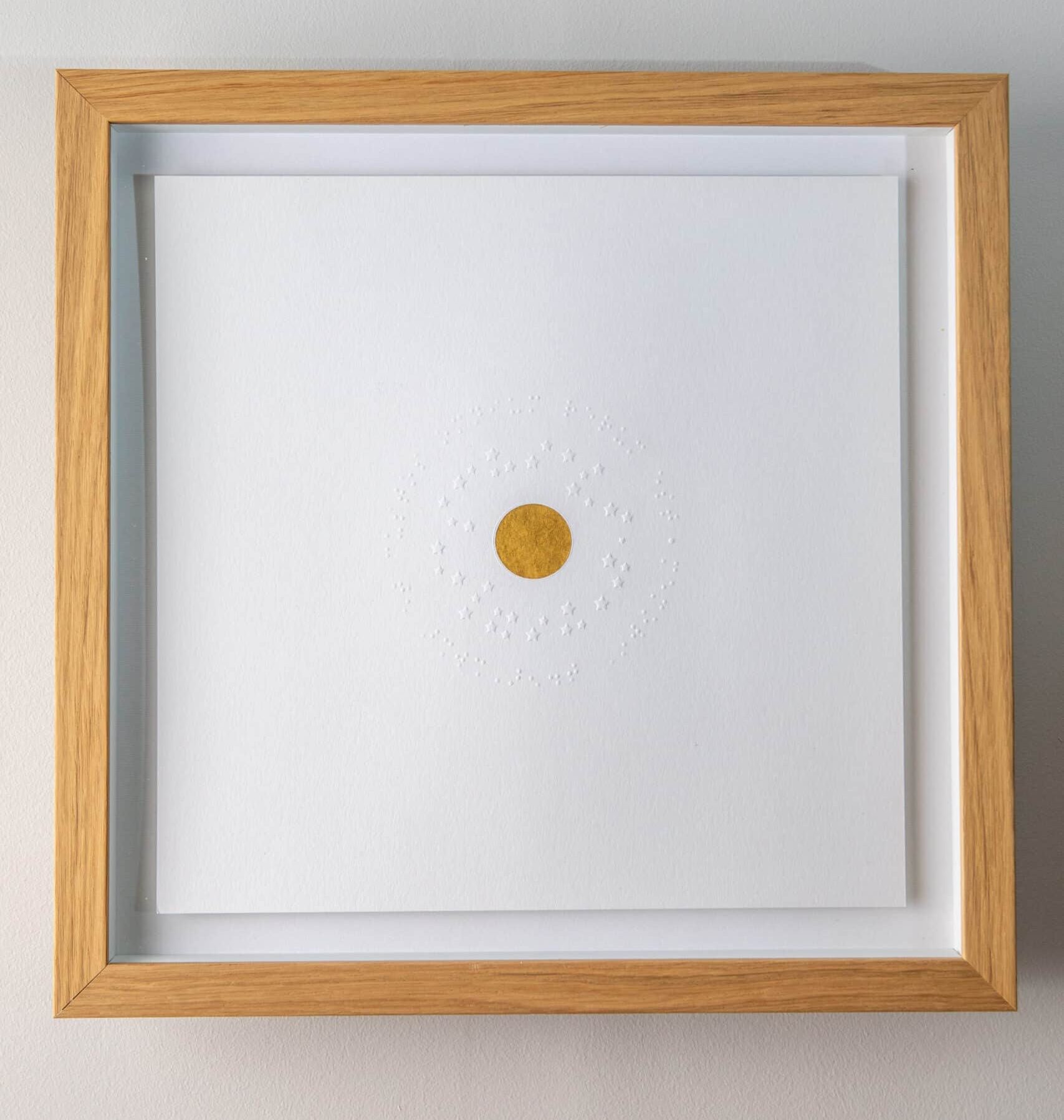
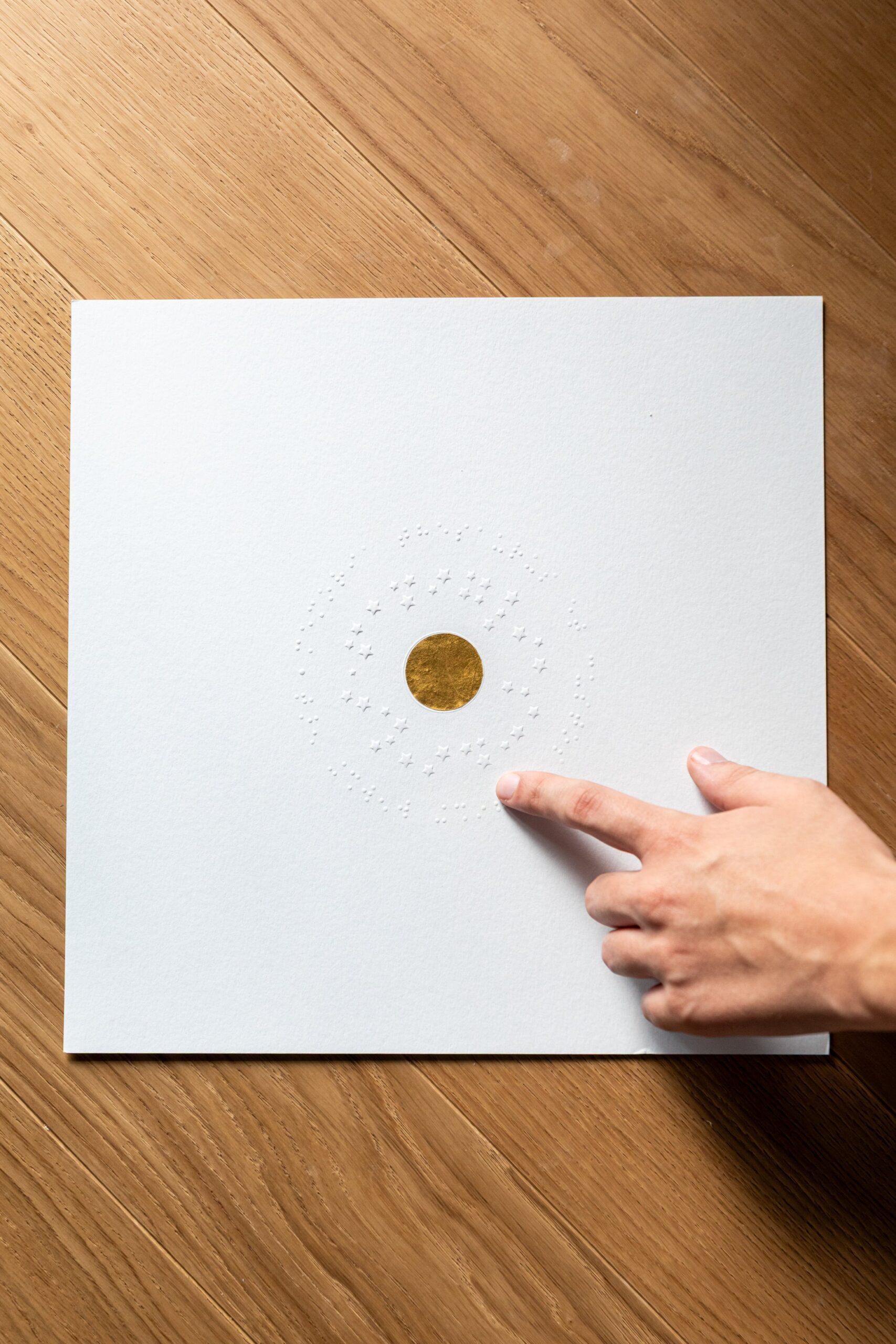
Then, almost through word of mouth, Schiavi S.p.A. asked me to create an etching multiple featuring gold leaf for one of the company’s anniversaries. I was intrigued because I had never considered “portraying” a company before. However, I realised that the process was not so different: here, too, it was about listening to a story and conveying it through my own artistic language.
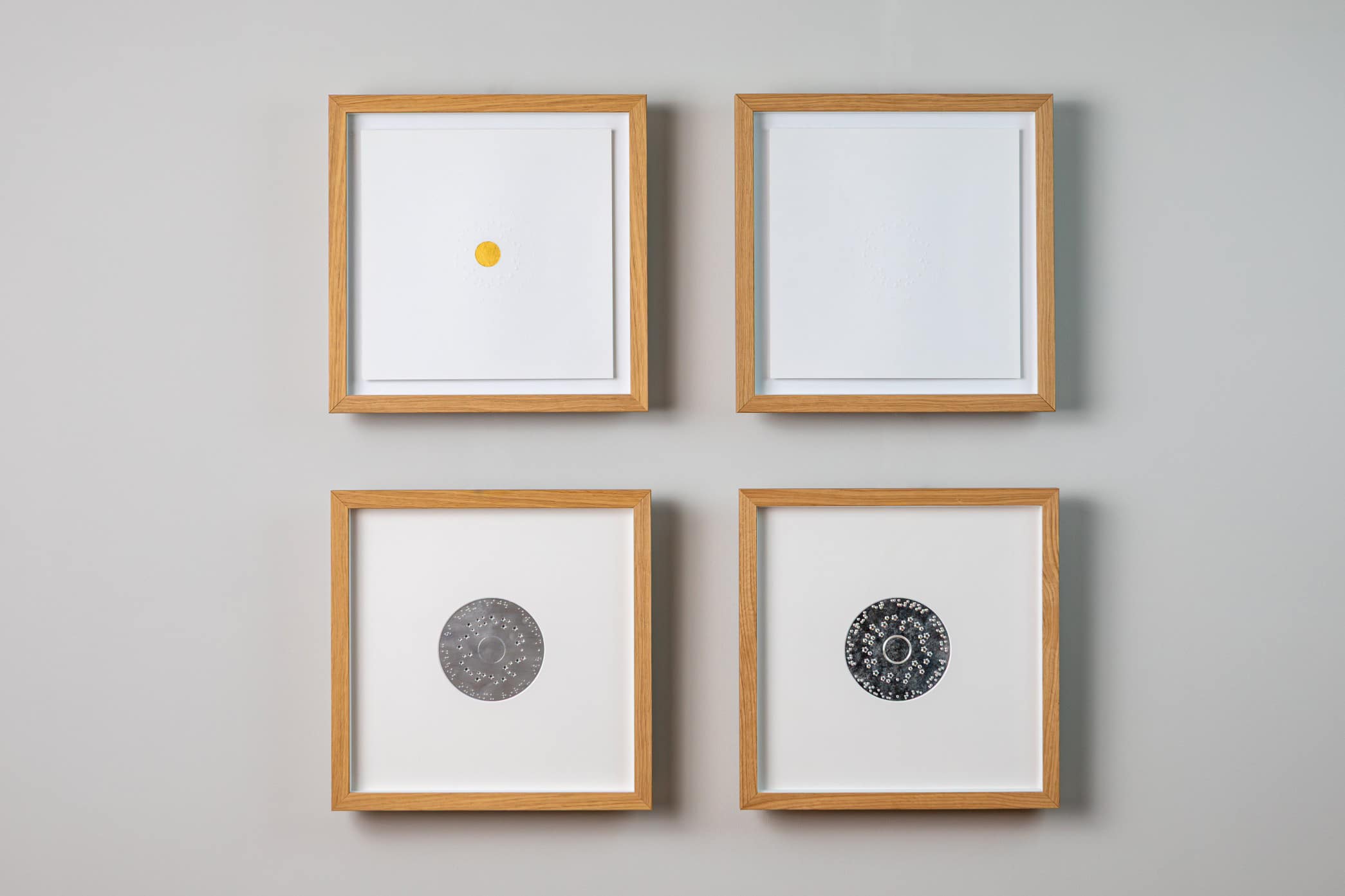
I have always given form to the words of great thinkers. So, drawing on the company’s long history, I set out to find an emblematic phrase that could capture the meaning of two centuries of memories preserved and passed down through generations. I found it in Cicero’s De oratore.: “Memoria thesaurus et custos omnium rerum est” – memory is the treasure and guardian of all things. So, not simply a motto, but an encouragement to preserve the past, allowing it to continue shaping the present and the future.
I like this idea because memory is not simply about remembering: it means preserving what has been, recognising its value and allowing it to continue to live on.
From a compositional point of view, I was fascinated by the idea of treating the anniversary of 23 November, which runs through the history of the Schiavi family and the company, as the construction of a small universe made up of people, generations, relationships and experiences.
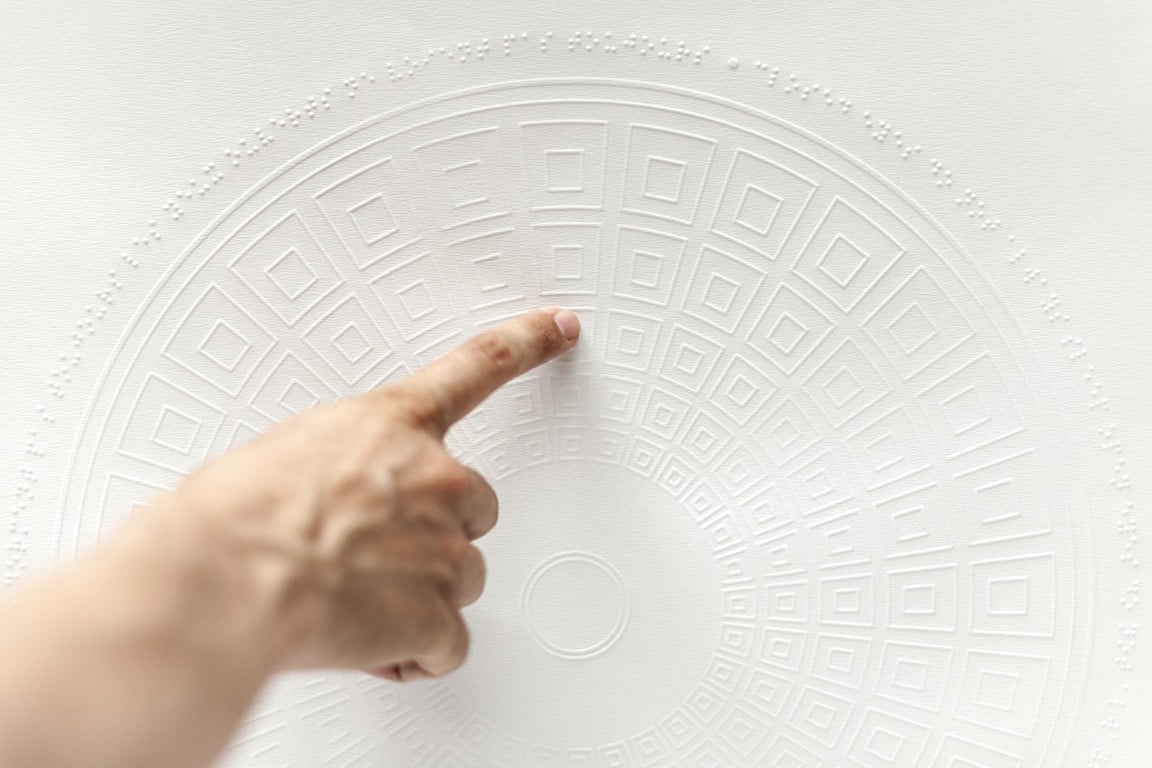
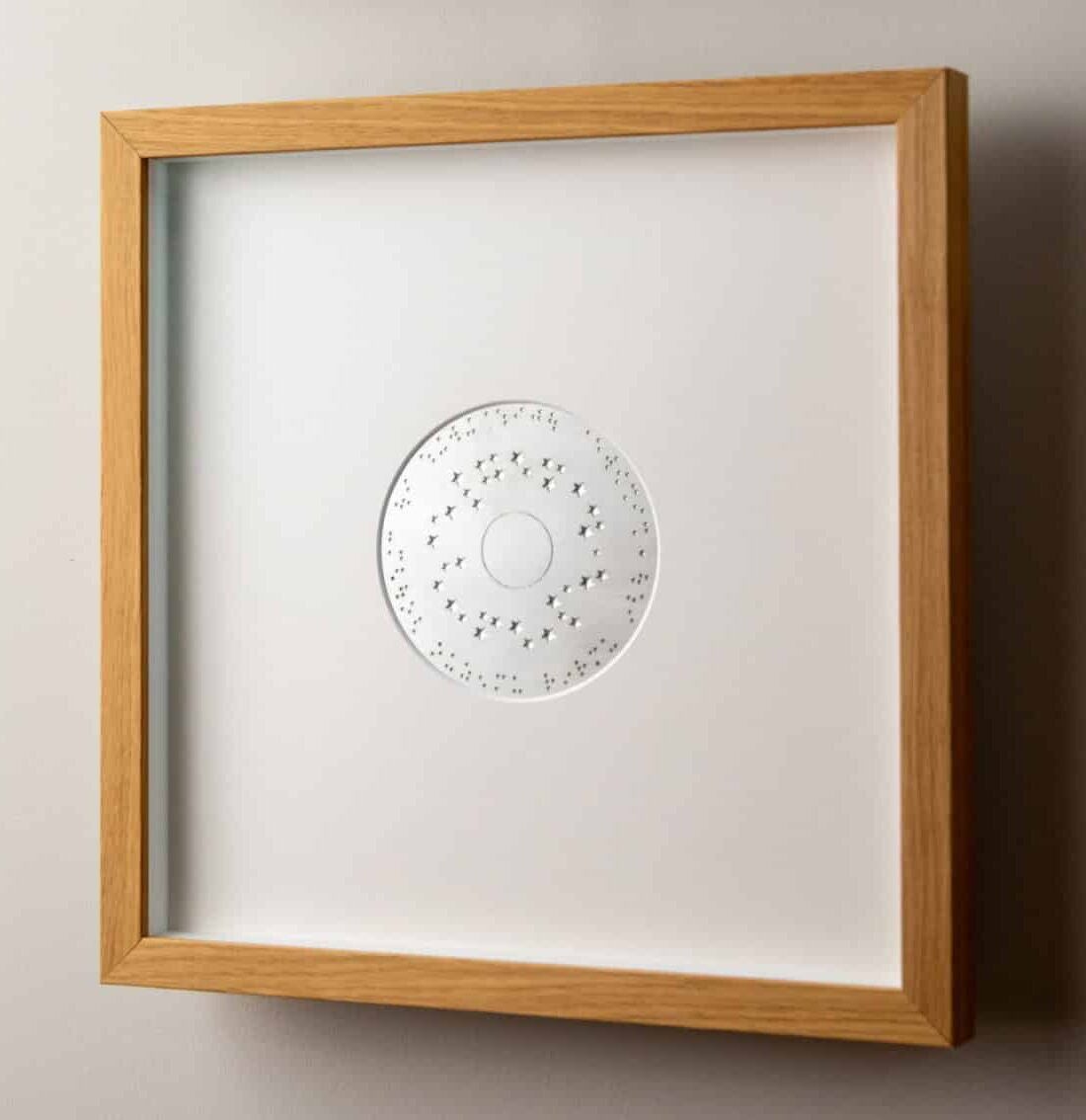
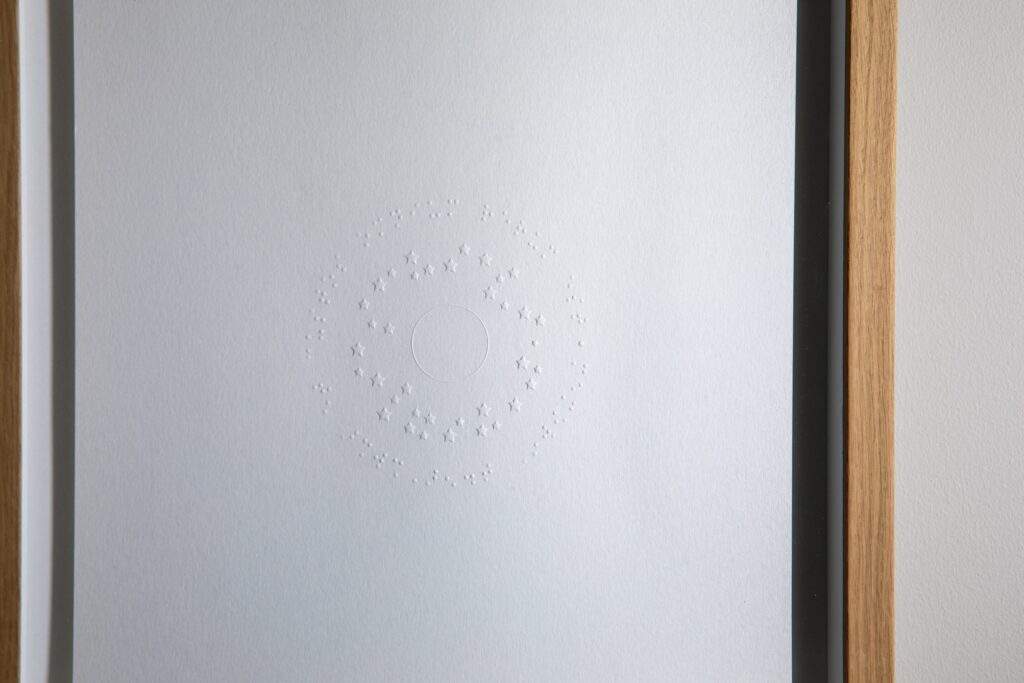
I therefore started with an image I had already worked on with Oculus, dedicato al Pantheon, arricchendola di un senso cosmogonico: intorno al sole compaiono stelle e pianeti, rappresentati attraverso i punti del Braille che animano questa preziosa calcografia realizzata in pochi esemplari. In questa prospettiva, celebrare una ricorrenza non significa semplicemente rendere omaggio a una successione di date, ma riconoscere un universo che si è formato nel tempo, si è stratificato e continua a espandersi.
It is a dimension that fascinates me. I naturally love unique pieces, but I come from a background in wood design, and perhaps that is why I have never seen uniqueness and repetition as being fundamentally at odds with one another.
A work can be reproduced without becoming anonymous. Many of my Braille works, for example, can be embroidered up to five times. I think of them almost as sculptures: there is a matrix, an idea, a form that can be repeated in a very limited edition.
Over the years, this exploration of repetition has taken many different forms. I have created multiples in paper, etchings and even chocolate works in collaboration with Guido Castagna. Very different materials, but all united by the possibility of allowing an idea to travel beyond a single object.
I love it deeply. I study it and seek it out everywhere. In my work, touch plays a fundamental role, and paper has an extraordinary tactile quality. This is precisely why I am so drawn to etchings.
Paper, like wood, is not a neutral surface: it has its own materiality and texture, and it responds to pressure, light and the touch of our hands. In a way, it invites us to touch it. It is an exploration I have been able to develop through several projects, from Oculus to Occhio di Jung,through to my most recent multiples and the etching I created in Paris for Ailes de Mouette, which I even wanted to seal with sealing wax. For an artist who has spent years exploring the relationship between seeing and touching, paper is almost an inevitable material. And I always hope that anyone who chooses one of my works on paper won’t be afraid to touch it: it is part of the artwork itself, part of the way it is intended to be experienced.
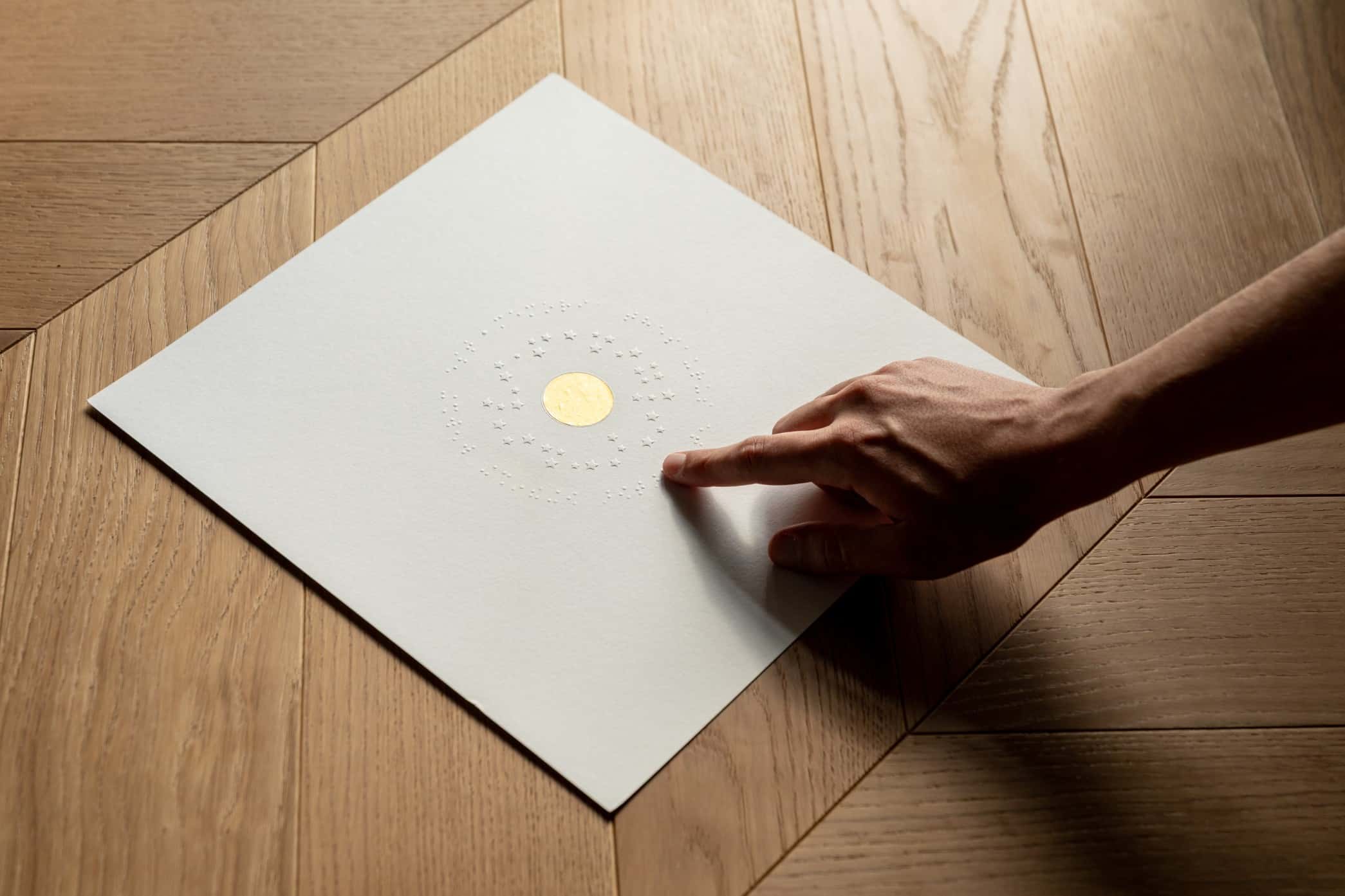
An etching doesn’t impose itself. You can hang it on a wall, but you can also keep it in a drawer and take it out whenever you like. It remains something precious, almost intimate.
Many of my works, on the other hand, are large-scale pieces: they occupy a wall, transform a space and inevitably ask a great deal of those who choose to live alongside them. I naturally love that kind of presence, but I also understand the desire for a more personal relationship with an artwork.
An etching measuring fifteen, thirty or forty centimetres can establish an entirely different relationship, perhaps a quieter one. And I must say, it always gives me great pleasure when someone who has received or purchased one of these works sends me a photograph, perhaps some time later, showing me that they have framed it and display it in their home. It means that this small artwork has found its place.
My work almost always begins with reading and writing, and perhaps there is a paradox in that, because I am a person of few words. I don’t particularly enjoy speaking; I have always preferred to let art do the talking. And through Braille, I have found a way to tell stories and express things that I probably wouldn’t know how to put into words.
I think primarily in images, through materials and tactile sensations. Words are not my most natural language, and perhaps that is precisely why they fascinate me so much.
I have enormous admiration for writers and the great authors of the past. Of all forms of expression, literature is perhaps the one that most often makes me wonder how difficult it must be, today, to genuinely add something new. I deeply admire those who manage to do so.
Perhaps what we might call my “passion” for books stems precisely from this attraction to something that does not entirely belong to my nature, yet feels very close to me. A little like painting, which, after all, was where I started.
That’s true, because for me a book is almost a fetish object: something that endures, preserves and tells a story without needing to shout. My works can be collective and universal, but also enigmatic and layered. A book allows me to explore some of their meanings in greater depth, but text alone is never enough for me.
I need the object, the material and the tactile dimension to remain present. I like to think of a book in three hundred and sixty degrees: something to be read, but also to be looked at, touched, opened and discovered. This is why my books often become book-objects, almost small sculptures.
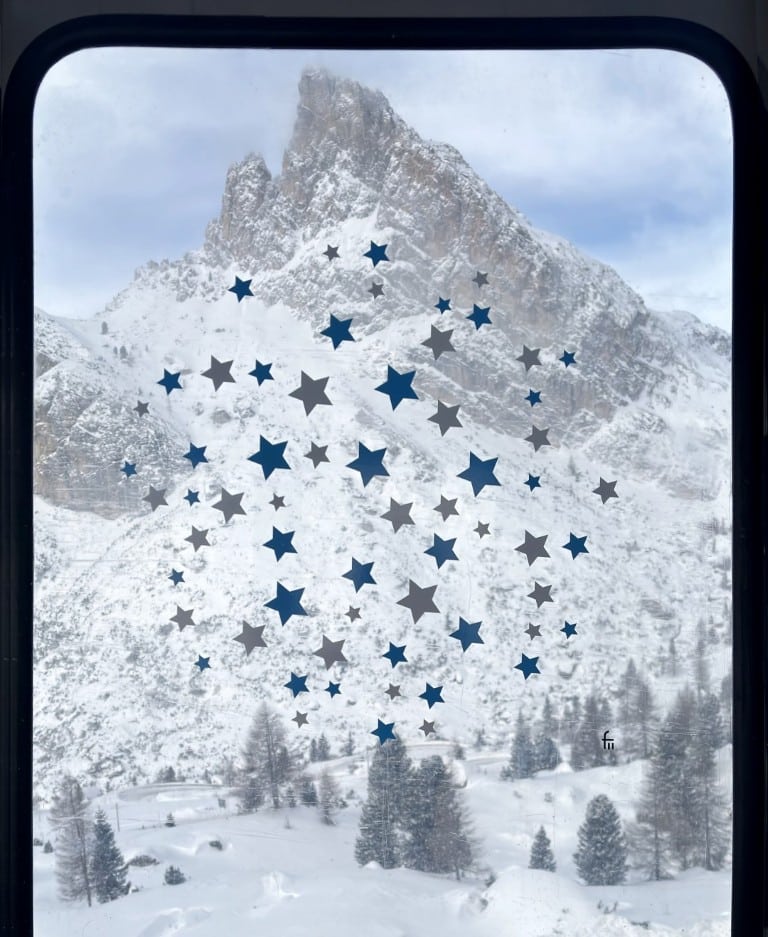
Of course, but not only that. This summer, I also had the opportunity to work on a very different project, developed together with Edizioni Palazzo Lissio following a meeting with BLU…a beautiful poem by Maria Luisa Domeniconi: a journey into the blue that also becomes a metaphor for existence. Maria Luisa was generous enough to allow me to enter her text without having to illustrate it in its entirety. I chose a passage in which I immediately recognised myself: “and thoughts will become / stars / those that are not yet visible.” Those stars naturally found their way into my work. And so I created a small Pupillawork, created in six unique versions, which accompanies the poem. But what interests me most is that this was not simply a matter of adding one of my artworks to a poem: a dialogue emerged. I had imagined these shades of blue in contrast with gold, and Maria Luisa responded through her own visual language, her handwriting and her interplay of blue and light blue. In the end, the book became an artwork composed of three souls:Maria Luisa’s poetic words, her visual interpretation and my own work, which is both tactile and visual. We produced just six copies, precisely to preserve their intimate and precious nature. I am very proud of this work and delighted to have presented it in Engadine this summer.
An artist’s entire life is a project in the making. So perhaps the new projects are yesterday’s projects, the ones that will live on tomorrow.
 Quando il mecenatismo ti fa innamorare dell’arte: nasce “L’arte in prima persona”