Sabino Maria Frassà
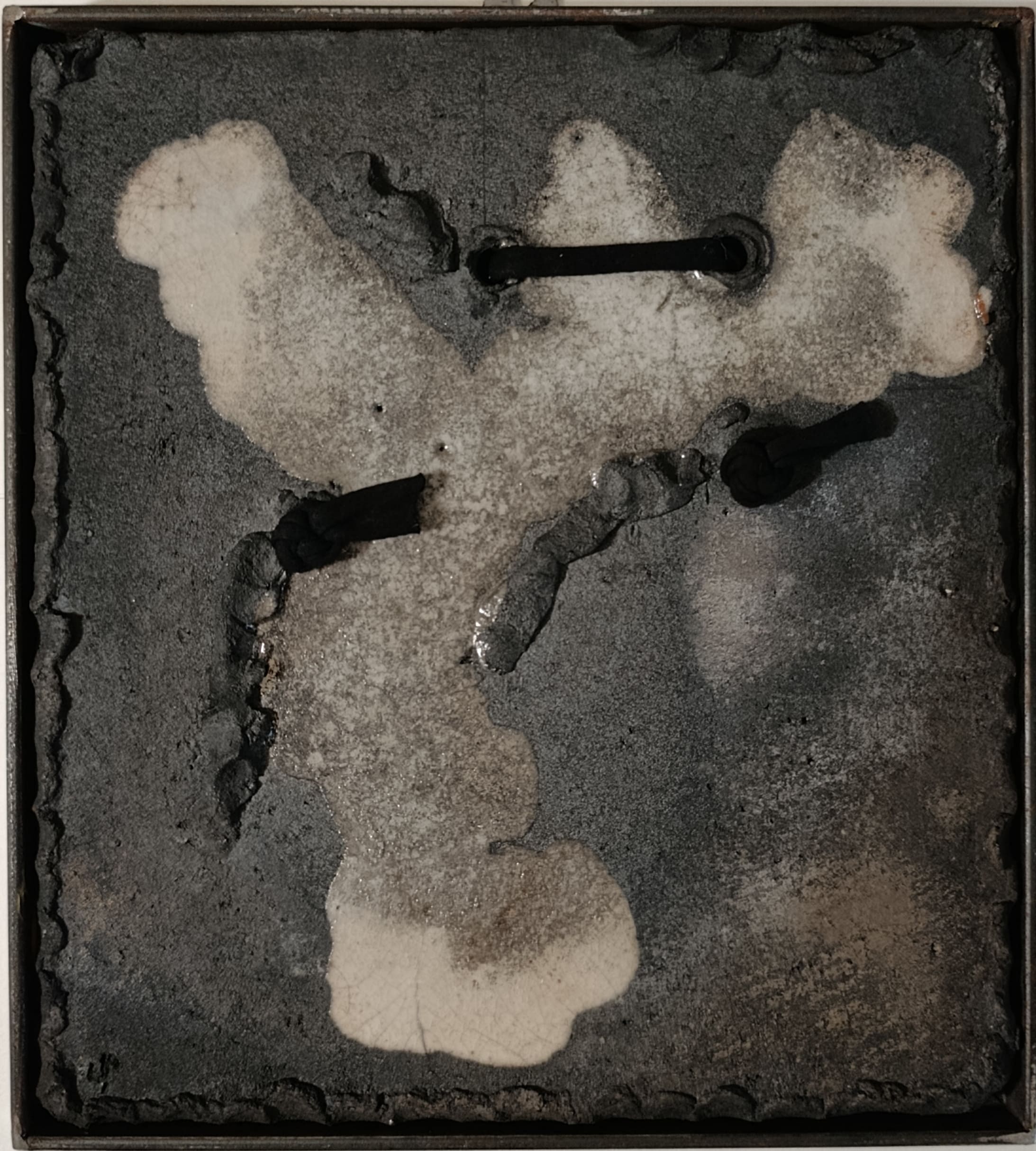
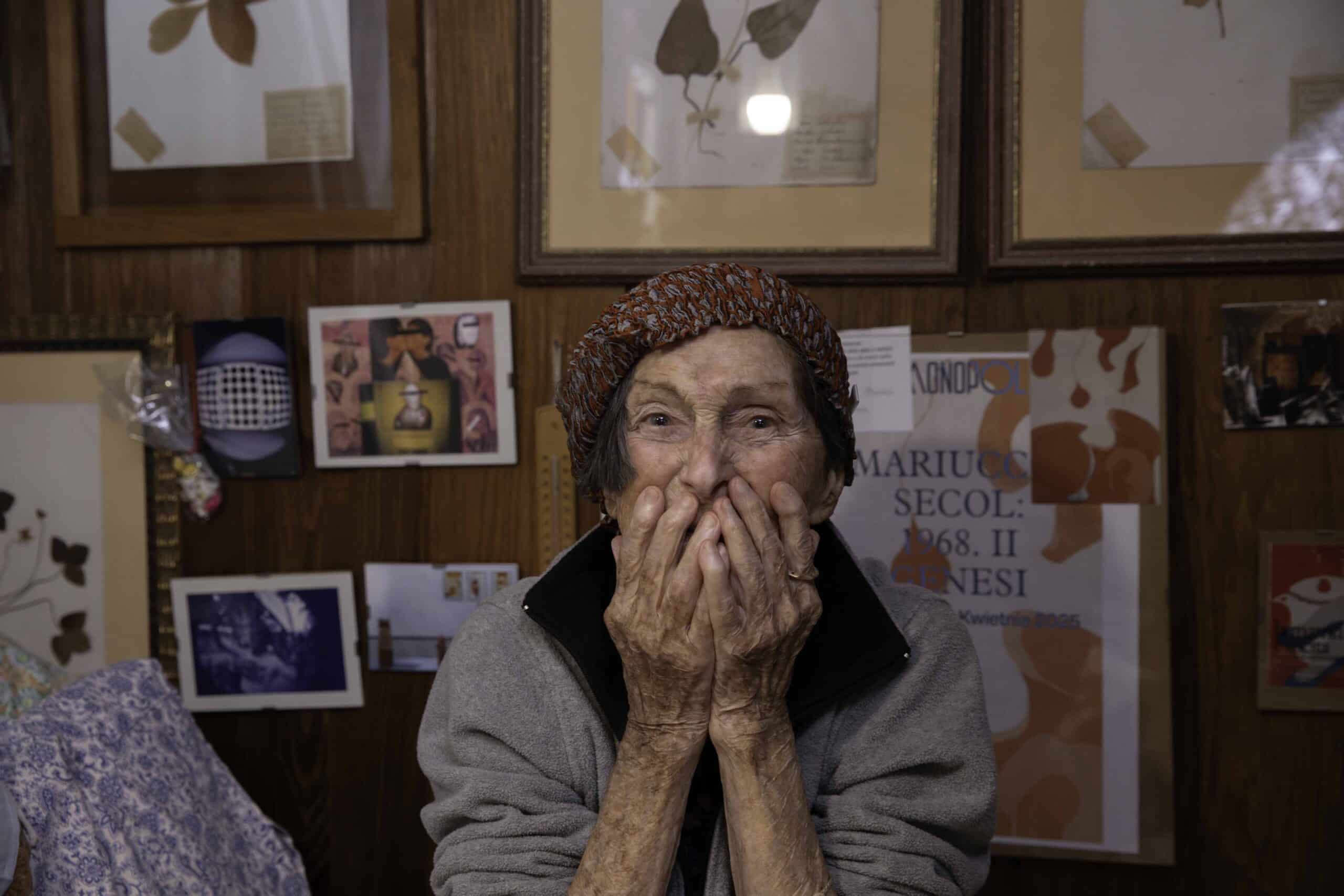
Having retraced her story through the extensive retrospective Mariuccia Secol: Unraveling, hosted at Muzeum Susch until November 1, 2026, I met her at her home-studio near Varese, where she had begun her artistic career in the late 1950s. At the time, she was still signing her work Tognola, her husband’s surname. Then came Secol. “At last, I had my own name,” she tells me. Among the works that did not receive significant space in the Swiss retrospective are the knots, to which the artist attaches particular importance and which she continues to make to this day. We chose to talk with her about them, alongside the other themes that run through an artistic practice inseparable from her biography.
The knots, the colors, the war, the sequins used to mock power, the little gates built for dolls: what follows is a conversation with a gentle, melancholic woman who, after almost a century, has yet to make peace with a world without peace.

Mariuccia Secol is 97 and she is still making them. In her studio, she has found some leftover fabric, some strips, and has begun joining them again through knots. “I still have to make them. I can do nothing but keep making them, and it’s terrible.” I ask her why it is “terrible.” The answer comes almost disarmingly: “Because I am without peace.”
Perhaps this is where we must begin if we are to tell her story today.
Not with seventy years of work, exhibitions, feminism, or the recent international rediscovery. But with this gentle, petite woman who has lived through almost a century and continues to look at it as something with which she cannot entirely reconcile.
I ask her whether there has been at least one moment in her life when she was truly at peace. She seems almost surprised: “But how could I have been at peace?”
And memory returns to a life marked by war. But it soon reaches the present, too, a world still at war, which Mariuccia, restless, seems to absorb like a sponge. Her father, wounded in the stomach, abandoned among men who appeared to be all dead and saved because someone refused to leave him there. Her brother Piero, sent to Russia and returning after witnessing a friend die at his feet. Then Fascism, Liberation. Secol searches her memory for a quieter interval. Perhaps, she finally concedes, “the 1960s.” But her thoughts immediately turn once again to the violence and abuses of the present.

At first, they were also a technical solution. Then they became a language. “A knot is something that grips, that leaves a mark,” she says. It is difficult to listen to her without thinking that those words contain much more than fabric. A knot tightens, joins, holds. It can be undone, or it can resist. And above all, it leaves a trace, even when it is no longer there.
Color, too, in her work seems to have gradually learned how to speak and how to remain silent.
Secol began as a painter and still remembers the Burnt Cities with affection: “They have not lost their meaning.” Back then, color was much more present. Then she began to remove it. She discovered that linen, fine linen, and hemp already possess “their own color, their own expressive power.” White, grey, and above all black came into view. Not as symbols imposed from the outside, but because they work: they bring out the fabric and give the composition “a more interesting rhythm.”
And yet color does not disappear. It changes its role and, in the 2000s, returns with force and mercilessness. The faces of those in power, taken from newspapers — including the now-famous image of Silvio Berlusconi — are attacked with threads, appliqués, and colorful sequins.
In the Postcards, the palette becomes vivid, flamboyant, almost brazen. I ask her why she chose sequins in particular. “In a way, it’s as if I were making the character ridiculous,” she replies. And immediately, she thinks of carnival.
It is a small declaration of artistic poetics. The color that had once learned to step aside returns when it is needed to strip authority away. It sparkles in order to mock. It decorates in order to desecrate. The sequin, seemingly frivolous, becomes a way of refusing to take power too seriously.

There is this strange coexistence of toughness and gentleness in Secol. I point it out to her as we look at the knots: they are elegant, refined, even pleasant to look at, and yet they can tell a story of suffering. The Scream, too, cries out without becoming brutal. I ask her whether she has ever consciously sought this harmony.
«No, no».
Forse, suggerisco, è semplicemente una parte di lei.
“An innate part.”
And when I ask whether, in life, she has been someone who tried to bring peace between others, this time she does not hesitate: “Yes, yes. That’s true.”
Perhaps this is also why she has never felt the need to find a definitive formula. Some works emerge from reasons she can reconstruct perfectly today; others retain a mystery even for her.
When I ask her where the recurring form in the works recently brought together under the title Ogives comes from — a critical title, not one originally chosen by her — she searches her memory. Today, it is difficult not to read that form as a reference to the female sex, too, but Secol does not recognize any conscious intention at its origin. She keeps searching, then finally gives in with a beautiful answer: “It is a secret even to me.”
Not everything needs to be explained afterwards.
I then ask her how she knows when an artistic exploration is complete, when the time has come to stop doing something that may have accompanied her for years.
“When I need to make something else.”
But the knots?
Not those. “The knots are not finished.”
And indeed, they keep returning.

Just as, after decades, even the dolls return.
In the 1970s, Secol had worked on The Doll’s House, symbolically and materially dismantling a universe of assigned roles. Much later, small Gates for Dolls appeared. They almost look like toys, but behind that childlike scale lies an uncompromising thought.
Secol explains that children are given little pots and other small objects that reproduce the adult world in miniature. So, she thinks, there should also be gates. So that, from an early age, they can understand “the problem of exclusion,” constraint, and the existence of something that separates those on the inside from those left outside.
It is perhaps one of the most tender and, at the same time, most fierce images in her work: teaching the existence of barriers through a toy.
In the end, the knots remain. “The knots never end,” she had said at the beginning.
In Italian, we say that sooner or later the knots come to a head. Mariuccia Secol’s seem to do something different: they travel through time, change their material and meaning, and bind together the memory of a restless century with a piece of knotted fabric made almost a century later.
It is no coincidence that Secol attaches particular importance to these works, absent from the major Swiss retrospective. In an artistic practice that has always been deeply autobiographical, the knots seem to take on the significance of a legacy. At 97, the artist does not offer us an answer, but an awareness: the knots of life and history cannot all be undone. And perhaps they will never end.
Secol continues to work. There is still something that grips, something that leaves a mark. Gentle, melancholic, combative. Capable of seeking peace for others, yet never finding it completely for herself.
Quando il mecenatismo ti fa innamorare dell’arte: nasce “L’arte in prima persona”