Emilio Fuentes Traverso is a young Chilean artist who is gaining recognition for a practice that intertwines photography, sculpture and geology, as well as textile art, science and philosophy. Since 2008 — through his most recent contraformas, sculptures made of “stitched” stones — his artistic journey has led him to participate in solo and group exhibitions, workshops, fairs and competitions in Chile, Germany, the United States, Spain, Brazil, Slovenia, Argentina and Mexico. The result is an eclectic, refined and conceptual body of work, with increasingly pronounced aesthetic dimensions: works that move towards dynamic, almost kinetic forms, where balance becomes an increasingly fascinating element and “vibrates” through the juxtaposition of cuts, layers and contrasting combinations of materials. At the heart of his practice lies the idea of a post-human “third matter”, in dialogue with the thought of Donna Haraway.
A graduate in Biology and Educational Sciences (UMCE), with a Diploma in Digital Photography (PUC) and a Master’s degree in Image Studies (UAH), Fuentes Traverso has further developed his method through two workshops focused on artistic production and analysis (2020–2023), led by Rodrigo Zamora, Raimundo Edwards and Catalina Bauer. In recent years, his practice has consolidated around a close dialogue between manipulated photography and sculpture: natural Chilean landscapes are transformed through layering, collage and interventions on volume, while his three-dimensional work emerges from the encounter between natural rocks, plaster, cement, concrete and sewing thread. It is a practice that reflects on environmental transformations — both those resulting from planetary dynamics and those generated by human activity — and on geological time as an invisible matrix underlying rocks and landscapes, ultimately questioning the mineral connections between organic remains and the materials that structure urban space.
Among his most significant projects are the exhibitions En concreto (In Concrete) (Galería Factoría Santa Rosa, Santiago; Museo Marta Colvin, Chillán), Trabajar con tiempo (Working with Time) (Galería Macchina, Universidad Católica de Chile), Fractura temporal (Temporal Fracture) (Galería de Arte Chimkowe) and Piedra, papel y tijeras (Rock, Paper, Scissors) (CCU Virtual Art Room). He is currently developing the photographic project Neotectónica (Neotectonics), included in the group exhibition Campos Alterados (Altered Fields), scheduled to take place at Casa del Arte Diego Rivera in Puerto Montt and at Centro Cultural La Moneda in Santiago. At the same time, he is producing new works for the solo exhibition Ejercicios de enlaces (Linking Exercises), scheduled at the Museum of Contemporary Art (MAC) in Santiago de Chile in the first half of 2026.
It began within my family: my parents gave me the freedom and the tools to create, first through drawing and then through music. Then I chose biology and became a science teacher. Only later, with a diploma in photography and a Master’s degree in Image Studies, did I begin to develop an artistic language: manipulated photographs, collages, and eventually objects and sculptures made with natural and anthropic rocks. The real turning point came with two years of mentorship at DARDO: Rodrigo Zamora and Raimundo Edwards were instrumental in helping me focus my path, from photography to working with stones and thread.
Deeply. The scientific method enters my studio, from observing natural phenomena to selecting variables, and then developing hypotheses about new types of matter. I am also interested in turning this perspective into a form of responsibility, through the idea of sustainable development and environmental care. In addition, I continue to teach biology and citizenship sciences in high school: I divide my time between school and artistic practice, and teaching directly nourishes my research because it forces me to keep studying and continually leads me towards new readings, approaches and discoveries.
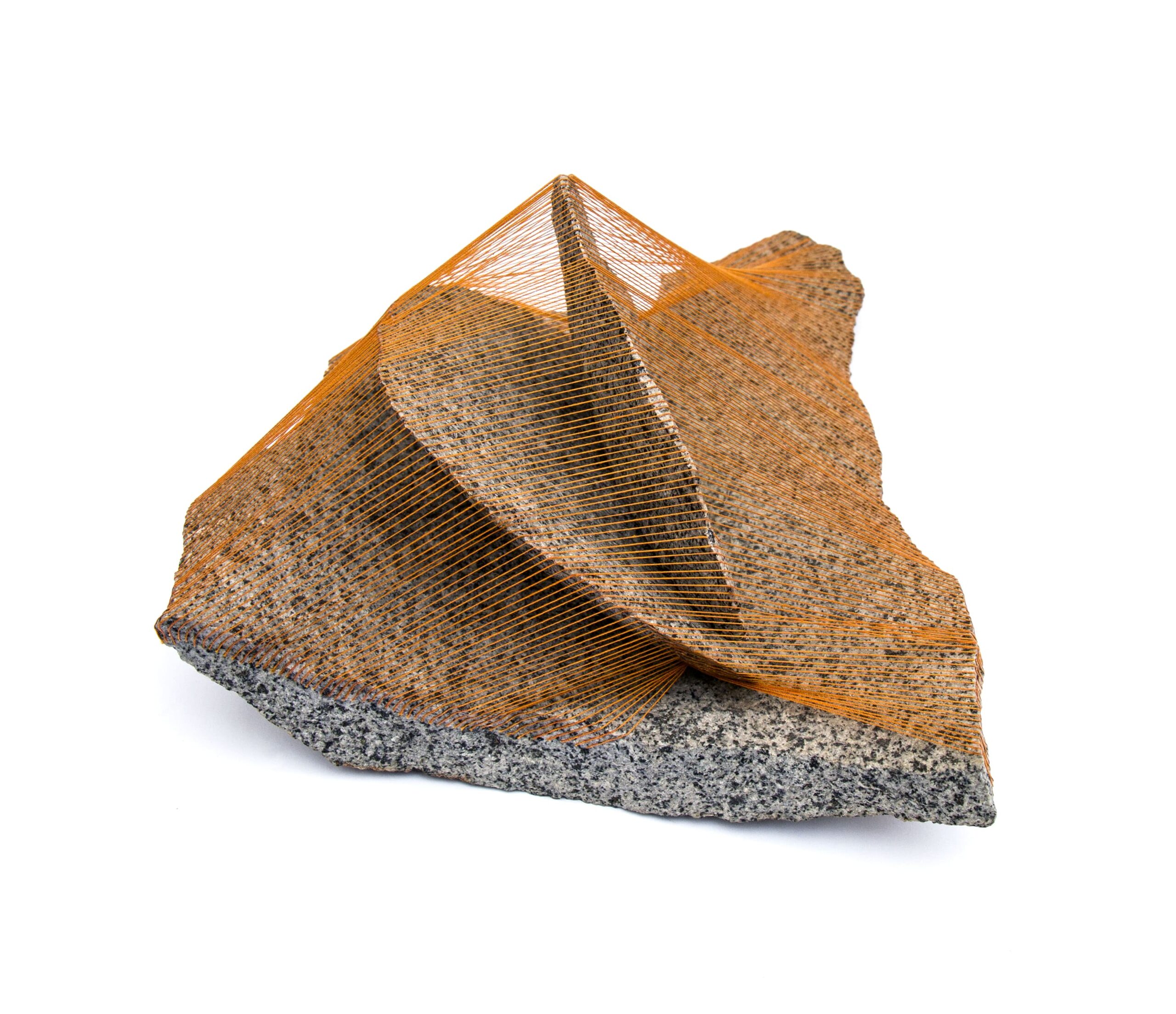
My practice develops around a central axis: environmental transformations generated by human actions, such as extractivism (for example, mining activity); the changes inherent in planetary dynamics within natural environments; and the natural processes that lead to the formation of rocks.
Yes, you are: time — and geological time in particular — is one of the themes that recurs most frequently in my work. Reflecting on the connections between matter and the transformations it undergoes within ecosystems is a central objective of my research, guided by questions about the natural events that lead to the formation of the three major groups of rocks on the planet: igneous, sedimentary and metamorphic. I am drawn to this temporal scale because the appearance of humanity occupies only a minimal portion of the Earth’s history: for this reason, I believe we will never witness all the evolutionary processes that the Earth will undergo. It is precisely this uncertainty — and everything that exceeds human experience — that motivates my creative process.
Today it is possible to identify a fourth group of rocks, defined as “anthropic”. This new classification includes urban structures created with concrete: a mixture composed of cement, sand and stone. It is a material associated with progress and modernity, but also with the emission of high concentrations of carbon dioxide into the atmosphere, contributing to global warming and significant climate change. In this sense, my sculptural proposal suggests that, in the future, matter created by humanity may merge with natural rocks, giving rise to new types of matter.
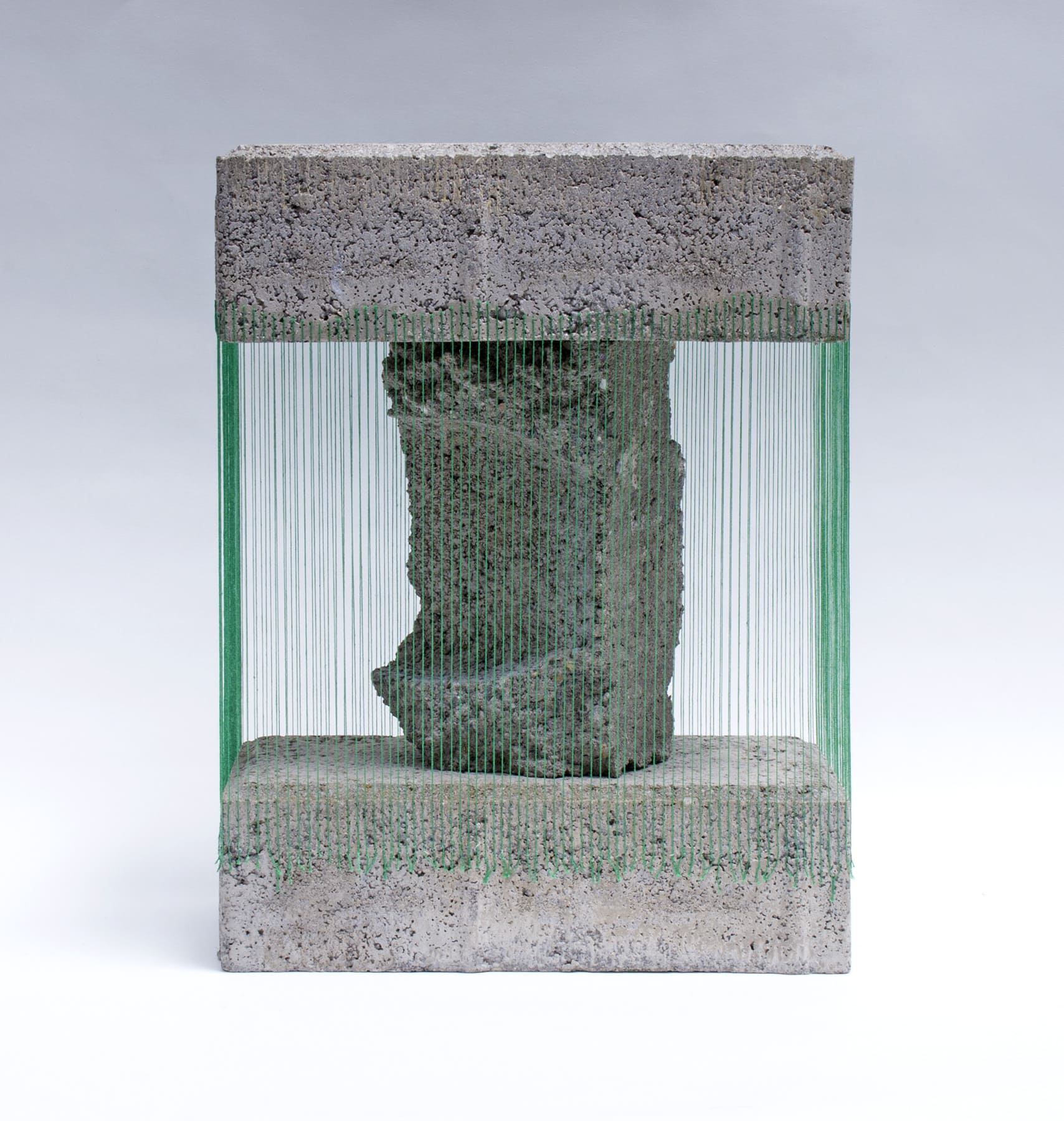
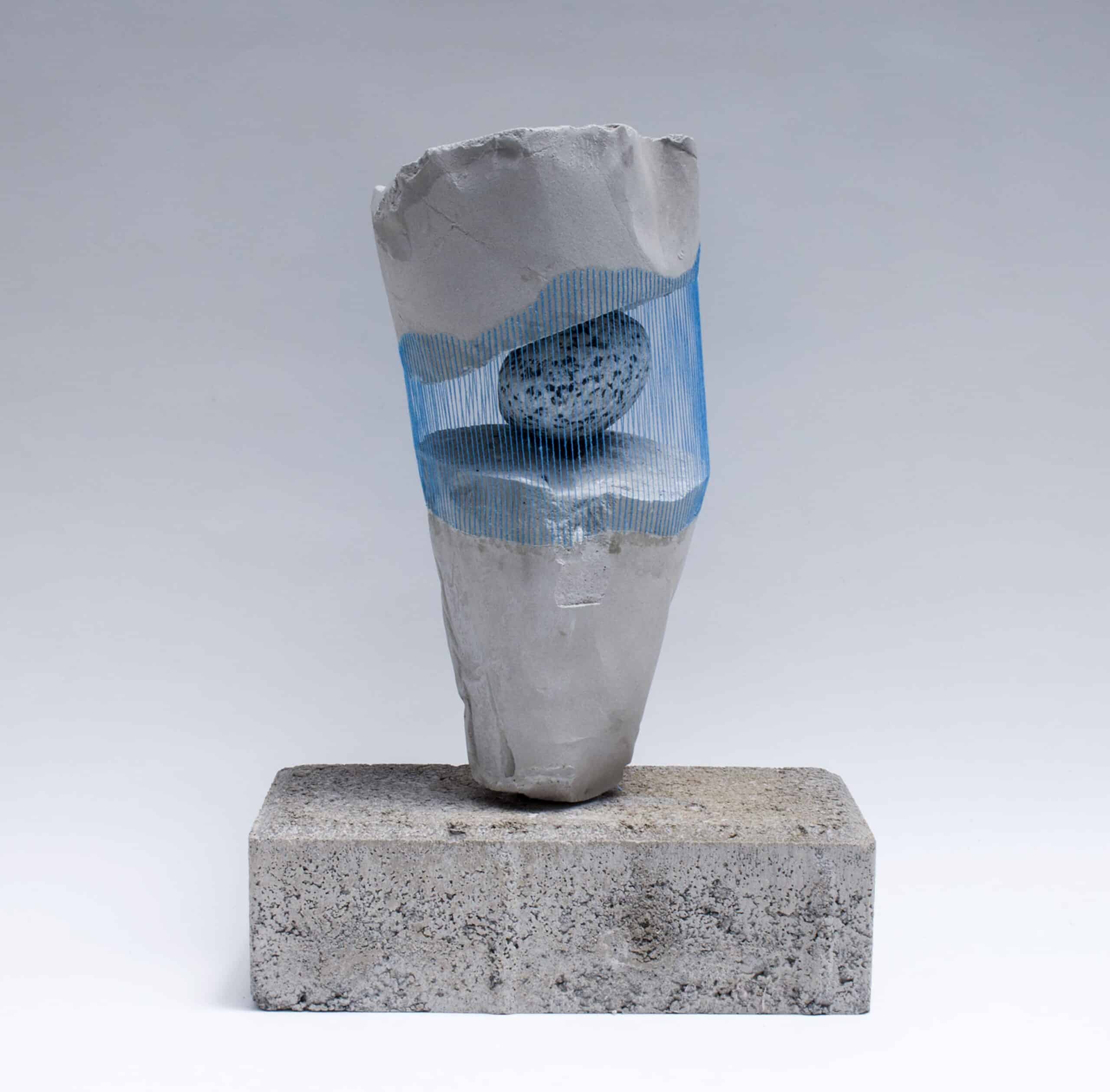
Yes, you have explained my idea perfectly. My intention is to anticipate the new forms of matter that may emerge after extremely long periods of time. In this case, the threads represent the natural forces that will fuse natural and anthropic matter, giving rise to this third form of matter or to new types of rocks.
To date, the central idea of my work has been represented by the environmental transformations that the planet undergoes, both naturally and as a result of anthropic activity. The development of my projects requires periods of pause, rest, observation of natural environments and the reading of scientific articles. From there, I begin to connect new concepts, experimenting with different materials and forms.
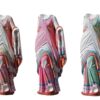
My work consists of a series of photographs of landscapes and natural elements from Chile. These images are grouped according to the type of material intervention. The first group consists of photographs manipulated analogically through layers of the same image, working with repeated prints of the same photograph. A second group is made up of volumes created from the same photographs using the pop-up technique. A third group instead includes interventions using images taken from other photographs of mineral textures, through a process similar to collage. As my creative process progresses, I feel that photography and matter become increasingly connected, both conceptually and through physical intervention.
In fact, I never really abandoned it; it simply remained the starting point. This process took place during the DARDO mentorship. The artists who guided my development suggested that I stop using photography as a form of expression. In other words, they encouraged me to stop using photographic materials, techniques and the photographic medium itself. At that point, having a large number of rocks at home, I began intervening on them and discovering their potential as artistic objects.
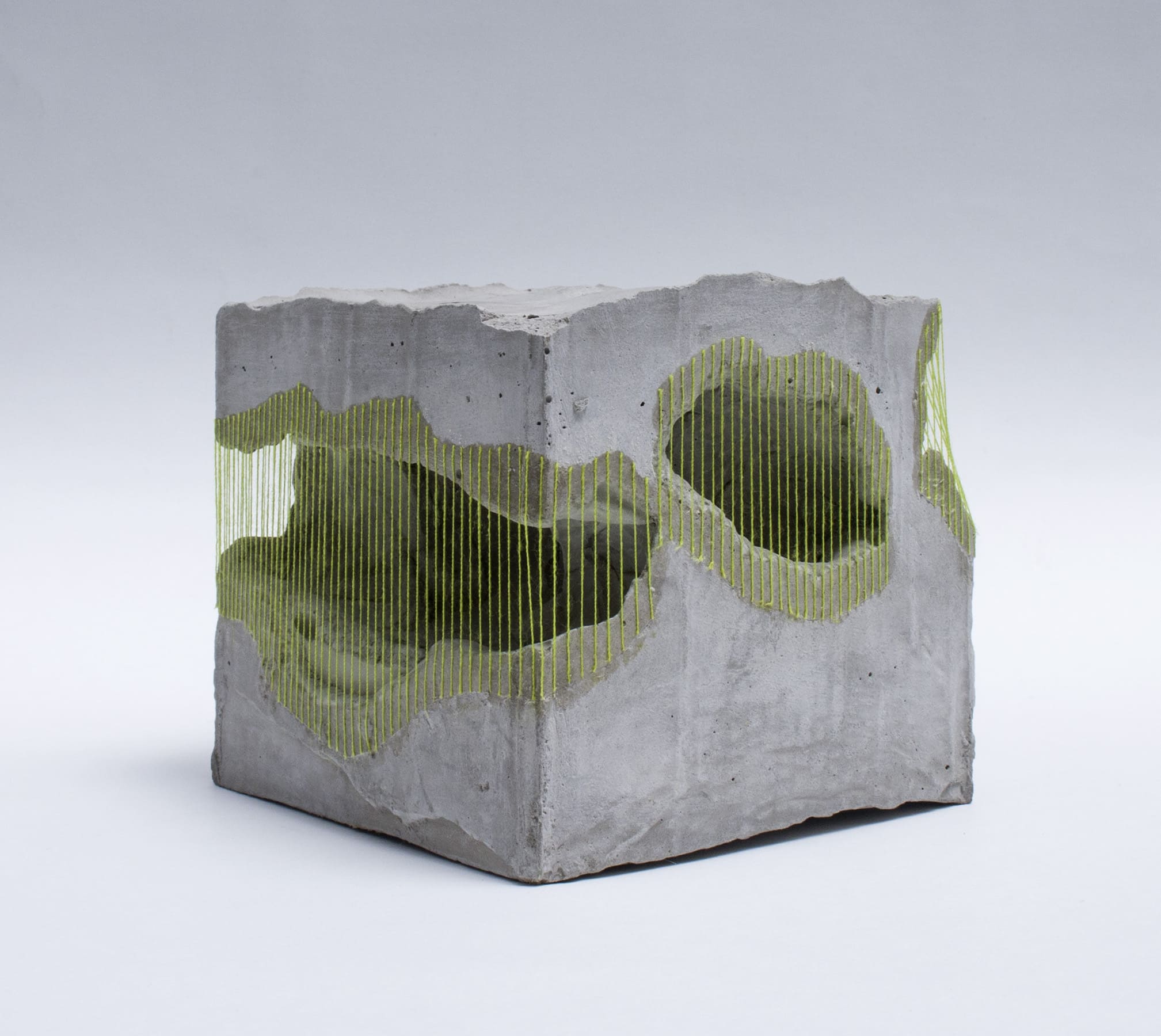
At first, it was mainly an intuitive process: I began working on very different rocks, experimenting with materials and possibilities. At a certain point, after observing them for a long time, I realized that some stones had cavities and fractures that, at some point in their history, had been “filled” by natural materials. That is where the idea came from: to reproduce that geological gesture and continue it symbolically. I therefore began filling those voids with sewing thread, as if I could reactivate an internal memory of the rock. Later, the work expanded: I also began constructing objects with plaster and cement.
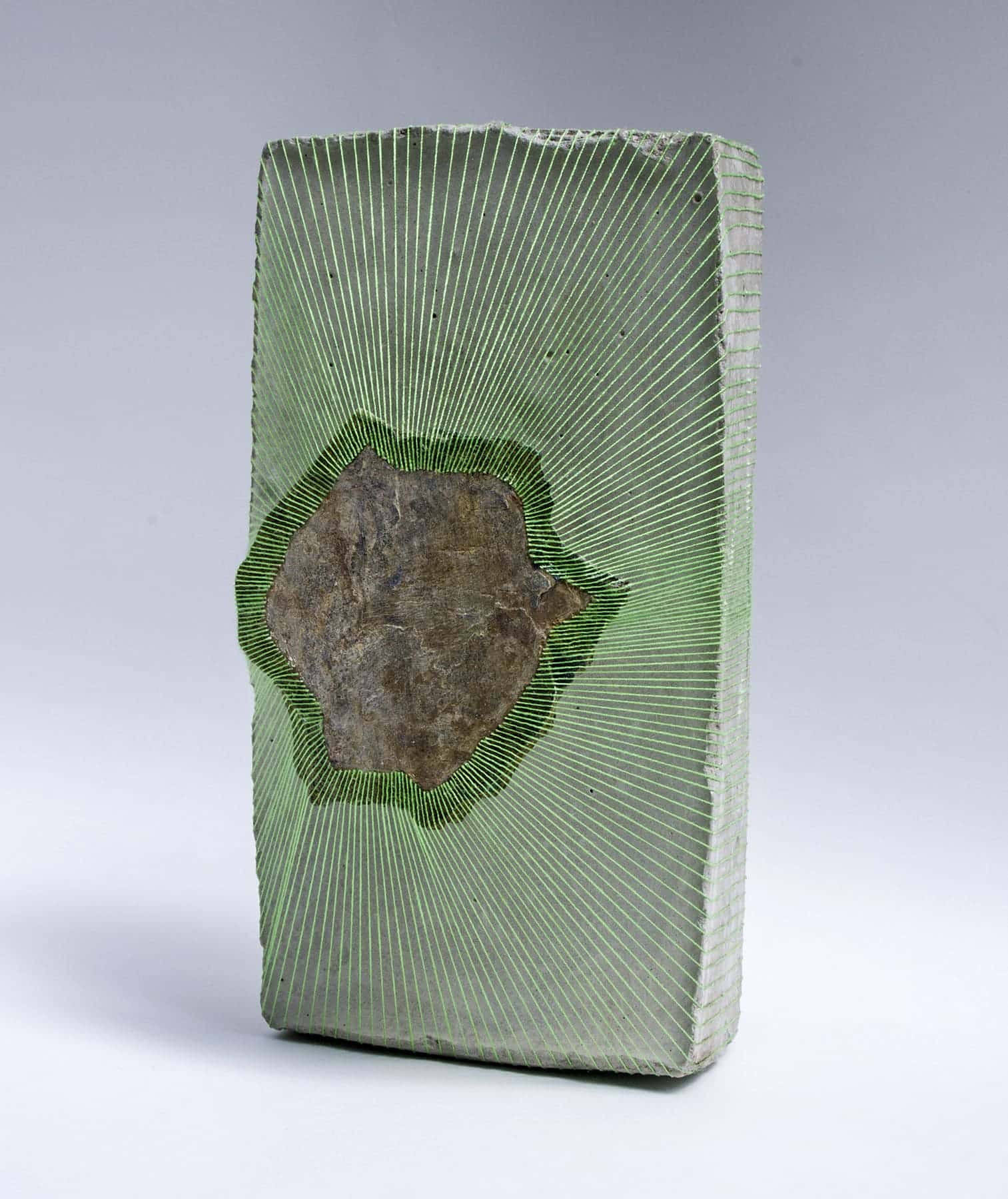
During the period of experimentation and the creation of the works for the exhibition, my attention focused on metamorphism: a natural process in which rocks, subjected to high pressures and temperatures within the Earth’s crust, transform and “compact” until they fuse in a solid state, without actually melting.
From this emerged a series of questions about the geological future of cities: what will happen to urban structures? How long will a mineral memory remain impressed upon them? And to what extent might what humans build — cement, concrete, fragments of infrastructure — one day enter into a material relationship with what is natural, between rocks and minerals? History shows us that many structures, or their remains, persist even after human communities disappear.
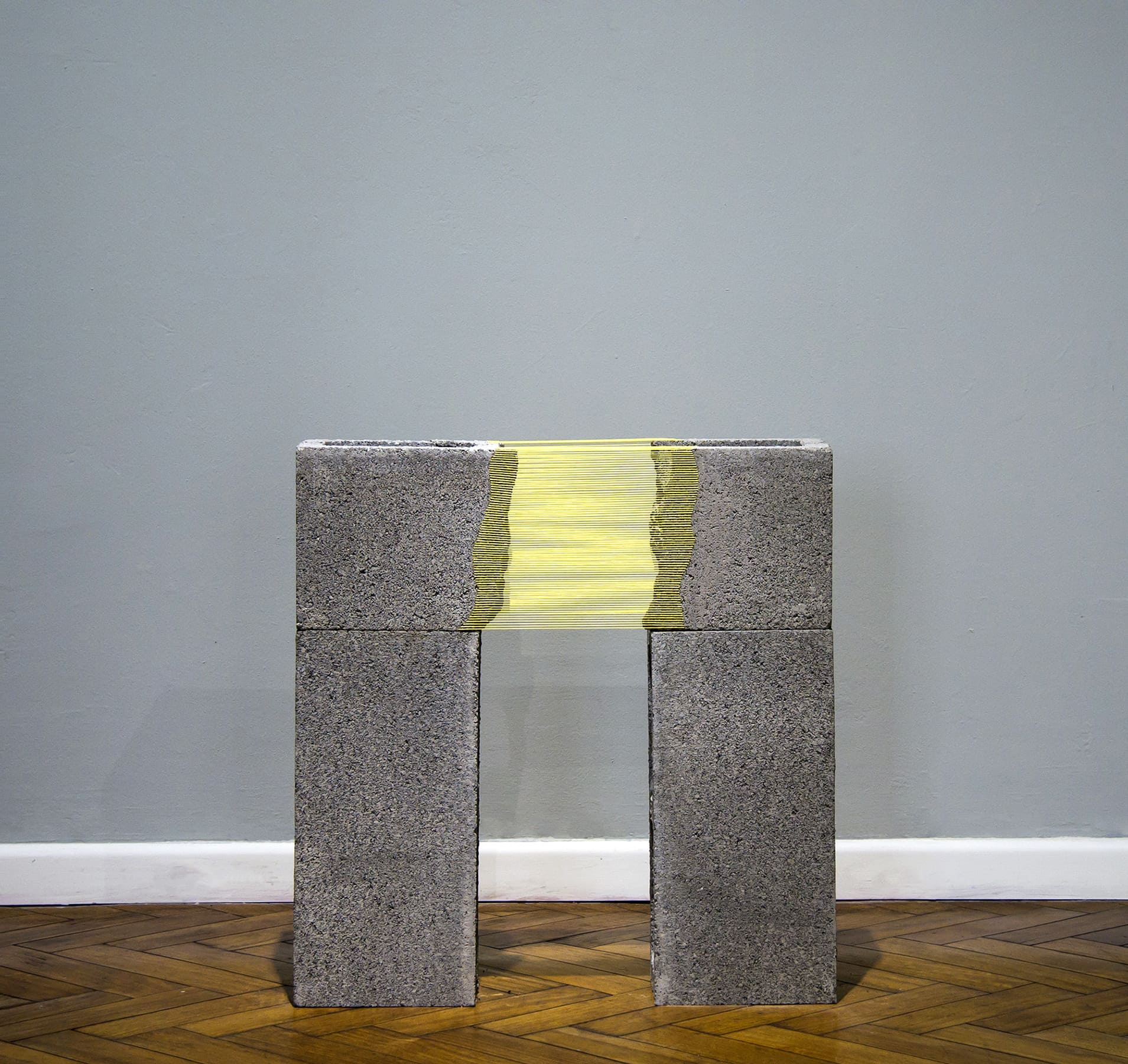
For this reason, my work today takes the form of a collection of natural rocks, concrete structures, and objects made of plaster and cement, all intervened with sewing threads. The thread serves to fill and connect spaces, voids and fractures: it is a kind of “anticipatory reconstruction” of what is no longer there — or of what might exist if nature were to resume its course. These gestures highlight tensions, separations and forced unions: they attempt to make the very idea of metamorphism visible, almost graphically — that is, the desire to unite and suggest a fusion without altering the solid state of matter.
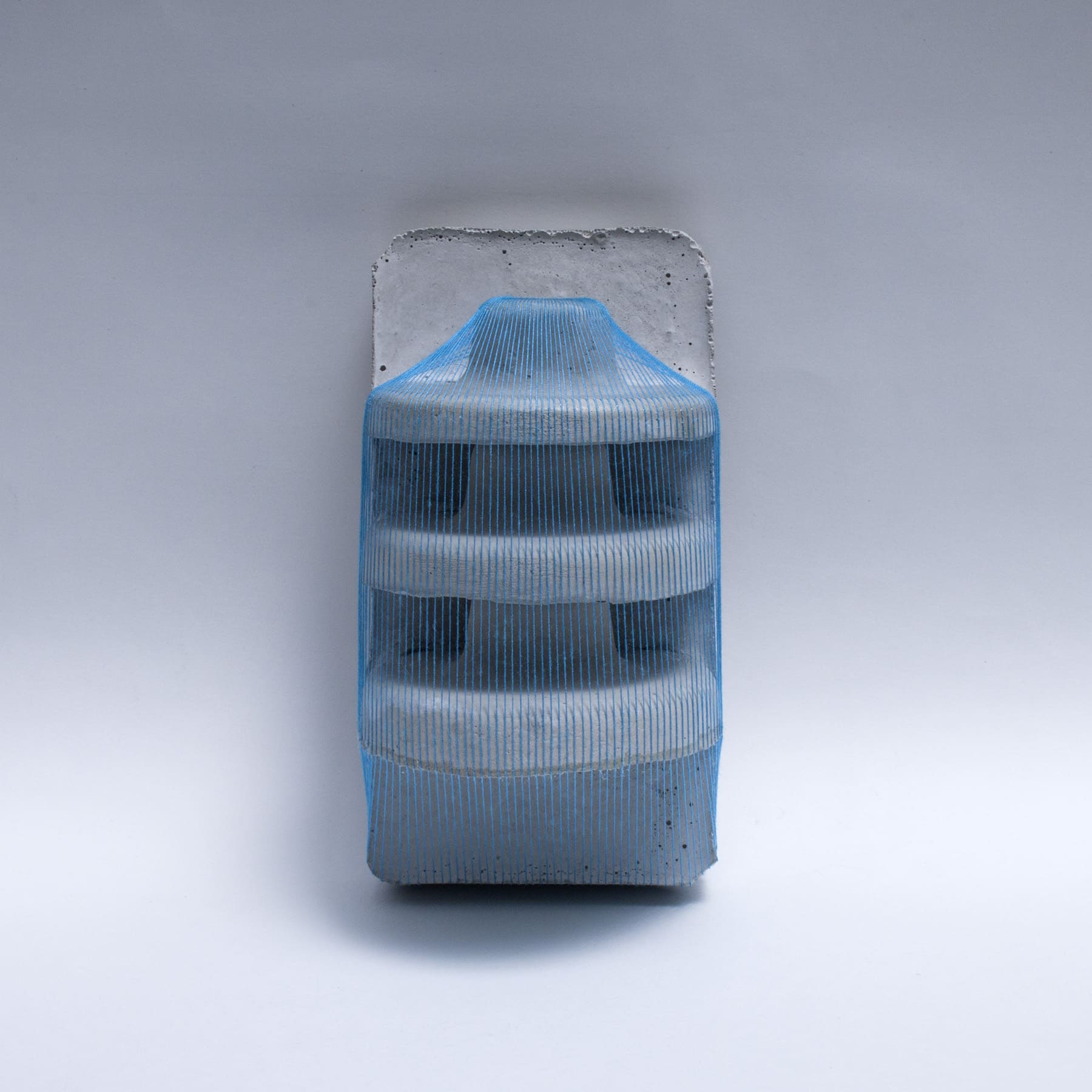
For me, “stitching” stones is a gesture of connection: the threads that join materials of similar or different origins become an interface between the anthropic and the natural and, in a poetic and metaphorical sense, make the connections between the matter of the planet visible. The works thus become containers of overlapping layers, volumes, voids, reliefs and textures crossed by different temporalities: a way of rethinking how planetary dynamics transform matter and how humans attempt to understand transformation as a force that makes the passage of time perceptible.
Yes, I strongly identify with this dimension. The Anthropocene and the post-human, for me, are not abstract theoretical categories: they are a material reality that can be seen and touched. I am particularly interested in the point at which what humans build — cement, concrete, infrastructure — ceases to be merely “human” and begins to become geology. In my work, I try to imagine a time when anthropic and natural matter will no longer be distinguishable, but will enter into the same process of transformation, generating hybrid forms. It is a way of thinking about matter not merely as a trace of human presence, but as something that can survive humanity, incorporate it and continue to change independently of us. Ultimately, this is also what interests me: shifting the gaze away from the human and towards matter, as if the Earth had its own memory and an autonomous force of transformation.
Discover previous episodes:
Quando il mecenatismo ti fa innamorare dell’arte: nasce “L’arte in prima persona”