Sabino Maria Frassà. Art in first person
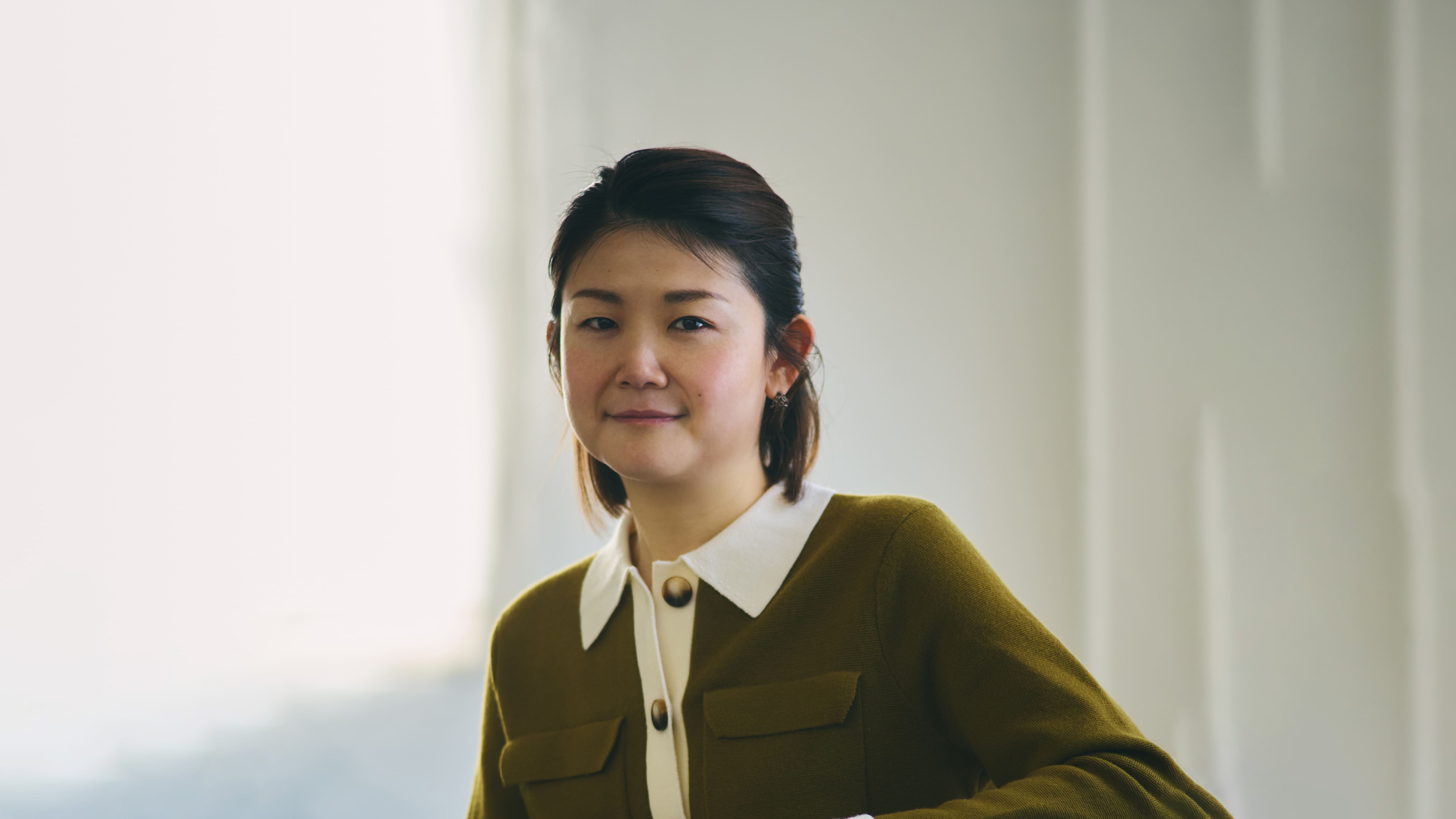
In the panorama of contemporary art, few artists manage to combine the world of nature with a dimension suspended between reality and imagination like Kaori Kurihara. His ceramic sculptures seem to come from a parallel universe: organic shapes, minute details and vibrant colors give life to works that evoke wonder, discovery and a deep sense of vitality.
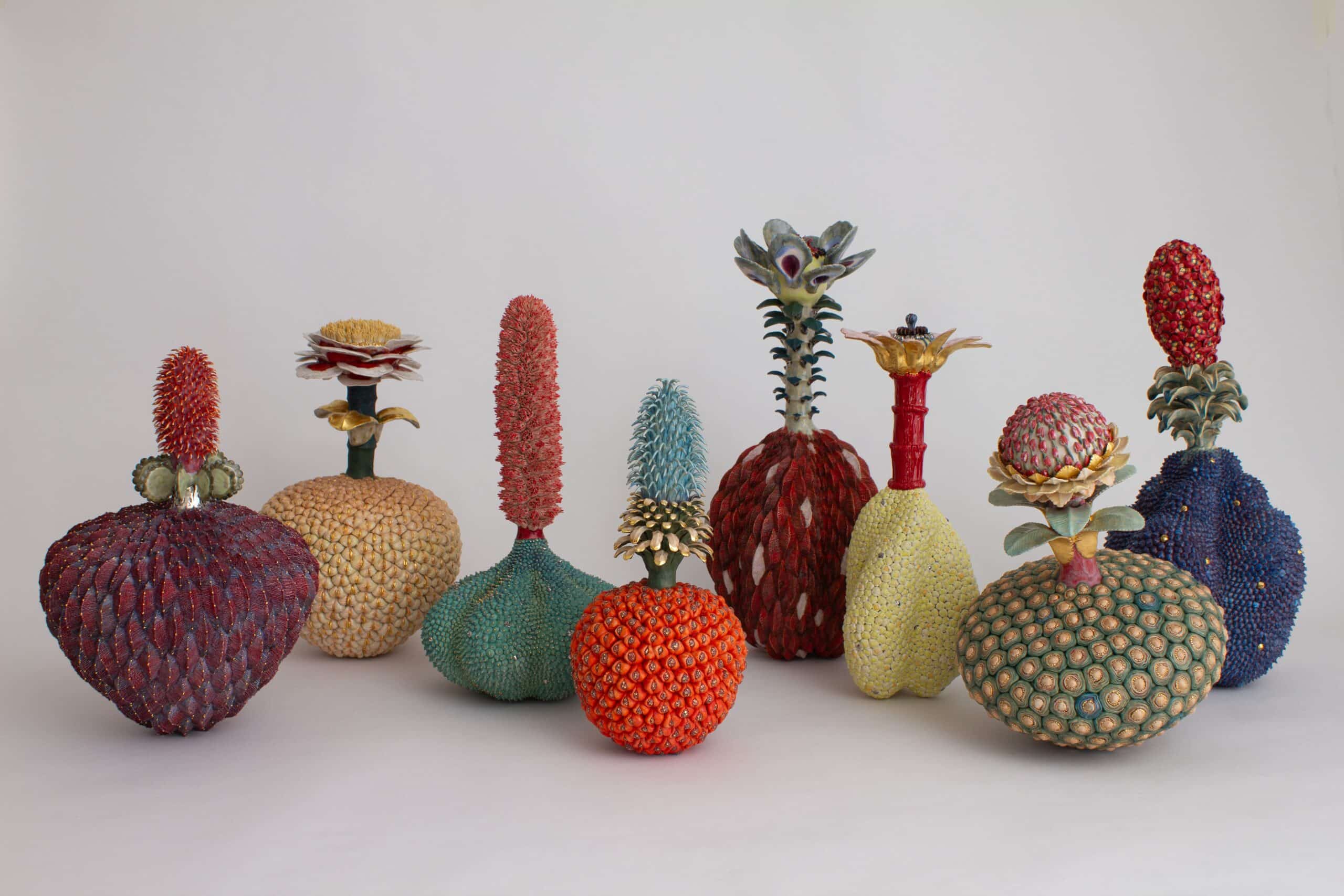
Photo de familie 2025 Born in Osaka in 1987 and now resident in France, Kaori Kurihara has established herself in recent years as one of the most original voices of contemporary international applied art. His research starts from the observation of nature, but never limited to representing it. Fruits, flowers and vegetable organisms become the starting point for a process of transformation that leads to unprecedented forms, suspended between memory, imagination and possibility.
Each work is entirely realized by the artist, who refuses to have assistants, by hand, without the use of moulds, through a creative process that the artist describes as a continuous dialogue with matter. Shape and color are not imposed, but emerge progressively during the work, as if the work itself suggested its development. For Kurihara, the artistic work is first of all an exercise of listening: a search for harmony that nature spontaneously expresses in its structures and that the artist reinterprets through the language of ceramics.
In his works, they coexist with technical precision and imaginative freedom, formal rigour and amazement. The result is a poetic universe in which ceramics becomes a bridge between the tangible and the dreamed, between what exists and what might exist.
 Éphémères printanières    2023 In this new episode of First Person Art, Kaori Kurithara accompanies us in a research that, through ceramics, reflects ontological and universal questions. Among imagined plant forms, organic geometries and a surprising reflection on the absence of will, emerges a vision of artistic doing understood not as dominion over matter, but as listening to its possibilities.
SMF: You left Japan for Paris: why? My transfer to France and my interest in French ceramics are two distinct things. As a child, I discovered that my favorite button and beads store was originally in France, and since then this country has become a dream place for me. I wanted to be able to do what I love in the country I love, and that's why I'm here. Only after I arrived I realized that France, with its deep appreciation for the art and freedom of individual expression, was a challenging place to undertake and develop an artistic career. Here art is an integral part of society and this has allowed me to find my space and focus on creation.
SMF: ** Your sculptures recall natural elements, but rarely represent real fruits or plants. What makes you create these hybrid forms, suspended between reality and imagination?** I don't care to faithfully reproduce existing forms. Rather than trying to achieve something as close as possible to a real form, I try to explore a mysterious boundary between what exists and what doesn't exist in memory. Although a form doesn't exist in reality, it is important for me to create the feeling that it has a vital presence, that conveys a sense of life in its space.
SMF: Why do animals never represent human and animal forms? Animals move according to their own will and are not symmetrical with respect to a point, but rather with respect to a line. Plants, however, as far as we know, do not act according to their own will, but seem to develop respecting a natural order, growing in directions dictated by the material efficiency and the environment around them. Their ability to adapt and move efficiently is what makes them live, and it is from this state of vitality that, in my opinion, beauty is born.
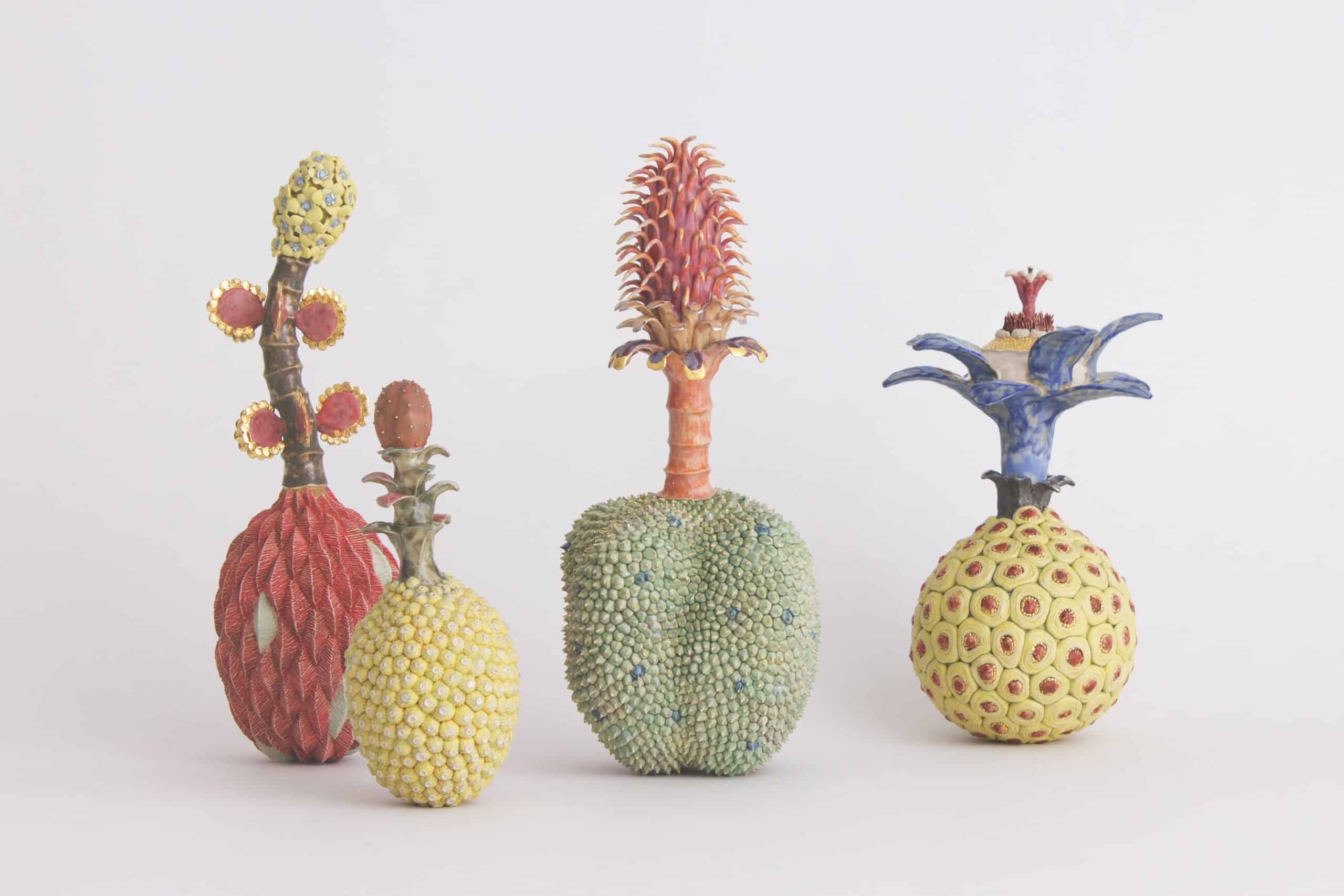
Photo de familile 2024
SMF: Does beauty arise from an absence of will? Just as an actor incorporates the will of others in its role, I believe that when we create something in a state of consciousness lacking personal will, letting the form emerge naturally, we can generate objects that seem to grow in harmony with their environment, just like plants. Of course, the mere fact of reflecting on this process is already an intentional act, There are always contradictions. However, it is essential for me to try to maintain this absence of conscious will during creation, and that is why I choose not to represent animals.
SMF: What do your fantastic forms tell? A dream with an open-minded eye. I always want to convey the feeling of something living, crossed by one's own vital energy. With my own forms I try to express the wonder and glow that spreads from the presence of the living. Just as it happens in nature and plants, I want to create something deeply connected to it. If my work can become an element of serenity and comfort for someone, this would be for me a further source of joy: to make a dream live.
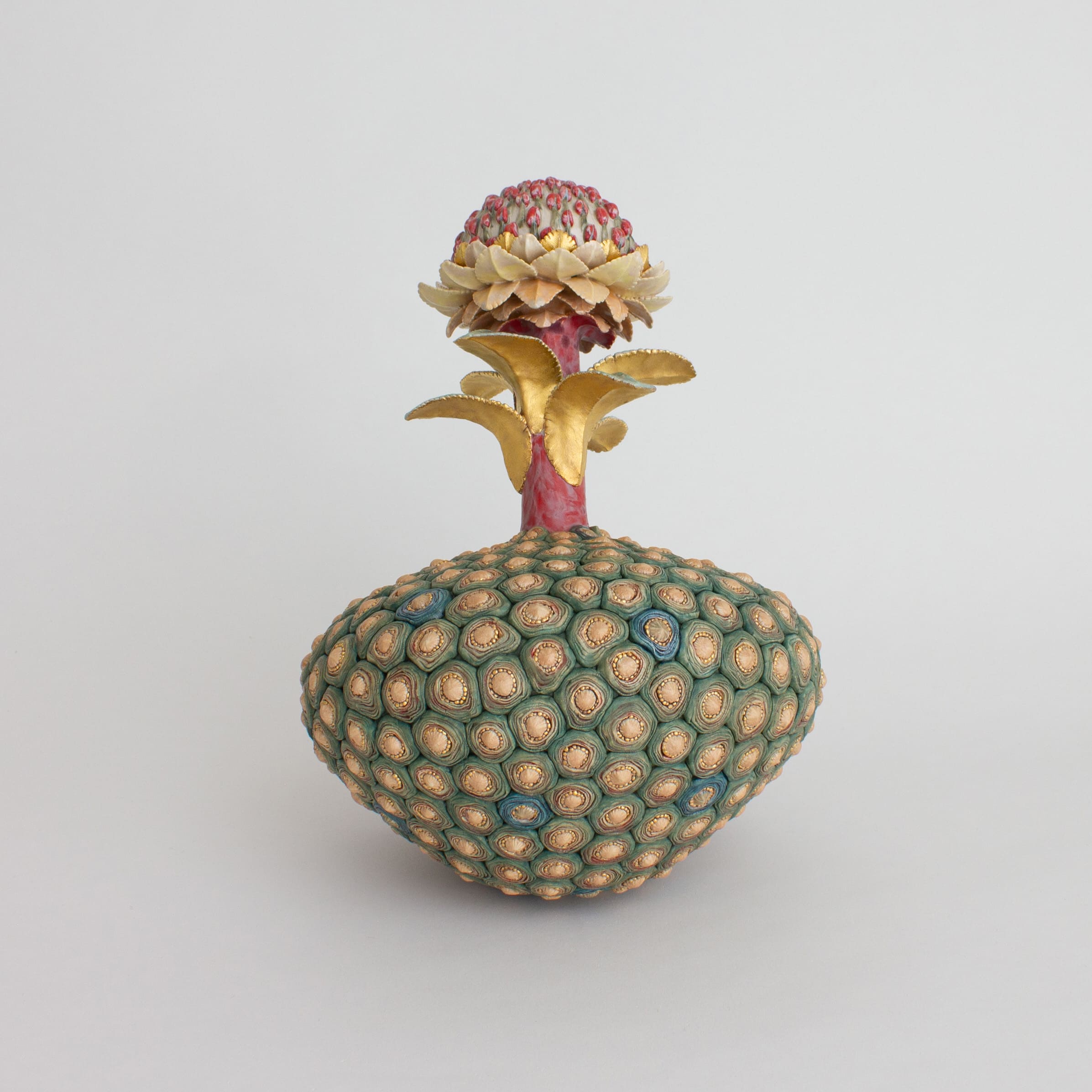
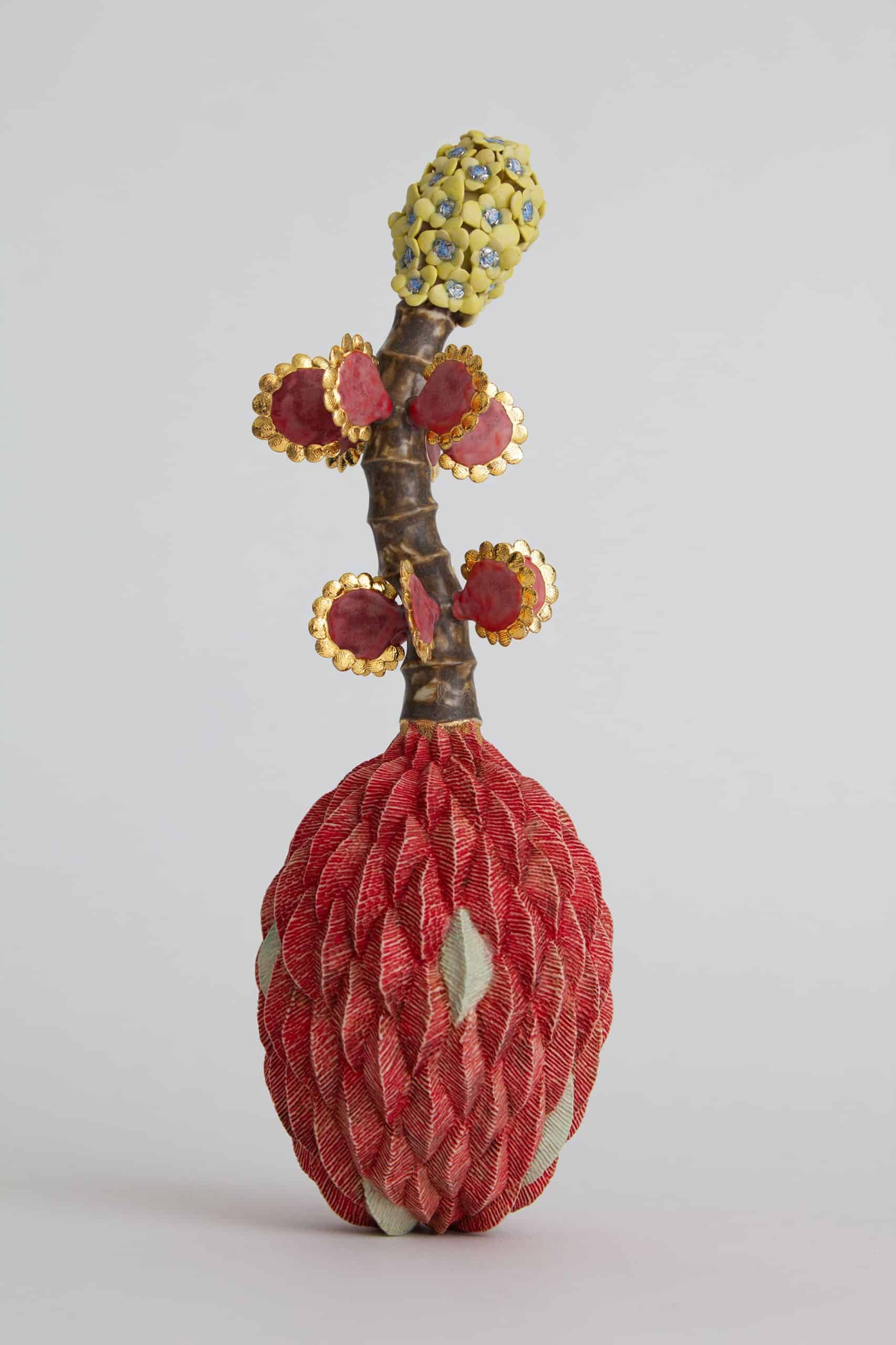
•Haute couture botanique • 2024
SMF: Your ceramic sculptures are incredibly detailed and refined. Can you tell us more about your technique? First, I hand-made the basic shape using the technique of the dove, then I prepare the small elements of surface detail separately. Then, I apply them one by one to compose the piece. Once I have done the first cooking of the cookie, I apply the colors with engobes and glazes using a brush. After cooking the enamel, I add the gilding and silvering, completing the work with a third cooking at a lower temperature. In every phase of the process, I decide shape and color listening to the 'will of the piece's. I follow what I have before me, it is the work itself that guides me, and that is how I proceed.
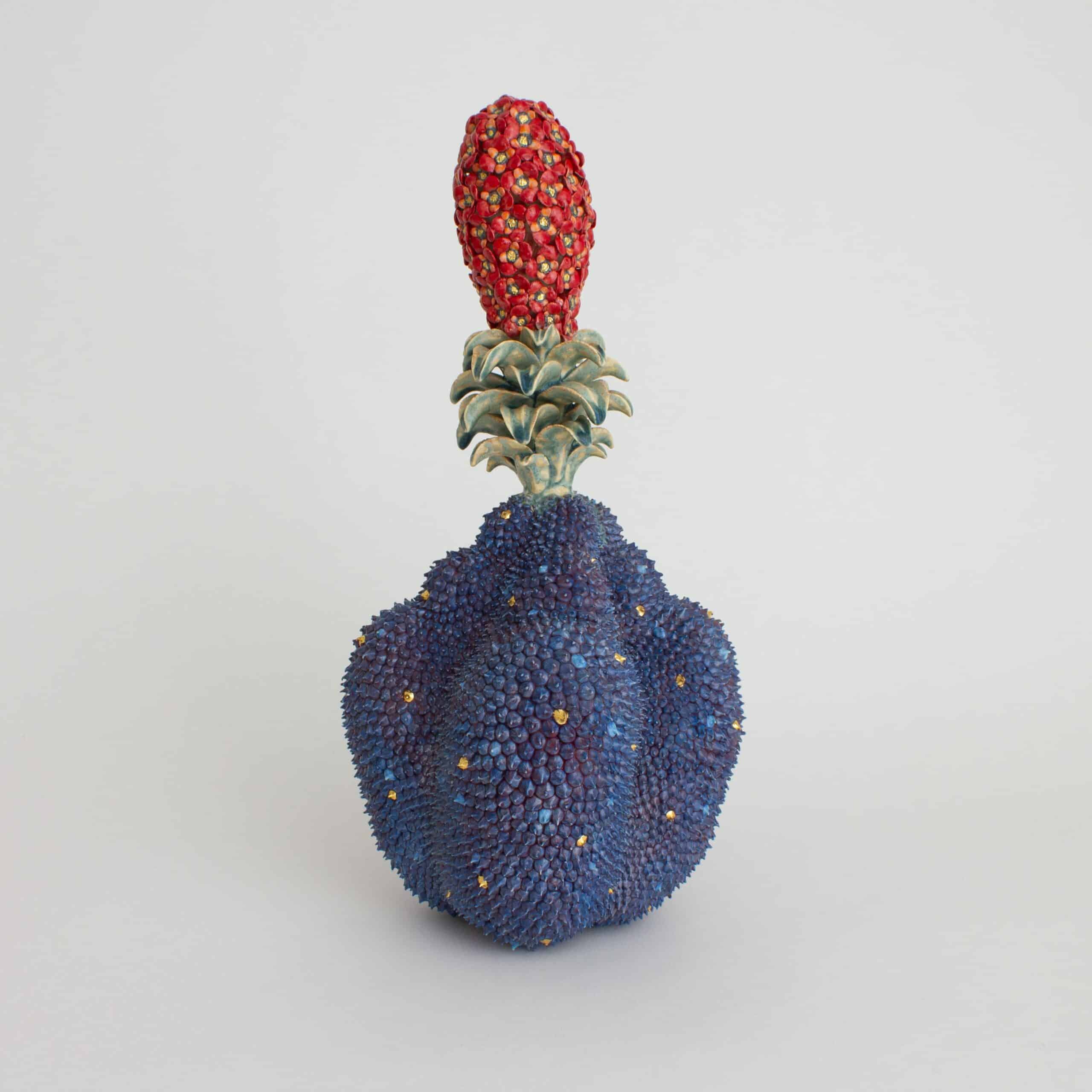
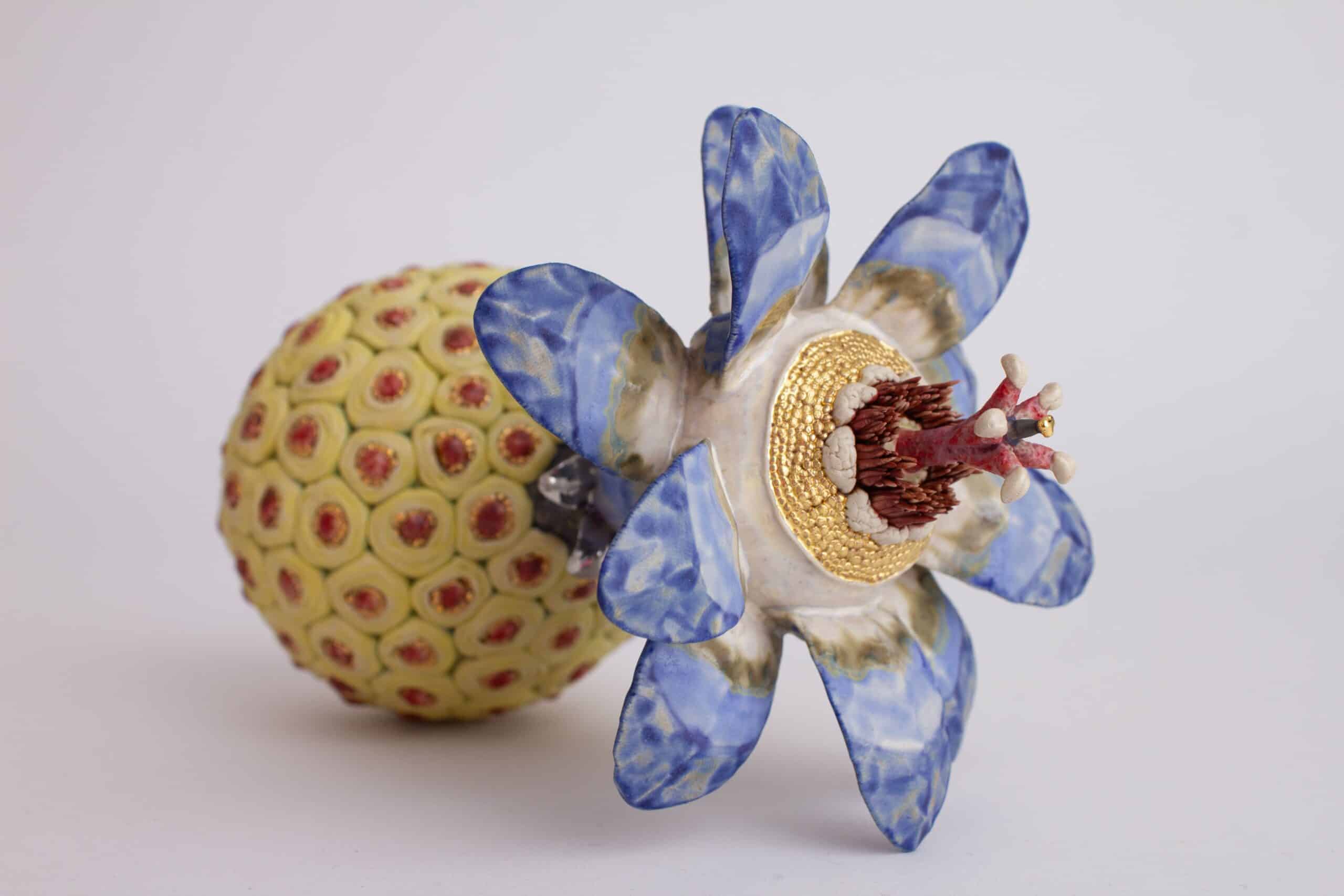
•Fruit embaumant la nuit • 2024
SMF: How did you develop this approach to ceramics? The initial impulse to create this series was born from my interest in the form of the duran (ndr: a great tropical fruit native to Southeast Asia) when I was a student. At the time, I didn't understand exactly why I was attracted to certain forms, but with time I realized that my attraction was mainly aimed at the structures based on the sequence of Fibonacci and the golden section in nature. Even though my work has a strong visual component, my main desire is to create that harmonious aesthetic feeling that nature transmits to me, reinterpreting it in my own way. SMF: **How important is manual work at every stage of your practice?**I make all production personally. Manual work is fundamental to me. My motives draw inspiration from nature. In particular, with plants, although many repeated leaves and petals seem the same, there are never two completely identical ones. I think that's what makes them look so natural to my eyes, and that's why I make every piece by hand, without using moulds. I live by a natural rhythm and try not to impose a precise will when I realize repetitive parts, so that they emerge spontaneously. At the moment I have no assistants, because I want to feel this dimension of the natural
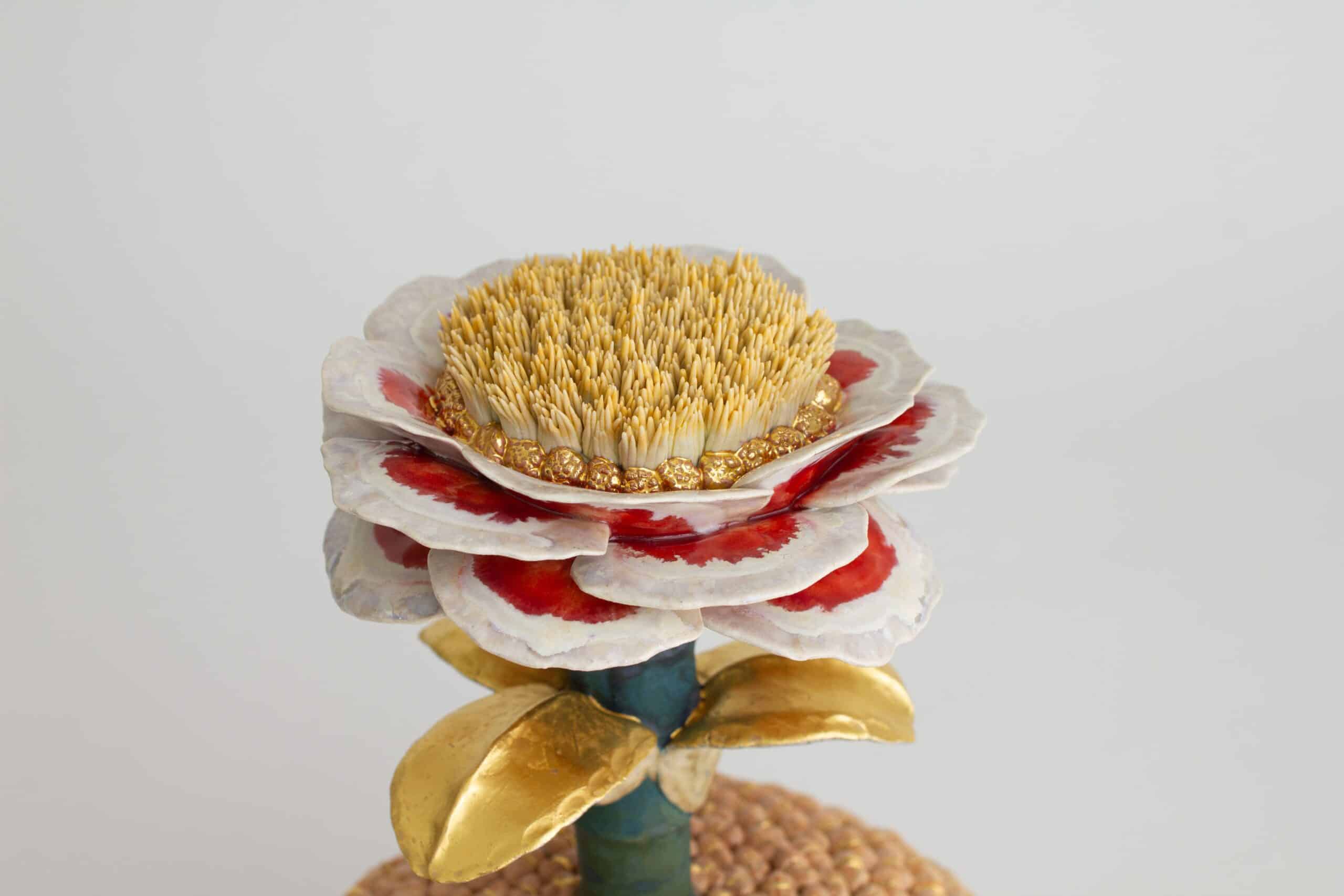
•Camélia dansant le matin • 2024
The interview with Kaori Kurichara marks a new stage of L'ARTE IN PRIMA PERSONA, a project promoted by Cramum together with Schiavi SpA, with the ideation, concept and creative direction of Sabino Maria Frassà.
Discover previous episodes:
Betty Salluce: towards an environmental body art?
To view videos, enable external content in your cookie preferences.