Sabino Maria Frassà for Art in the First Person There are artists who chase the image and others who let it mature. Ingar Krauss belongs to this second category. His photographs often come from an idea guarded for a long time, which takes shape slowly in the encounter with what happens during the work. They seem the result of a prolonged time of observation: fruits, flowers, domestic interiors, gardens, faces. Nothing seems random, but nothing is even rigidly programmed. Each image is thus built in a subtle balance between intention and unexpected.
Born in East Berlin in 1965, Krauss lives and works between Berlin and the Oderbruch campaign, on the border with Poland, where the rhythm of nature has become an integral part of his working method. After the beginnings dedicated mainly to portrait, his research has progressively focused on the still lifes, transforming fruits, vegetables, flowers and everyday objects into suspended presences, able to escape time and return an unexpected form of contemplation. Rather than documenting reality, his images seem to preserve it, keeping open the possibility of an ever new look.
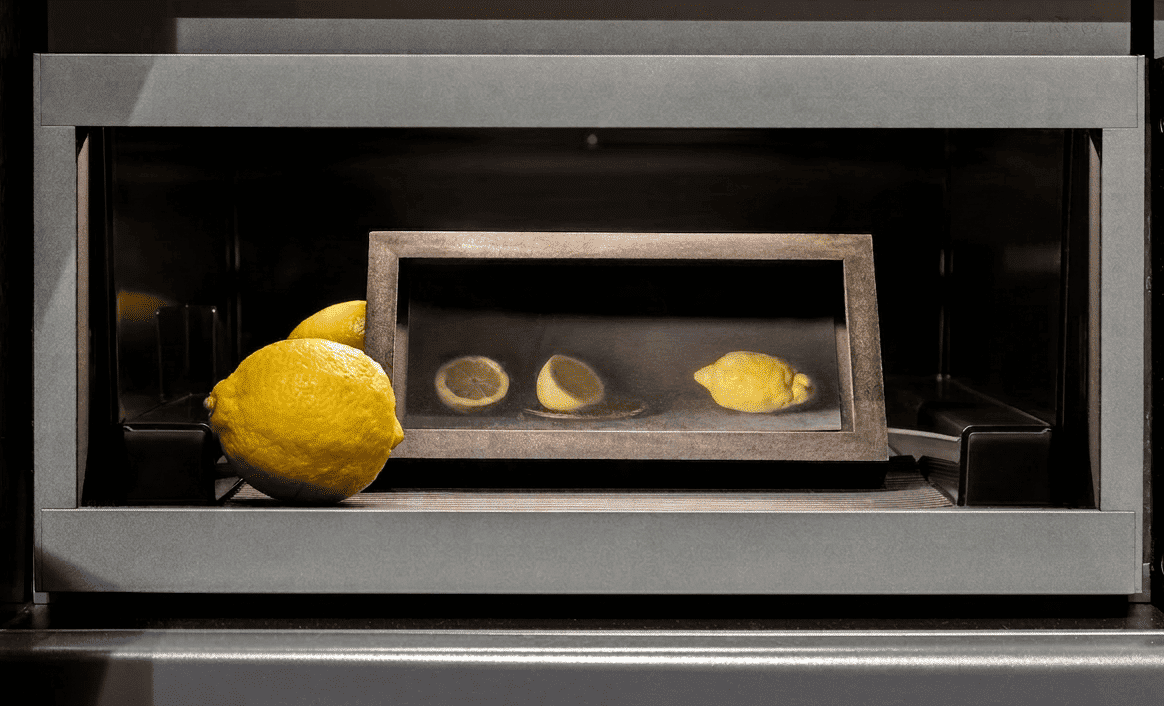
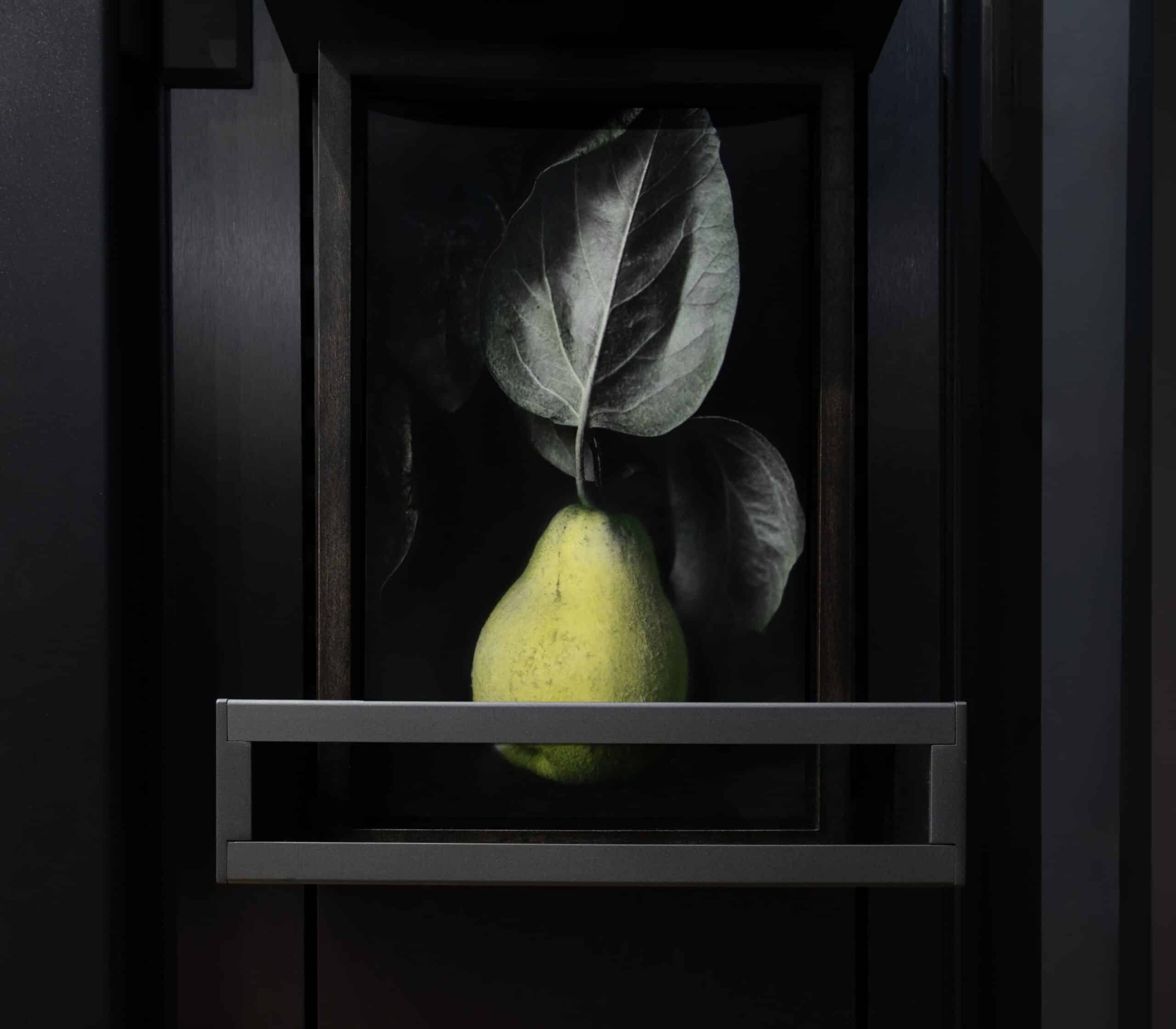
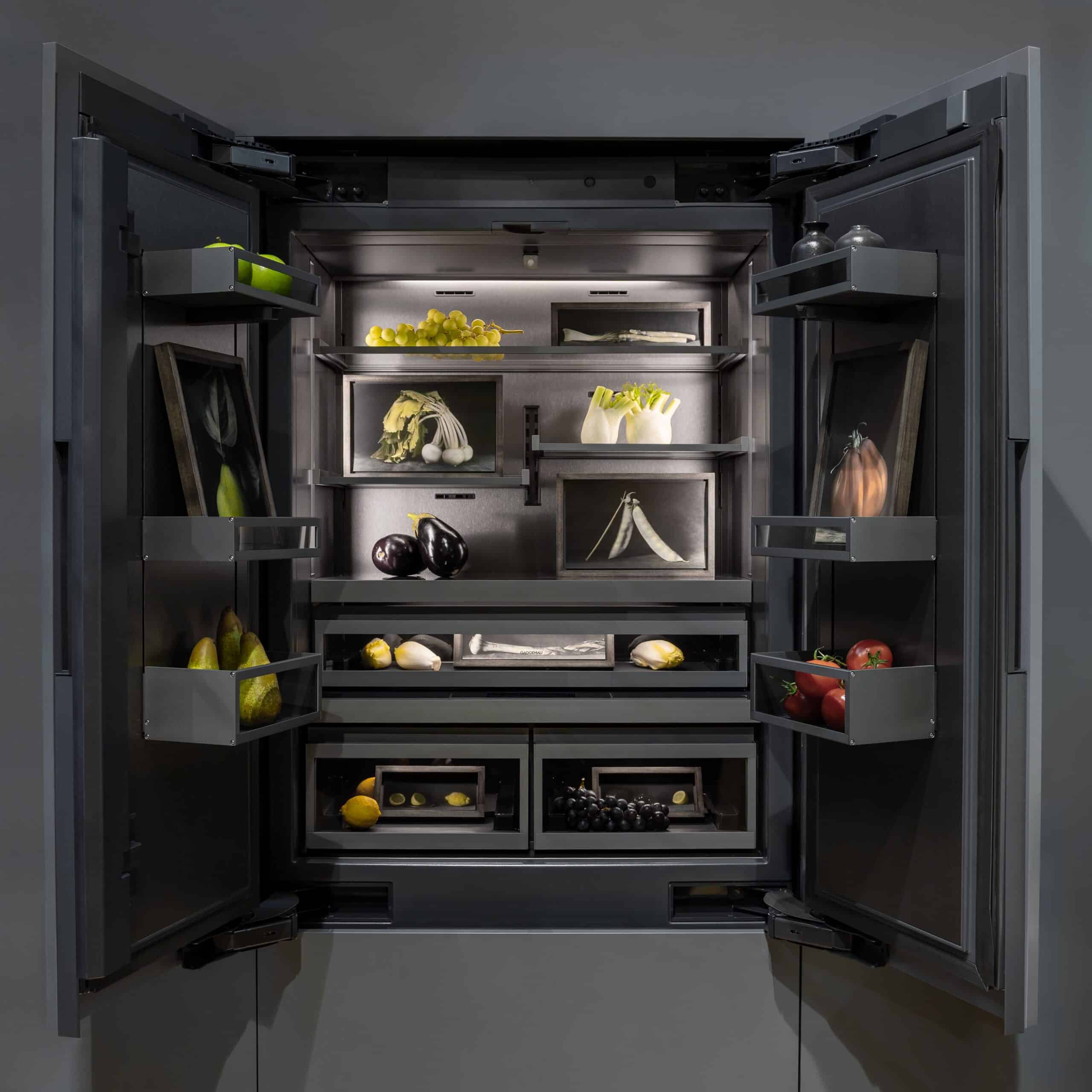
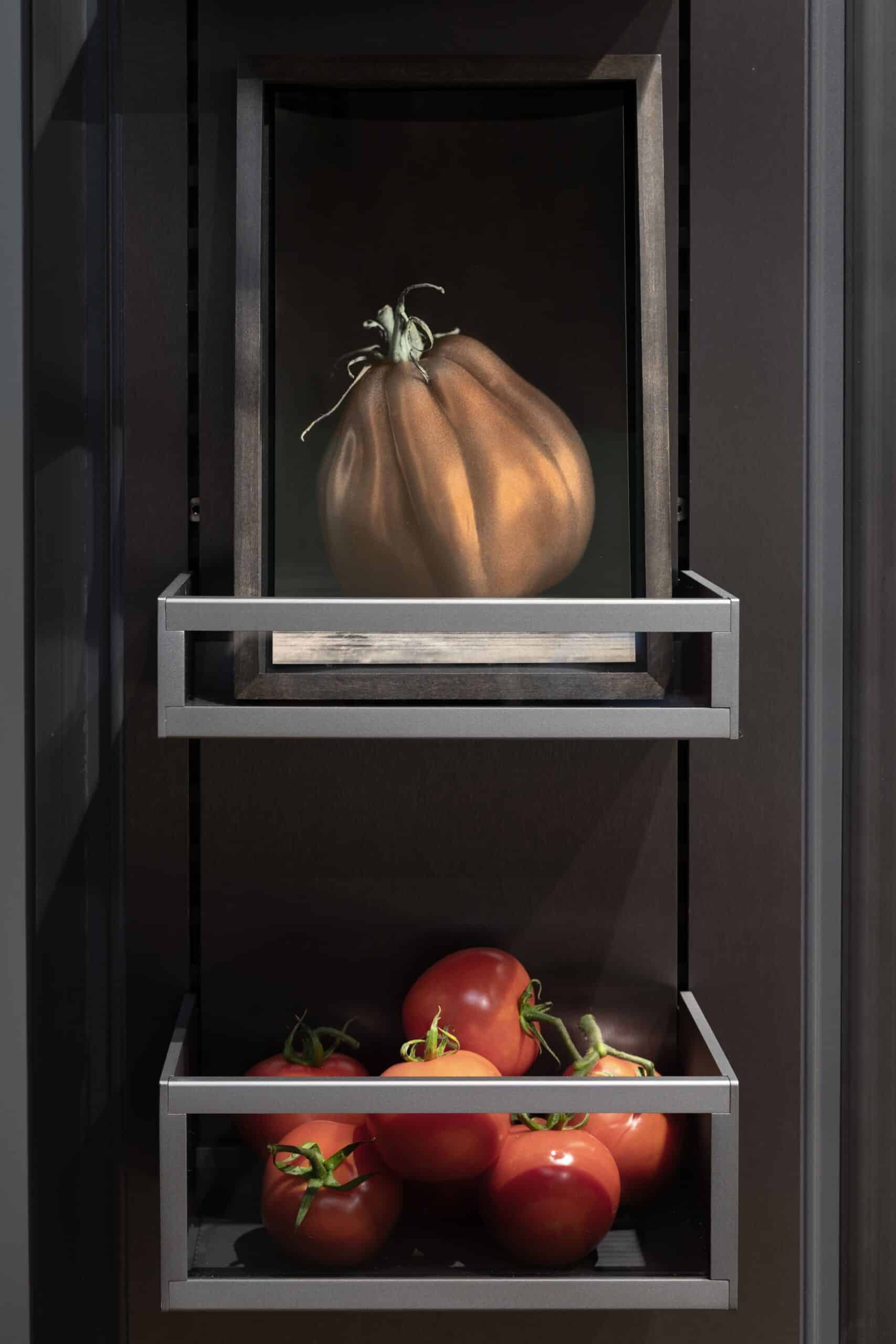
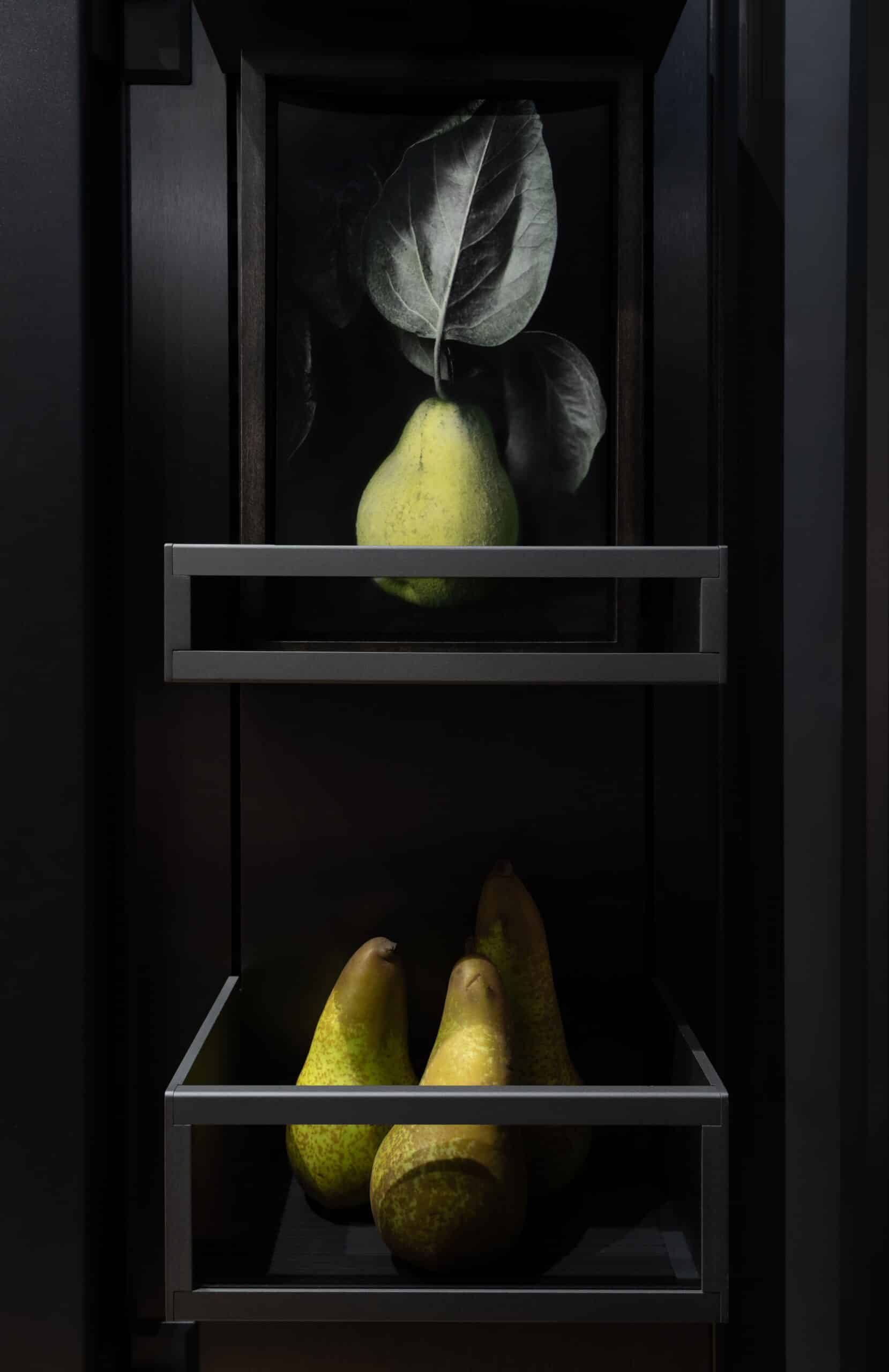
It is this idea of photography as a place of preservation and discovery that gave rise to D'ENTRO, the project promoted by Gaggenau and Cramum on the occasion of Artissima 2026, open to the public on 30 and 31 October. For the first time Krauss has conceived a corpus of works designed to be discovered inside a Gaggenau Vario Expressive Serie refrigerator, transforming a daily gesture   the opening of a door   in the beginning of an aesthetic experience.
We interviewed him on the occasion of the presentation of the project to talk about the birth of his images, of time, of the relationship with matter and of that slow practice of observation that continues to distinguish his research in the panorama of contemporary photography.
How does your work come about? I think by images and, in most cases, an image comes from an idea, a thought or a vision. Sometimes I carry that idea with me for a long time, before I arrive at the moment when I feel I am ready to give it shape.
Your dead natures appear to be built with great rigor. How does their composition come about? Sometimes I encounter fruits or plants that capture my attention, sometimes I deliberately seek them. From there I start to develop the image mentally. Sometimes I sketch the composition in advance and return to it at a later time. Other times, the final photograph is completely different from the one I had imagined. During the creative process it can happen practically anything: I start from an idea, but I never follow it too rigidly.
For many years the portrait has been at the centre of your research. Today, on the other hand, the still lifes seem to prevail. What attracts you most in this stage of your journey? At this moment it is easier for me to relate to the still lifes and other subjects rather than the portraits. Moreover, I feel that the still lifes offer me a larger creative space.
You have been faithful to analogue photography for almost forty years. Where does this choice come from? I simply believe that analog photography is better suited to my way of working and allows me to build a visual language different from the digital one. Therefore I continue to reserve the realization of the works, while I use digital photography only as a visual notebook: to note ideas destined for future images or, more simply, to document the works already completed.
How has your way of photographing changed in all these years? I still use the same cameras I worked with thirty years ago and even in my darkroom has changed very little. Of course today it is more difficult to find materials for analogue photography, especially photographic paper and chemicals for printing. This is the main difficulty I encounter in continuing to work in analog.
**You are a substantially self-taught artist. Have you ever been inspired by past or contemporary masters?**In fact, in my early years as an artist I deliberately avoided observing too many photographs, just because I didn't want to be influenced by them. This helped me develop my language in a more free way. Of course there are artists I admire a lot, both in the field of photography and in the field of visual arts. One of these is the Danish painter Vilhelm Hammershøi. In general, But I find much more inspiration in visual arts than in photography.
What continues to fascinate you with Hammershøi's work?** Hammershøi's interests are mainly for me in interiors. I think that in these images it was really early. In the recent exhibition Vilhelm Hammershøi. The Eye That Listens, at the Kunsthaus in Zurich, was also exhibited an extraordinary painting by Adolf Menzel depicting a staircase immersed in the shadows. And then there was a portrait of Hammershøi of a young sick woman: a very clear, essential image, but with an incredible presence.
** Speaking of interiors, are you known especially for portraits and still lifes, but in your photography also the places seem to be protagonists. In such constructed images, interiors, gardens and architectures can really be random?** Of course, the interiors inhabit always reveal something of the people who live them. In the series dedicated to men who live alone, for example, the domestic spaces have a central role and, in some cases, I personally design and set up the photographed environments. Architecture is also important in other works: I am making a series on urban gardens, some of which are located in Italy, in which I consider the structure of the garden fundamental. In the project realized for Santoni in Milan, instead, I have approached portraits with night views of Milanese architecture.
For Gaggenau we asked you to conceive a corpus of works thought of as a small exhibition inside a refrigerator. What convinced you most about this proposal? I found the design of the Gaggenau refrigerator a fascinating idea and a particularly stimulating artistic challenge. From the beginning, the curatorial vision at the base of the project seemed convincing and anything but obvious: I was thrilled to investigate the relationship between the object, the work that it holds and the space in which it reveals itself. Transforming a daily object of high design into an exhibition space, until it itself becomes an art object capable of welcoming other works, has for me a special charm, which I hope the project will fully return.
Pictures ©Francesca Piovesan
The interview with Ingar Krauss marks a new stage of L'ARTE IN FIRST PERSON, a project promoted by Cramum together with Schiavi SpA, with the ideation, concept and creative direction of Sabino Maria Frassà.
Discover previous episodes:
Sew stone. Post-human art by Emilio Fuentes Traverso
To view videos, enable external content in your cookie preferences.