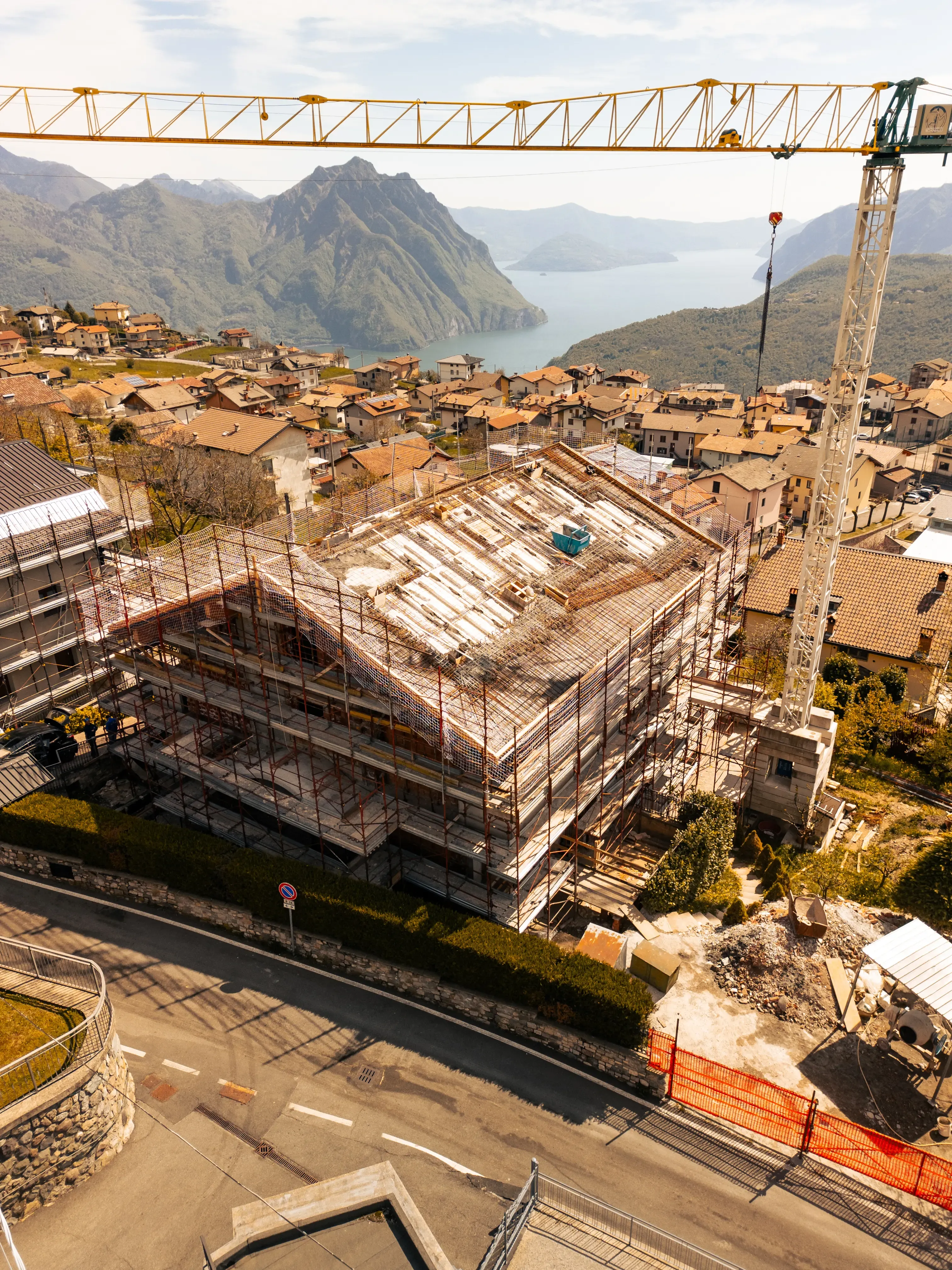

Italians want to buy their own house, with an interest in this area increased by 13.8% in the last year: this is the result of the recent ** FIMAA • Confcommercio survey** on our country's ** real estate market** and related in particular to sales in 2023. According to the Italian Federation of Agents Business brokers (FIMAA), the real estate sector has recently experienced an important phase transition, moving from a decrease in sales found in the first nine months of last year (as compared with a slight increase in real estate prices, equal to .. 1.8%) to a progressive set-up in the following period.
It increases consumer confidence and the desire to buy new properties Interesting is to note that the increase in property prices is, at least in part, influenced by the construction of new homes: a trend that responds to an actual demand of the market. In fact, the president of FIMAA Santino Taverna, Energy efficient** However, at least for the time being we are facing a marked dissonance between supply and demand** because, although demand increases, the percentage of new houses sold compared to the total is still halved due to a lack of availability (17.7% of 2023 versus 34.8% of 2010).
What emerges most from the Federation's investigation is the improvement of the general 's sentiment', i.e. of the consumer confidence and the desire to buy new properties, linked to the low interest rates on loans and to the significant increase in rent. In practice, today buying a house is worth more than renting it.
In addition, FIMAA points out thatthe high demand for rented housing has convinced many small and medium-sized investors to buy mobile to be put on income, while large investors are looking for properties to be offered for rent in urban areas more popular or tourist most appreciated.
High restructuring costs, economic and fiscal concerns hinder the desire to invest Despite the increase in purchasing will, however, there are some critical issues that reduce the drive to invest in the brick. Among the predominant factors are the high restructuring costs, the generalised fears linked to employment, current economic situation and mortgage rates, and the complexity of the tax and regulatory framework, for example in the area of capital gains taxation and energy classification.
In view of the above, a real estate market is expected for the current year, characterized by what Andrea Oliva, Coordinator of FIMAA Studies, defines ** a strong mismatch** . For two out of three members, in fact, • demand for rental properties will grow** in the coming months, probably due to the ** difficulties of accessing a loan** and to the high interest rates • On the contrary, • 34.2% believes that demand will remain stable and 3.3% assumes a decrease.
As for the offer of real estate**, 43.9% of the members of the Federation fear an additional reduction in availability (compared to 48.8% who believes that this will remain stable and 7.3% that expects an increase). Finally, some numbers related to the perception of the rental canons: 58% of the respondents are said to be certain that there will be new increases, 37.1% believe that will remain stable and the remaining 4.9% predict a reduction.
To view videos, enable external content in your cookie preferences.