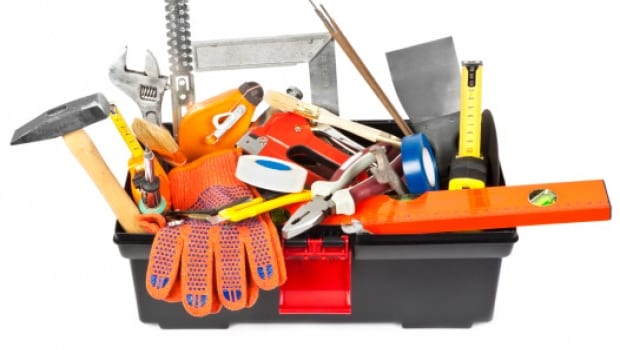
In a previous article we have already explained what can not be missing in the toolbox and we have illustrated what are The 4 indispensable tools.
Today we want to talk about other instruments that are not indispensable but will prove to be really useful and important.
English key The keys are used to screw and unscrew nuts and bolts and are available in various sizes and shapes. Their size is expressed in mm or in inches. Among the various versions we find: double keys, combined keys and adjustable ones that are equipped with a wheel.
Level It is the tool par excellence for measuring slopes. It is really useful to determine slope and orientation of surfaces or even to align a series of holes or signs. On the market there are two models: bubble or laser. The first type, thanks to an air bubble contained in a graduated cylinder, indicates the horizontal and in some models also the vertical. The laser level is very useful instead to draw a light line and determine if a series of points are on the same line.
Cable caliper To replace a plug, cut an electric cable that must be prepared to enter the spaces. This particular electric caliper serves to cut and remove that piece of plastic sheath that isolate the copper filament. On the market there are various models from the economic and basic ones to the more professional and adjustable ones.
Calibro The calibre is very useful for detecting external and internal measurements, if you find several versions the most suitable for occasional use is the cradle type. Better to opt for a metal calibre with a fairly accurate graduated scale.
Folding and flexible metro It is a real classic of building the yellow folding metro with wooden or plastic sticks with brass joints. It is convenient to use because it remains rigid and therefore is convenient to measure distances even vertically. Or you can opt for a flexible meter: consisting of a strip of graduated metal that rewinds automatically thanks to a spring. It also allows you to measure rounded and irregular shapes.
Rasps and files They are used to smooth metal and wood. The rasps have larger and protruding teeth and are used for roughness of the material, while the files for more precise work. Be careful to always use them in the direction of the fibers when used on the wood, while on the metal you have to calibrate the strength according to the hardness of the material.
Clamp The clamp is used to block an object on which you have to intervene. There are several sizes and with different finishes. The type of clamp varies according to the type of work. Usually for a classic use and without many pretensions is sufficient a traditional clamp that allows a fast closure and that has the jaws of the clamp protected with PVC platelets to not ruin the object at the point of grip.
To view videos, enable external content in your cookie preferences.