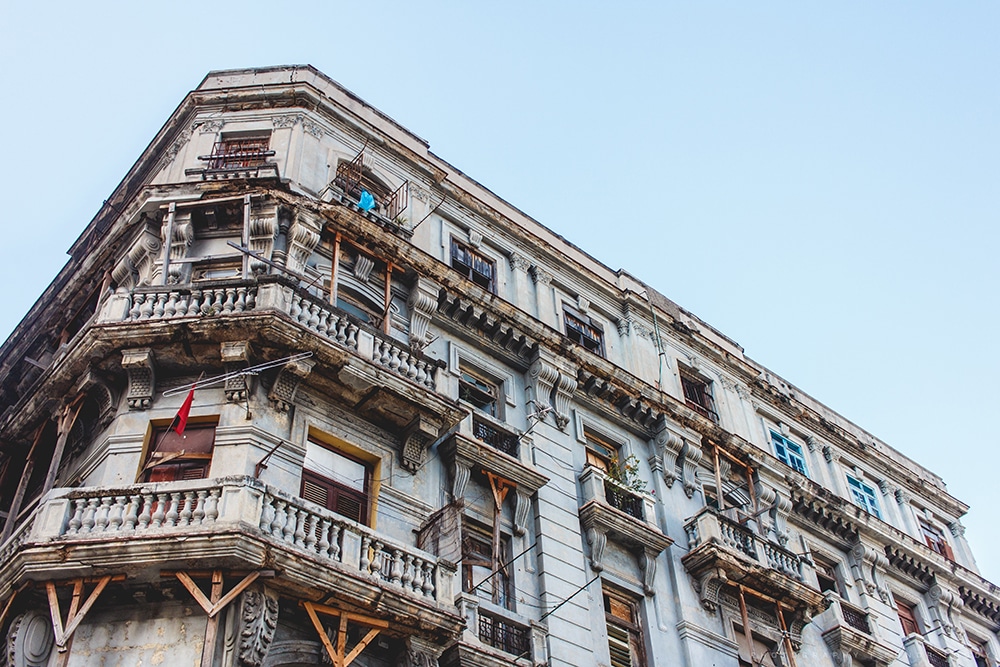
In the UK**, the first appearance of balconies understood as we know them today is dated to the late Georgian period**, when these artifacts were specifically commissioned to the most renowned architects with the aim of guaranteeing the houses of the nobility a ** aspect** especially prestigious. Originally characterized by ** very showy decorative elements in wrought iron**, these balconies were rectangular and extended exclusively by the width of the window door, on the first floor of the stables.
At the beginning of the nineteenth century, the ** wrought iron balconies** had reached a certain popularity** and the fashion of the moment provided for the inclusion, in the decorations, of classical reasons. As the years passed, the decorations became increasingly intricate and examples of this historical and cultural phase are still visible in some balconies of London, Bath and Chelthenham.
In the Regency age, the mass production (at ever lower costs) of wrought iron balconies made the use of it very widespread: it was the time of the ** decorative balconies** which, among their motives, incorporated mainly vases and acorns. Many typical villages of the period showed balconies at all height that, besides having an aesthetic purpose, protected the dwelling from the entrance of unwanted intruders.
The works of Carthusian wrought iron destined for balconies continued to find application in the Victorian properties**: these artifacts managed to keep pace with the popular ** French windows**! It was then the recognition of the benefits given by sunlight to push the architects towards the search for an increased natural brightness inside the apartments. At the same time, new techniques were born in the production and decoration of the glass: that was the real moment of boom for balconies. Victorians took inspiration from the rest of Europe to develop their unique vision of decorative balconies • always based on a smashing • aesthetic impact and a wide use of wrought iron. Then the Edwardians brought the balconies to an even higher level. How did they do it? Simply ** increasing their size**, and extending them in width so that the balconies had access to more than one window door. On the other hand, the buildings were also in the meantimebecame bigger and with them the need to spend more time outside** was pressing: the balustrades, made mainly of wrought iron or white wood carved, had precisely this purpose. Today, the increase in population density** in the cities and the redevelopment of areas once purely industrial has certainly an important weight in the way of building houses and apartments. However, the balconies are experiencing a kind of rebirth, because the designers and owners of the properties perceive them as pleasing additions to the domestic space, capable of guaranteeing air, living space and above all light.
On the other hand, the splendors of the past are over**: technological innovations in the materials sector have drastically changed the appearance of the English balconies, today mainly made in aluminium and glass, while the limits of the balustrades are always pushed a little further: their versatility makes them perfect both for ex-novo architectural projects and for renovations and requalifications, as well as for the completion of structures of any style.
To view videos, enable external content in your cookie preferences.