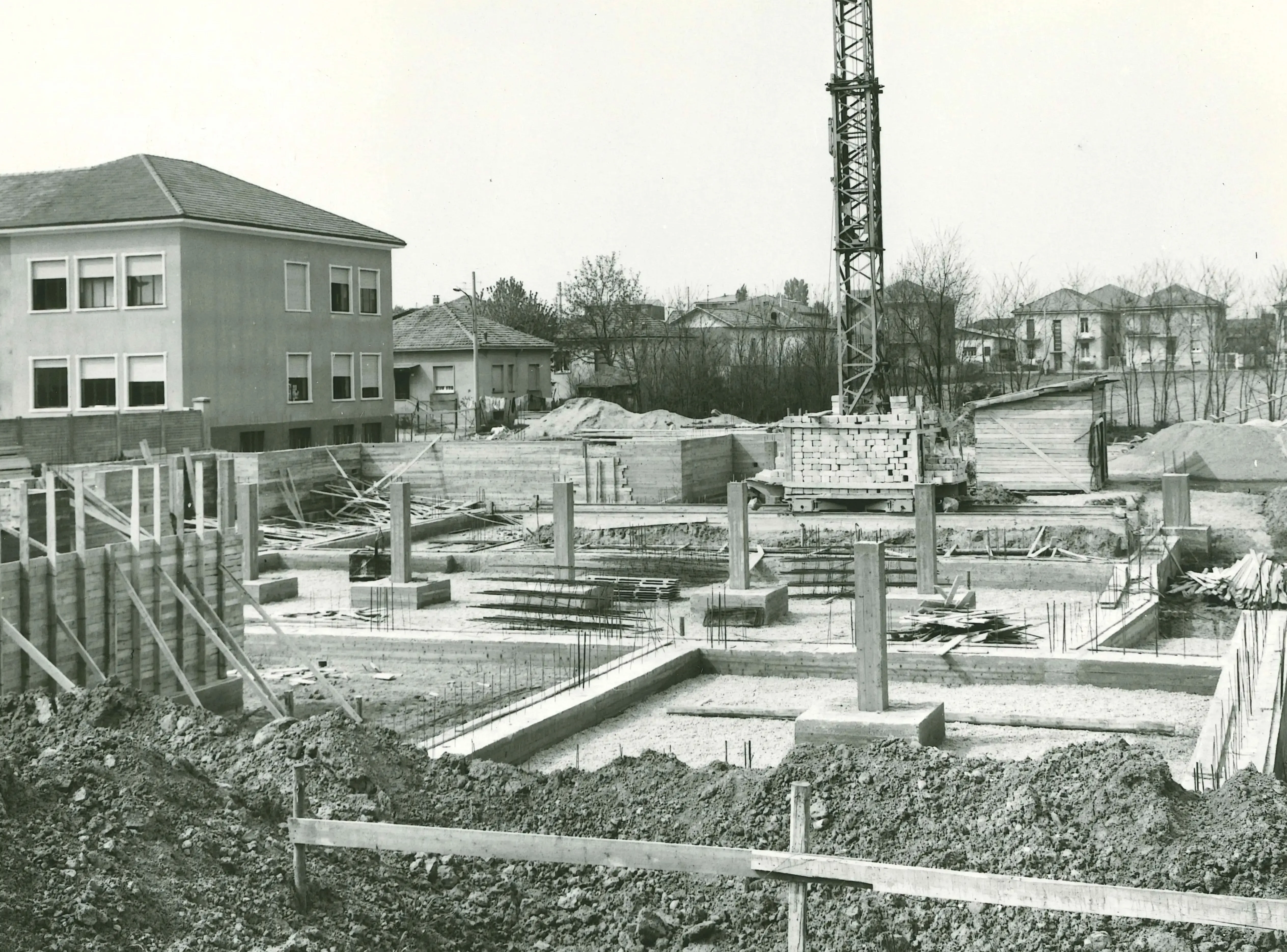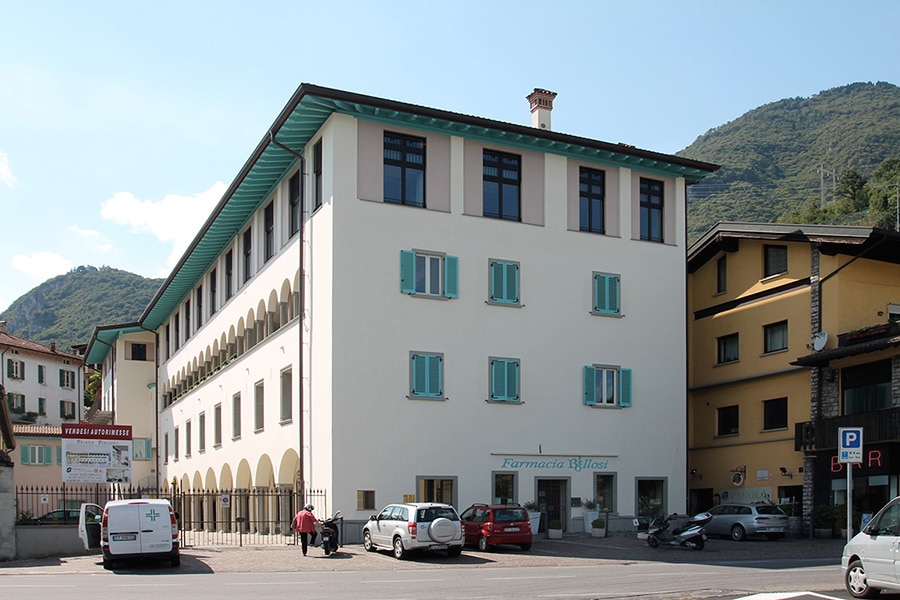
For months we have been exploring together with you the complex project of restoration, renovation and redevelopment of the splendid Palazzo Ferlendis, historical building in Lovere. We moved from the heart and the bossing of the property, retracing the interventions that have become necessary for its supporting structure, moving then towards the outside. It is no coincidence that today we will tell you how we cleaned the aesthetics, that is, the leather of the palace, through the ** renovation of its plasters and its masonry.** The world of plasters is more various and articulated than one might initially think. Basically, the plaster is constituted of three elements: a legant, a ** aggregate** and a part ofwater. However, the use of different types of binder (cement, lime or plaster), the use of sand of various granulometry as aggregate and the possibility of mixing these elements with different quantities of water make it possible to obtain a vast range of plasters, all with different characteristics.
Since the structure of the building is made up of ancient stone walls subject to humidity, it has proved very important to intervene with a plaster that is able to allow the masonry to breathe , i.e. to disperse the humidity inside the room. The type of plaster most suitable in these cases is the based lime since ancient times. While the plaster based plaster** tends to 'consume itself' very quickly when applied on the outer walls, and the cement base***** with its waterproofness characteristics to water and water vapour • imprisons the water inside the walls generating dangerous condensation phenomena inside the wall, the plaster based on lime allows the walls to disperse the accumulated humidity and guarantees at the same time an exceptional resistance to atmospheric agents.
During the construction phase of the project, after having scrovate the existing plaster and secured the masonry, proceeding to scrap them with the help of a ** metal net* that could improve static and mechanical performance, we proceeded to realization of the new coatings. Contrary to what might be thought, the plaster is not definable as a single element applied on the wall. It is in fact consisting of three different layers: the first, defined rescaffo , consists of a rather liquid base applied directly on the masonry. Its purpose is to fill the irregularities of the wall with a uniform base on which to apply the thicker layer. This second layer is called "smart" (smart) and is the real body of the plaster. Only in the final phase is the thin layer** that remains more visible to the eye of the observer, that is the so-called "finish" (smart) . The process of the process put in place by Schiavi SpA ** for Palazzo Ferlendis**. A careful and studied intervention in detail and specifically for the building, which allowed the Palace to be brought back to its deserved original beauty.
To view videos, enable external content in your cookie preferences.