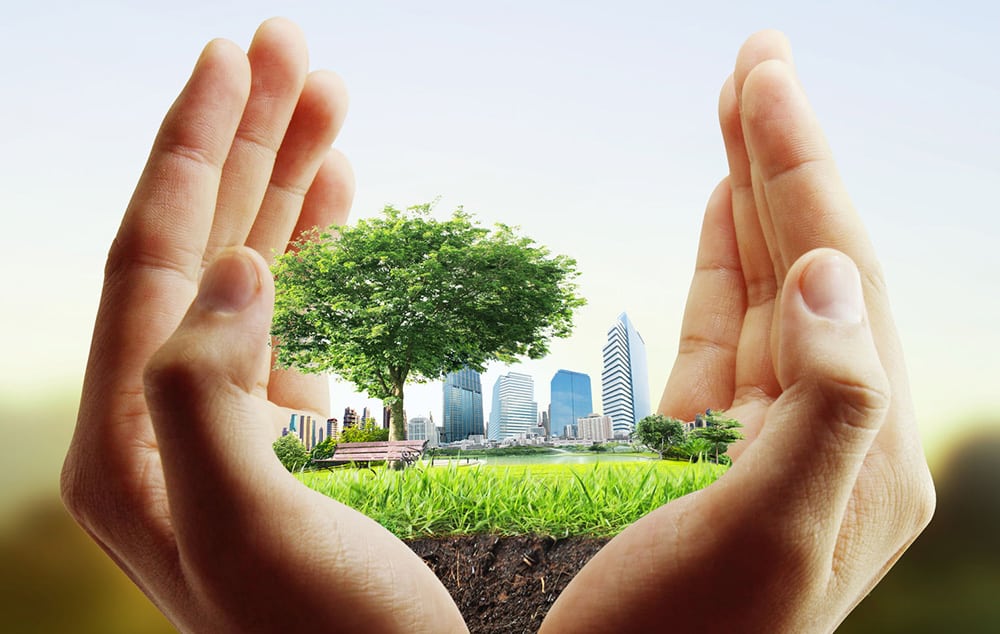
We hear now daily about Green Building and, at a time when Ecosustainability is a concept that is increasingly destined to guide both activities individual and company and collective, the importance of understanding what this term means becomes fundamental. It defines Green Building a building that, from the phases of design before those executive and constructive then, is designed to prove ** both performing and sustainable**, both from the point of view of the well-being of those who live there, and from that of the ecological footprint. In a nutshell, the Green Buildings, or green buildings, are designed to pollute less and ensure a higher quality of life for their inhabitants. In more general terms, the term Green Building also contains a series of protocols for the so-called "sustainable building**" (the goal of which is not only to measure the ecological impact of a building building but also to reduce it in a sensitive way** throughout its entire life cycle.
As you can imagine, a Green Building is the result of very careful design choices, a very accurate selection of materials and technologies, and a detailed study of the related aspect all energy absorption of buildings. In this sense, therefore, the building is no longer considered a simple container, but rather a holistic organism in complete relation to both those who live it and the surrounding environment, in which it must integrate as much as possible without defacement, and reducing to a minimum its own polluting emissions. The variable that can be assessed in the context of the sustainability of the buildings are numerous:
- Location and Sustainability of the Site
- Materials used and their pollutant impact
- Resources consumption
- Content of energy consumption
- Safeguarding air quality within the building
- Recovery of materials and re-entry into the production cycle
- Reduction of gas and noise emissions
The applications of the concept of Green Building The concept that is at the basis of the philosophy linked to the Green Building is based on the awareness of the high level of pollution that characterizes our planet, as well as its scarce water resources and the problem of climate change. This is accompanied by an increasingly marked awareness by the construction companies, which now marry synergic approaches in which we experience the fusion of technological excellence, environmental sustainability, innovation, design and constructive quality.
The building sector as a whole is the real protagonist of the Green Building**, through the entire design, production and maintenance chain. This new approach to construction will involve designers, architects, engineers, interior designers and outdoor designers, as well as construction and maintenance companies. At the application level, almost **any building can be
- Private residences
- Industrial sheds
- Logistics and commercial structures
- Professional buildings
- Public buildings
- Places of aggregation or hospitality The basis of the design of each of these buildings, there will always have to be the driving principles on which the concept of green building is based.
The advantages of the Green Building The advantages of an ever greener building** and oriented towards greater respect for the environment, but at the same time more and more calibrated on the needs of livability of the inhabitants, are undeniable and numerous. Not only the concept of absolute respect that lies at the basis of this new way of building brings with it a more precautionary approach towards the exploitation of resources in their entirety, but also concrete savings prospects: buildings generated by a virtuous cycle are in fact less expensive by nature, because they involve a ** reduction of waste**, an optimization of activities and an increasingly marked recycling of elements and materials. In any case, among the main benefits of the Green Building should be included:
- A greater respect for the planet, since a more sustainable building fits better not only in the natural environment that surrounds it, but also in the urban one without causing damage. The Green Building is based on harmony with natural elements such as air, water, sun and soil.
- An increased commercial value, easily spendable even in the long run. Green buildings are considered increasingly attractive in the real estate market, thanks to the high comfort and excellent energy efficiency that distinguishes them.
- A concrete economic saving for the inhabitants. An eco-sustainable house is, by its nature, less energizing and this means that the energy needs it requires is significantly lower than that of a traditional building. The use of new generation plant and renewable technologies allows a smooth harmonisation of initial investments in a relatively short time, compared to a concrete saving on consumption and an increased housing well-being.
To view videos, enable external content in your cookie preferences.