The technology** is one of the sectors that have been most up-and-coming in recent decades. The updates and investments in this area are constant, to the point that technologies that until yesterday seemed to be at the forefront can become obsolete in a short period of time (the term "technological obsolescence**" is, not by chance, specifically linked to the current era), and affect practically all industrial context**.
The largest range is the digital transformation** which has now been tracified in every production sector, with the aim of modernising it** and making it more performing and resilient. The building** is also subjected to this crucial metamorphosis and, in reflection, the concept of home is modified and shaped with the help of new technologies.
How technology influences contemporary construction The digital transformation in the construction sector affects every stage of the construction process, starting with its design. If we consider that over a few decades, we have moved from the graphics work done by hand to the ** 3D modeling** of the well-known BIM (Building Information Modeling), and that the communications themselves between designer and client have moved from the architecture studio to the space in Cloud,** we easily understand that we are facing a very rapid and detonating revolution in the sector.
technology is also of practical interest todaythe construction site: the super-collaudatitraditional materials bio-compounds, of geopolimes from the scraps of marble, Tissue facets, just to name a few) that respect the environment and promote the recycle of materials which were once considered simply 'waste'. Obviously, not to mention the technology applied to production processes, which streamlines activities and makes them faster, more efficient and precise: a good example in this sense is the prefabrication of particular construction elements at the manufacturer and the delivery of the manufactured "a measure" directly to the yard.
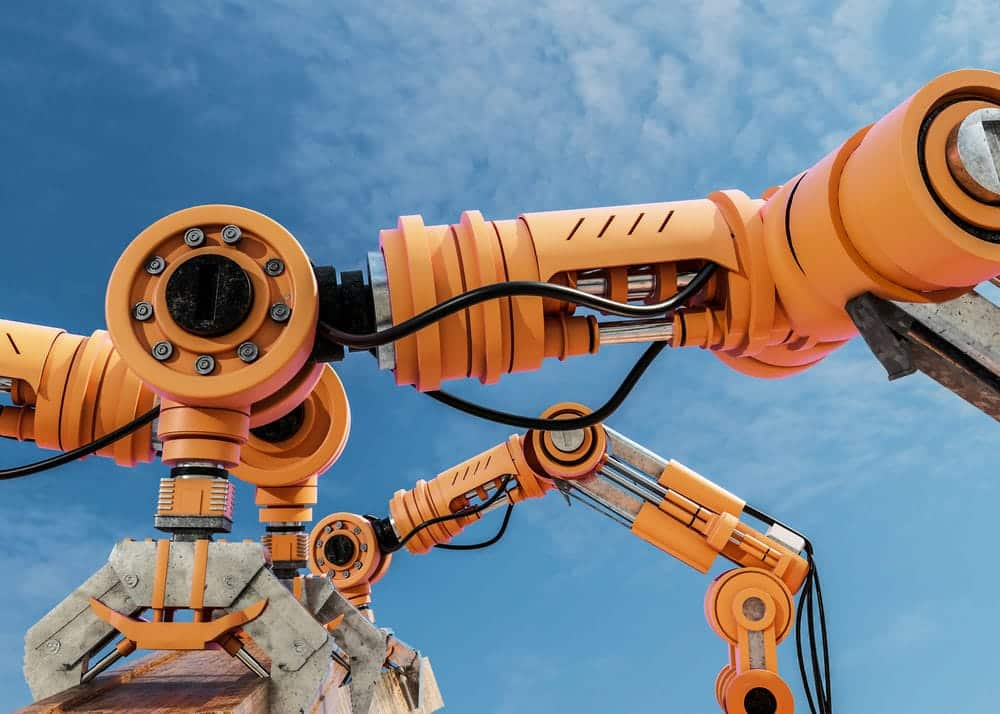
And again, on the site, they appear robotic systems, automation and even artificial intelligence/machine learning, which increase the safety of operators** and fasten operations. In the field of robotics** in particular, an increasingly intensive use of machines reserved for assembly and assembly of components; external cybernetic equipment for support of the operators' bodies (these are the so-called robotic exoskeletons, i.e. wearable robots), and the aforementioned robotic constructors in three dimensions. As regards the monitoring and organisation of operations on site, the digitalization aims at the self-contained rovers equipped with sensors and high-definition cameras for continuous-cycle earthworks within the sites; visors for the verification and control of the progress of work and, more generally, of the equipment and systems related to the sensoristic for the detection of specific technical characteristics (e.g. of the plants).
In short, the ** cantiere di domani** is inevitably destined to become an increasingly technological and automated place**, while remaining "seat" of human ingenuity: a place where the digitalization is accompanied "experience of specialists to configure the buildings in order to adapt in advance to the needs of those who will live in them, and where the living well-being is always guaranteed as well as the safety and health of the spaces.
The objectives of technological innovation in buildings The objectives of technological innovation in the construction sector** are many: on the one hand, there is now a pressing need to reduce greenhouse gas emissions** and water consumption**, limit waste production and structure circular systems of recovering materials Technology is therefore today at the service of what we could call a sustainable building** from the environmental, economic and social point of view**. This last approach is the 3D printing of buildings applied to wood manufacture which is believed to be likely to solve in the near future the housing challenges in the least favoured countries thanks to its ability to build economically approachable, quickly inhabitable and of goodquality overall.
To view videos, enable external content in your cookie preferences.