It is defined as a passive house** a building that is able, alone, to cover most of its energy dream both for heating and cooling the environment, without overburdening the environment and producing, at the same time, savings and well-being for the inhabitants**.
In practical terms, a passive house manages to maintain a good degree of well-being in the interiors during all four seasons, ensuring a constant high level of comfort: fresh during the most affluent months, hot during the winter, it is also able to keep controlled l"humidity inside the environments, reducing the possibility of mold formation and thus offering a good level of health. If we were to watch statistics, the first number that would be worth mentioning is 90%. This is the percentage of energy consumption ** that a passive house brings compared to a traditional construction, and that mainly affects the so feared costs of heating and cooling. But how does the passive house** succeed in offering such a performance? The answer lies in the five key pillars that characterize it:
- The passive house is by its nature designed to ensure a very high degree of thermal insulation**
- It involves the installation of infittings and windows of excellent quality, in order to avoid further dispersions
- It is designed to respond adequately in terms of the ** air hold**, snow, hail and sudden temperature changes
- It is generally equipped with special ventilation systems which also involve heat recovery
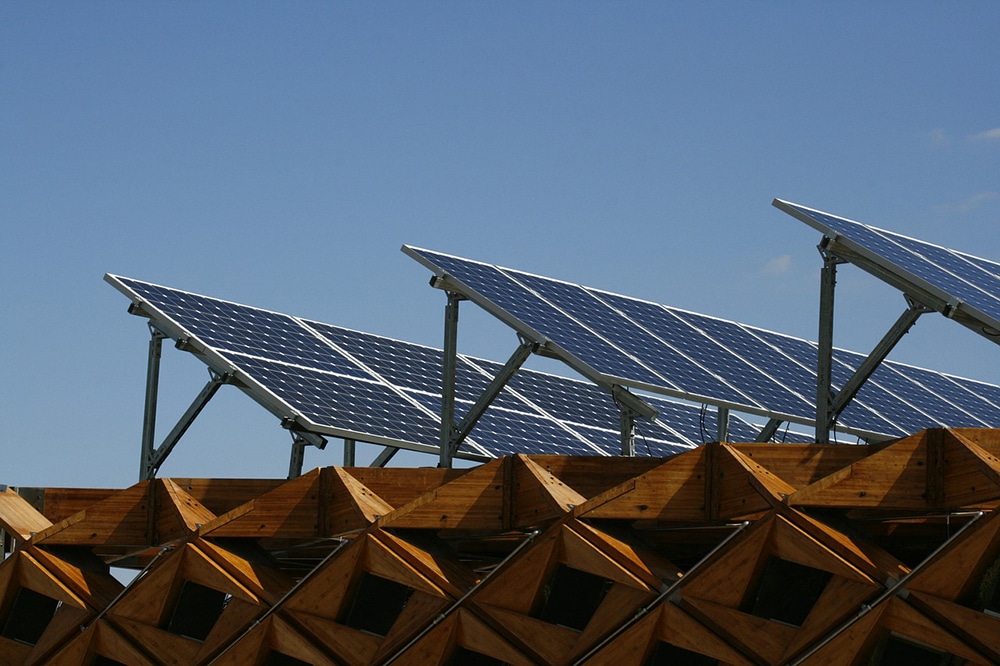
- It involves the complete or almost total ** elimination of thermal bridges**, reducing heat dispersion Typically, the passive house . standard . is also equipped with ** photovoltaic systems and solar panels**, respectively responsible for the production of electricity and hot water sanitary. In short, it is in everything and for everything of a house that manages to manage almost
Why the passive house is green: the appearance of eco-sustainability
L'Employment of this, but also that of the future, all aims at the construction of ** buildings that are less and less energetic** and increasingly in communication , not invasion , with the surrounding environment. In this sense, the new technologies allow to marry two concepts as ** ecosustainability**, understood as well-being of the planet, and quality of life, understood as the well-being of people.
When housing manages to keep substantially the temperatures and well-being conditions unchanged in its own interiors, it is clear that the need to turn on heating or cooling system** is reduced significantly**, not only resulting in ** consumption reduction** economic but also with a much smaller impact in terms of environmental pollution. In this way, resources by their very nature, such as gas or oil, are consumed in a very small part, especially because the use of renewable sources such as solar or geothermal energy is always promoted and exploited in the first instance.
At the same time, also the use of natural materials, ** locally produced and non-polluting** • such wood contributes to both quality of life and to the protection of the environment, while reducing the dangerous carbon dioxide emissions generated even only by the transport in situ during the construction phase. Finally, it is important to remember that, although the passive house may be slightly expensive ** economically** due to the highest care in the design phase and the careful choice of high quality materials, the investment in the short, medium and long term is absolutely advantageous. The cost incurred is in fact completely refundable by the significant energy saving generated by this type of building, and by performances that are maintained excellent even over time. Wide to a future greener, therefore!
To view videos, enable external content in your cookie preferences.