With l"energy efficiency now become Central theme in the real estate sector and in the environmental policies of an increasing number of countries, there are now several innovative solutions available to reduce consumption, reduce CO2 emissions and improve the housing comfort of buildings.
The heat coat is certainly among the most important, since it allows to increase effectively the energy performance of a building**: this insulation system reduces heat losses through the walls, helping to maintain a more stable internal temperature in winter and summer. But how many energy classes can be actually earned by installing a heat coat? We will then look into this specific theme in order to encourage an even more informed and effective choice.
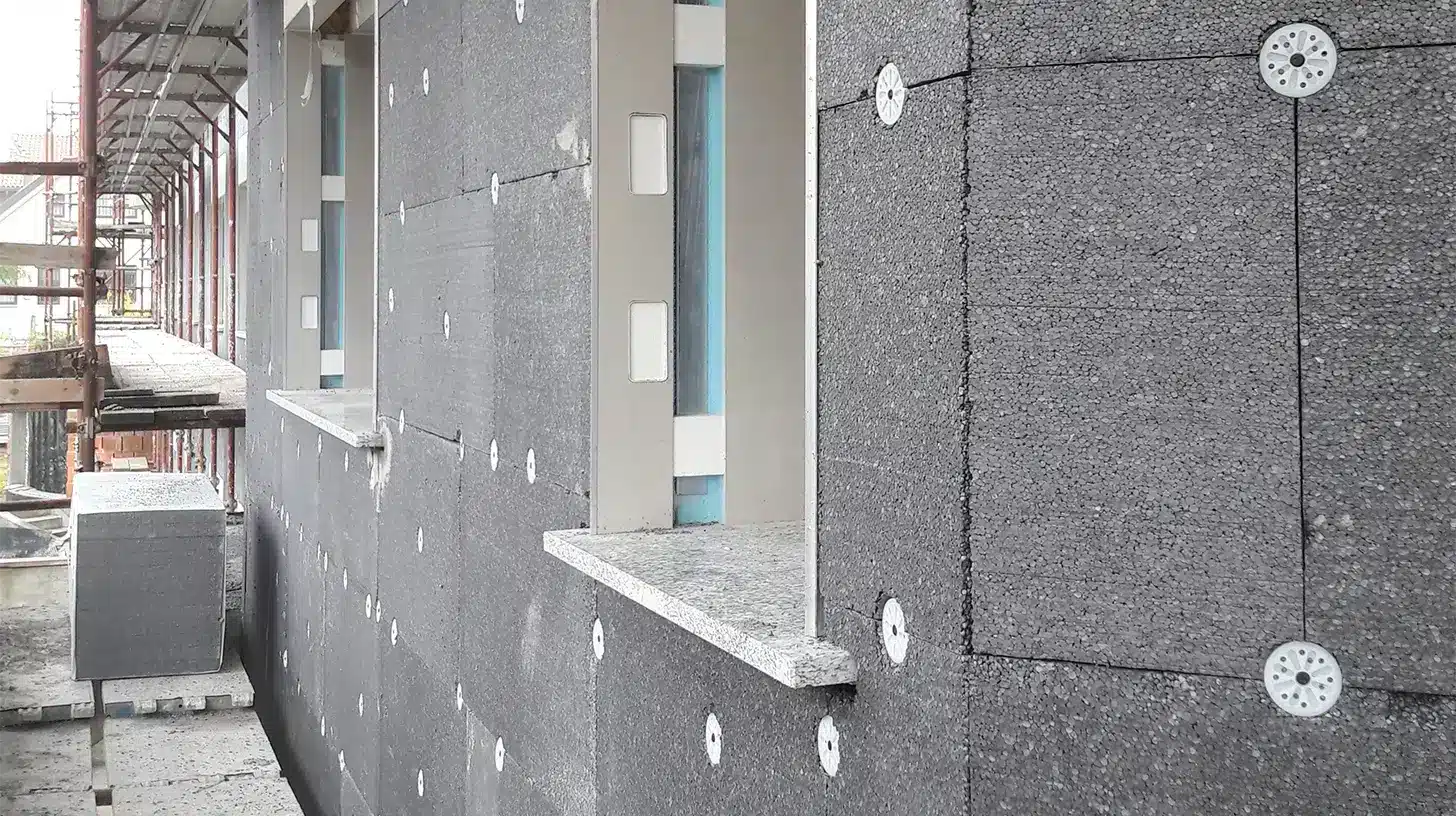
What is the thermal coat and what are its advantages?The thermal coat** is an insulation system designed to improve the energy efficiency of a building, reducing heat dispersion through walls. It can be applied both to the outside** and to the inside** of the property and is considered to be › a very effective solution to reduce energy consumption and increase the comfort of living.
Without going into the most technical aspects of the intervention, the idea behind the thermal coat is to create an insulating barrier that protects the structure from thermal changes, keeping the heat inside during winter and preventing overheating in summer. The installation of a thermal coat is therefore a strategic intervention to optimize the energy performances of a building: in addition to ensuring greater comfort in living, it allows to significantly reduce consumption, to reduce greenhouse gas emissions in the atmosphere, and to increase the value of the property on the market. Let's analyze the benefits of this intervention in greater detail.
Concrete energy saving One of the main benefits of the thermal coat is the ability to reduce thermal dispersions of the building, limiting the heat leak in winter and the heat input in summer. This translates into:
- ** Lowering costs** of heating in the cold months, as the environment retains heat for longer.
- A reduction in the need for air conditioning in summer, thanks to the insulation of the walls from solar radiation.
- An improved overall energy efficiency, with less waste and more rational use of resources. Although the economic saving on bills** may vary depending on the characteristics of the building and the insulation material used, in many cases it may even reach up to 30-40% compared to previous consumption.
Improving living comfort The thermal coat not only improves energy efficiency, but also helps to create a more comfortable and healthy environment** for people. Thanks to this insulation intervention, you can obtain:
- Stable internal temperatures, avoiding thermal changes between day and night.
- Reduction or even cancellation of thermal bridges, i.e. those points where heat is most dispersed, often responsible for condensation and mould formation.
- Better sound insulation, especially with the use of materials such as rock wool and wood fibre, which help to reduce noise from the outside.The synergy between these benefits leads to the creation of more livable environments, with a more balanced internal microclimate and greater acoustic well-being for those living there.
Reduction of CO2 emissions The reduction in energy consumption** brings with it a The European Union and many governments are encouraging sustainability policies and ecological transition, improving the energy performance of buildings is a more strategic choice** for all mobile owners and, of course, for the European Union, for the European Union and the European Union. BuildersThe adoption of the heat coat is one of the most effective solutions to align with the objectives of reducing pollution and improving the efficiency of the building stock.
Increase in the value of the property A property with a higher energy class** is more attractive on the market and can be sold or rented at a higher price than buildings with lower energy performance. The main reasons for this enhancement are:
- ** Lower operating costs** for future owners or tenants, thanks to savings on bills.
- More competitiveness of the property, in a real estate market increasingly attentive to efficiency and sustainability criteria.
- Access to tax incentives and facilities for buyers, who can benefit from deductions for energy redevelopment interventions.
The impact of the thermal coat on the energy classes of the property We have now made it clear that the installation of a thermal coat is one of the most effective interventions to improve the energy class of a building. The latter indicates the level of efficiency of a property from the point of view of the energy consumption and is expressed with a Staircase RANGING from the G class, the least efficient, up to the A4 class, which represents the maximum level of energy performance. This classification is determined according to parameters such as:
- The energy needs of the building (expressed in kWh/m2 per year).
- The type of heating and cooling systems used.
- The thermal insulation of the building envelope (walls, roof, windows).
- The use of renewable sources is possible. Low energy-class buildings (E, F, G) consume much more energy than higher class buildings (A, B), with a direct impact on bills and the environment. For this reason, improving the energy class with a thermal coat is always considered a strategic and profitable investment**.
How much better does the energy class improve with a heat coat? The magnitude of the improvement depends on several factors, including the initial state of the building, the type of insulation chosen and the amplitude of the intervention. The insulation with outer coat, the energy jump can be significant especially if the intervention is made with performing materials and in a homogeneous way throughout the structure. A building in class G, for example, can improve up to class B or even A, drastically reducing its energy consumption. The reason is linked to the capacity of the outer coat of:
Reduce thermal dispersions evenly on all exposed surfaces.
Delete thermal bridges, i.e. the places where heat is most easily dispersed.
Improving the behaviour of the building envelope in winter and summer, ensuring a more stable indoor temperature. Depending on the results it allows, this intervention is particularly effective in the Condominium and in the ** single-family buildings** with large dispersing surfaces, allowing access to tax incentives for energy redevelopment. When it is not possible to create an external coat, for example for constraints urbanistic or architectural, you can still opt for a inner coat. Although this solution necessarily involves a loss of living space, it still allows to achieve a significant improvement of the energy class: specifically, if the intervention concerns at least 25% of the surface gross dispersant of the building, the
Historical or bound buildings, where it is not possible to modify the facade.
** Apartments in apartment house or villa, where you can not intervene on common areas.
Targeted actions on single real estate units.
When is the heat coat mandatory? The installation of the heat coat is not always a voluntary choice: in some cases it can become a ** regulatory obligation**, mainly as a result of energy restructuring or upgrading of existing buildings.
The obligation to heat coat for new buildings For new buildings**, compliance with rigid energy efficiency standards today requires the adoption of high-performance insulation solutions. Although not explicitly required for the use of the heat coat, buildings must be in high energy classes (A or higher), and often the insulation is the most effective solution to meet these standards.
Obligation to heat coat in the event of major renovations The obligation to install a thermal coat is triggered in the cases of ** major first-level renovation**, as established by the Decree Minimum Requirements (DM June 26, 2015) Synthesizing, an intervention falls into this category when:
- It covers more than 50% of the surface of the enclosure of the building.
- It involves the complete renovation of the thermal system**. In both cases, the heat coat or equivalent system becomes necessary to comply with the minimum thermal insulation performance** imposed by the regulations.
The obligation of the thermal coat with the Superbonus 110% (now up to 70%) Who access to tax incentives for energy efficiency, like the Superbonus (** Currently with reduced rates** The heat coat is often a driving operation, or a requisite to access facilities on other operations, such as the replacement of fixtures or the installation of efficient air conditioning systems.
The obligation of the thermal coat in the condominiums Finally, inside the condominiumsthe installation of the thermal coat can become mandatory when the interventions of energy renovation are carried out on a significant part of the outer enclosure, such as the facade. Decree Law 34/2020 (so-called Decree Relaunch) has encouraged insulation in the condominiums, making them often indispensable to improve the energy class and access to building bonuses.
To view videos, enable external content in your cookie preferences.