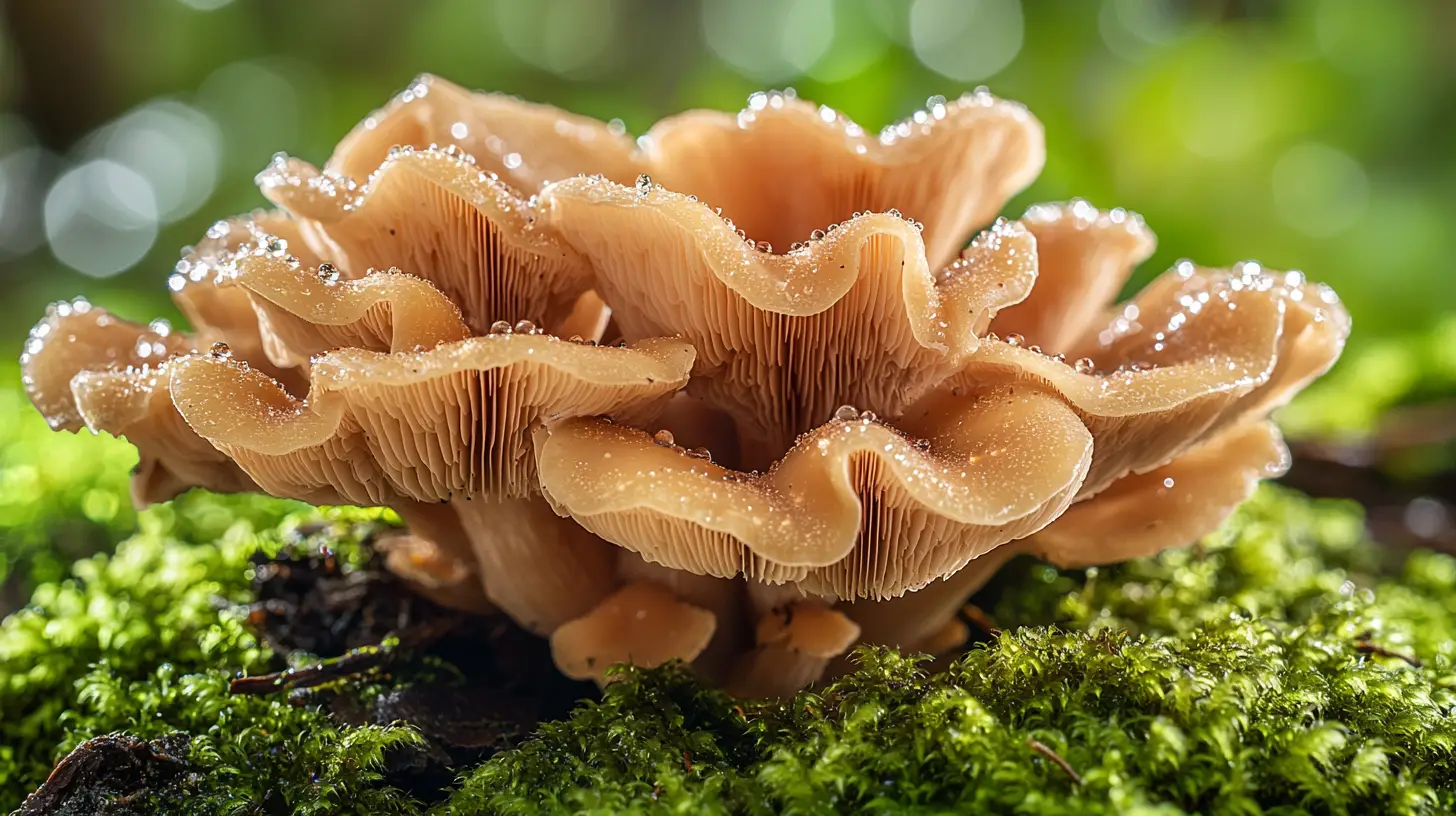
As is well known, construction** is among the sectors characterized by greater environmental impact, i.e. it contributes significantly to greenhouse gas emissions and the consumption of natural resources. However, the growing awareness of the need to adopt more sustainable models led to the search for alternative to traditional materials, often associated with high environmental costs. In this context, innovation plays a crucial role in defining the future of construction. Among the emerging solutions, mycelium, the filamentous part of fungi, is an extraordinarily promising material. Thanks to its unique properties and its ability to integrate perfectly into the principles of the bio-building, for some years now, mycelium has been establishing itself as one of the main players in the green revolution in the building sector**. Easy to grow, sustainable and incredibly versatile, could provide a concrete response to the challenge of building in a more environmentally friendly way.
Mycelium: a material that 'constructs the future It is defined mycelium the vegetative structure of the fungi, that is the portion composed of a braid of filaments called ifeInvisible to the naked eye, the mycelium grows below the surface of the ground or inside organic materials such as wood and decomposing plants. This filamentous system acts as a natural network, capable of transporting nutrients and communicating with the surrounding environment, and is therefore a real biological infrastructure. The process of mycelium growth is extraordinary: it develops rapidly using organic material as a substrate, transforming vegetable or agricultural waste into a dense and resistant mass. Thanks to its capacity to self-assemble and adapt to different shapes, mycelium can be 'cultivated' to create panels, bricks or other building elements. It is a process with reduced environmental impact, which requires very little energy and does not produce harmful waste, and therefore is ideal for sustainable construction.
What are the properties of mycelium that can be exploited in building? mycelium has a number of interesting characteristics that make it extremely attractive for the construction sector and, in particular, ** for green building**- Let's see what's on top of it.
High insulation capacity Mycelium is an excellent insulation**, both from the thermal and acoustic point of view. Thanks to its porous structure, it is able to retain heat and reduce thermal dispersion, contributing to a higher energy efficiency of buildings. Also on the acoustic level, its ability to absorb vibrations and sounds makes it ideal to create more comfortable environments.
Resistance and lightness While incredibly light, mycelium offers a remarkable mechanical resistance. This combination of lightness and solidity makes it a ** versatile material**, usable for the construction of structural panels, decorative components and much more. Its resistance is further improved through specific treatments, which could make it even more competitive than traditional materials.
Biodegradability and atoxicity One of the most revolutionary features of mycelium is its total biodegradability. At the end of life, mycelium-based materials** decompose naturally**, without releasing toxic or polluting substances in the environment. This property not only reduces the impact of building waste, but also offers new opportunities for the circular economy, transforming waste materials into new resources. Thanks to these properties, mycelium is establishing itself as an innovative and sustainable solution for building of the future, with the potential to refine building standards in the sign of sustainability.
Mycelium vs traditional building materials: what differences? mycelium is considered a revolutionary alternative to traditional materials such as cement, plastic and other oil derivatives, which still dominate the construction industry but entail high environmental costs. Its natural characteristics and low impact production process make it an ecological material** that meets the new challenges of global sustainability.
- ** Less environmental impact**: Mycelium production requires a minimum amount of natural resources, such as water and energy, compared to traditional materials. is grown on organic waste, reducing the need to extract virgin resources and reducing the environmental costs associated with production.
- Reduction of CO2 emissions: Mycelium growth process not only consumes less energy than cement or plastic production, but also contributes to CO2 absorption during the mushroom life cycle. This advantage makes it a particularly convenient solution to reduce carbon footprint in the building sector.
- Sustainable life cycle: Unlike materials such as cement, which have a linear life cycle and produce waste that is difficult to dispose of, mycelium follows a circular model: from production to recycling, all material can be reused or re-introduced into the environment without generating pollution. This approach makes it almost a symbol of the circular economy, as it guarantees the real transformation of agricultural waste into a valuable product.
- Use of organic waste: one of the most innovative aspects of mycelium is its ability to use organic waste, such as wood chips or corn peels, as a substrate for growth. This is not a small advantage: in addition to reducing waste, this peculiarity also allows to give a new life to materials that would otherwise end up in landfills.
- ** Safety and reliability**: to conclude, mycelium has a remarkable mechanical resistance and fire, proving itself capable of sustaining significant loads and tolerate high temperatures. Moreover, thanks to its regenerative capacity, it is able to repair any damage through the growth of new filament structures, confirming itself again a particularly versatile and innovative material.
The practical applications of mycelium in the building Clarite the characteristics and advantages of fungi in the building, let's see now what their practical applications that, thanks to the innate versatility of mycelium, are extremely numerous and varied. First of all, the mycelium is one of the most promising thermal insulation** for the green building. Its porous structure allows to retain heat and reduce energy dispersion, helping to create buildings more energy efficient. It is not by chance that it is now increasingly required in the form of panels for walls and ceilings and seems to be even more performing glass fibreThanks to its resistance and lightness**, mycelium can be transformed into structural panels used for light constructions, partition walls and other building applications. These products can replace wood or synthetic materials, offering a completely natural and sustainable solution. Finally, it must be reiterated that mycelium is not only functional, but can also be aesthetically versatile because ely modelable in forms useful to create decorative elements, furniture and innovative interior design. Architects and designers are experimenting with its use to create welcoming and sustainable environments, demonstrating how technology and nature can blend harmoniously.
Who is already using mycelium in the construction field? mycelium is attracting the attention of companies and startups as Mykor, which have chosen to specialize in the development of innovative materials for construction and design and continuously experiment with new applications, highlighting the ability of this material to redefine standards in the sector. An additional example of great importance is FUNGAR (Fungal Architecture), launched in 2019 by the Columbia Graduate School of Architecture, Planning and Preservation. This ambitious project aims to build building materials from mycelium, exploring their potential to revolutionize the building sector. During the course of the experimentation, the research team developed a process in which mycelium is combined with agricultural waste, such as straw and maize waste, and cultivated for about two weeks. During this period, mycelium colonizes the organic substrate, forming a solid mass. To obtain the final product, the compound is then heated or chemically treated, interrupting the biological activity of the fungus. The result is a matton similar to the traditional ones in terms of consistency and resistance, but composed exclusively of organic materials**. According to researchers, this solution could drastically reduce carbon emissions in the construction sector. The mycelium based bricks would ensure environmentally friendly and sustainable disposal, eliminating one of the main problems related to the demolition of buildings. Some interesting projects that exploit the formidable qualities of mycelium are listed in this contribution published by Hyperproject.
To view videos, enable external content in your cookie preferences.